Short answer: A puffy face in the morning is usually extra fluid that settles in the soft tissue around your eyes and cheeks while you lie flat. It is made worse by a salty dinner, alcohol, too little sleep, crying or allergies. To ease it, splash cool water on your face, roll something cold over it and give it a gentle massage towards the ears and down the neck. Most everyday puffiness fades by itself within an hour of being upright. Puffiness that stays all day, comes with swelling elsewhere, or appears suddenly with itching or breathing trouble needs a doctor.
Key takeaways
- Morning puffiness is mostly fluid that pools while you sleep flat, so it usually eases on its own within 30–60 minutes of being upright.
- Salt, alcohol, short or broken sleep, crying, allergies and hormonal changes around periods are the most common triggers.
- Cold and light massage give the quickest visible change. Use chilled tools or cool water rather than holding bare ice on the skin.
- Under-eye bags that look the same morning and evening are often fat pads or genetics, and cold or massage will not change them much.
- See a doctor if your face swells suddenly, swells on one side with pain or fever, or swells along with your ankles, legs or lips.
Why does my face look puffy in the morning?
During the day, gravity and movement keep fluid draining down and away from your face. At night you lie flat for seven or eight hours, so fluid spreads more evenly and some of it collects where skin is thinnest and softest: under the eyes, on the eyelids and across the upper cheeks. Once you get up, it slowly drains again. That is why the puffiness you see at 7 am has often gone by 10 am.
Several things make this overnight build-up bigger:
- Salt at dinner. Pickles, papad, namkeen, chips, instant noodles, restaurant gravies and late-night takeaway all carry a lot of salt, and your body holds on to extra water to balance it.
- Alcohol. It dehydrates you and disturbs sleep, and many people wake up noticeably puffier after a party or a wedding sangeet.
- Short or broken sleep. Late nights, screen time and festival season schedules show up on the face the next morning.
- Crying or rubbing your eyes. Both irritate the delicate eye area and draw fluid into it.
- Allergies. Dust mites in pillows, monsoon damp and mould, pollen, pet hair, and the smoke and pollution around Diwali can all leave eyes puffy and itchy.
- Hormones. Many women notice more puffiness in the days before a period, and some during pregnancy.
- Heat. Hot, humid nights without good airflow can add to fluid retention.
Which cause is behind your puffiness?
A few clues usually point to the likely trigger, and that tells you what will actually help.
| Likely cause | Typical clues | What usually helps |
|---|---|---|
| Salty or late dinner | Whole face looks fuller, rings feel tight, better by midday | Lighter, earlier dinner; water through the day; cold and massage in the morning |
| Alcohol or very late night | Puffy eyes, dull skin, headache or thirst | Water before bed, enough sleep, cool compress in the morning |
| Allergies | Itchy or watery eyes, sneezing, worse in monsoon or high-pollution weeks | Wash pillow covers often, don't rub your eyes, ask a doctor about allergy care |
| Sleep position | One side puffier, pillow creases on the face | Sleep on your back with your head slightly raised |
| Hormonal cycle | Puffiness comes and goes with your period | Cut down on salt that week; be gentle and patient |
| Fat pads or genetics | Under-eye bags look the same morning and night, often run in the family | Little change from home care; a dermatologist can explain your options |
How can I reduce face puffiness quickly in the morning?
This routine takes about 10 minutes and works best right after you wake up.
- Get upright and drink a glass of water. Standing and moving around starts the natural drainage.
- Splash your face with cool water 8–10 times, then pat it dry. If you have hard water and your skin feels tight afterwards, a final rinse with filtered or boiled-and-cooled water can feel gentler.
- Apply a light serum or a few drops of face oil so tools glide over the skin and don't tug it.
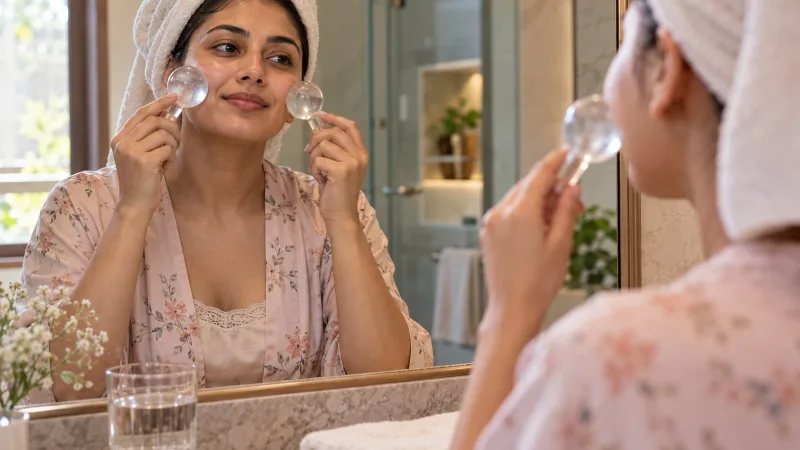
- Use something cold. Chilled ice globes, a cold jade roller or two steel spoons kept in the fridge overnight all work. Keep the tool moving and roll from the centre of your face outward for 2–3 minutes.
- Massage towards your drainage points. With light fingertip pressure, sweep from the inner corner of the eye towards the temple, from the nose across the cheek to the ear, and from the chin along the jaw to the ear. Finish with slow strokes from behind the ears down the sides of the neck. Do 5–6 passes for each.
- Finish with moisturiser and sunscreen, then wait 15–20 minutes before makeup if you can. The puffiness keeps settling as you get ready.
Press lightly. Fluid sits just under the skin, so a feather-light touch moves it better than deep pressure, and hard rubbing around the eyes only irritates them.
Do ice globes or a jade roller actually help with puffiness?
They can help with everyday fluid puffiness, mainly because they combine cold with gentle, steady movement. Cold makes the skin look tighter and calmer for a while, and the outward rolling follows the same direction as the massage above. The effect is temporary. It helps you look fresher for the day, but it won't change why you got puffy in the first place.
Using ice globes at home
Frost facial ice globes are handy on puffy mornings and before makeup. Keep them in the fridge, or in the freezer for about 10 minutes and then let them rest for a minute so they aren't painfully cold. Keep them moving and roll from the centre outward. Don't hold them still on one spot, and avoid the eyelids themselves. Roll on the bone around the eye instead.
Using a jade roller or gua sha
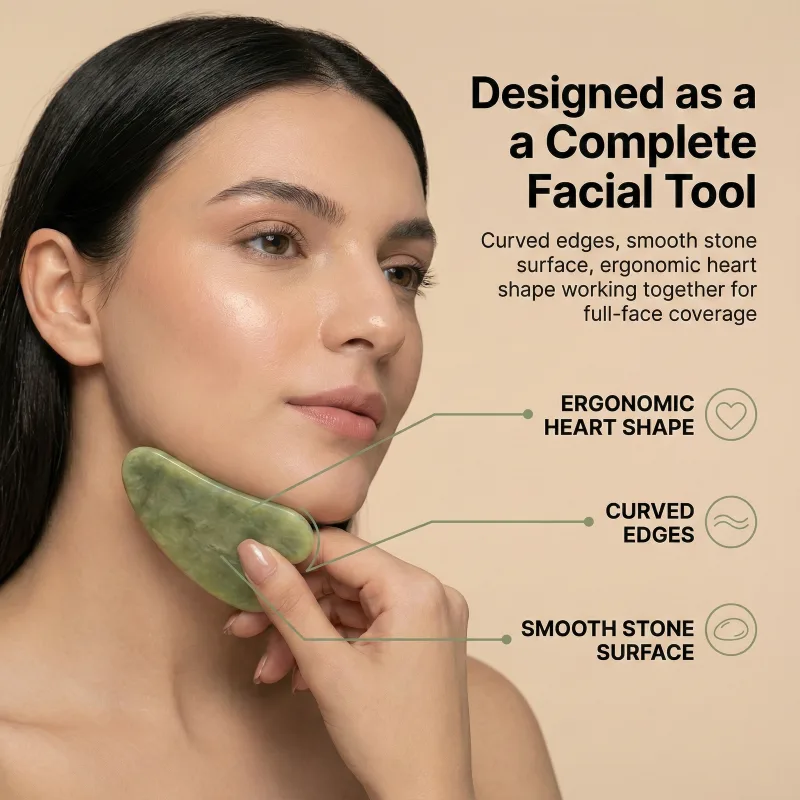
A roller such as the Himalayan jade roller face and neck massager works well if you keep it in the fridge. Use it over oil or serum and roll upward and outward 5–6 times per area, finishing down the neck. If you also hold tension in your jaw from clenching, a gua sha stone used almost flat can feel good. Our step-by-step gua sha routine shows the strokes. If you are deciding between stones, see jade vs rose quartz rollers.
Who should be careful: use only feather-light pressure if you have rosacea or visible broken capillaries, and skip areas with active, inflamed breakouts. If cold makes your skin sting, turn blotchy for a long time, or makes your fingers or face go white, stop.
What can I change at night to wake up less puffy?
Prevention usually does more than any morning trick.
Watch the salt, especially at dinner
Lunch can be your bigger meal, and dinner a little earlier and lighter. Go easy on achaar, papad, packaged snacks and salty restaurant food in the evening, particularly before an important day.
Drink water through the day
When you are dehydrated, your body tends to hold on to fluid. Spread your water across the day rather than drinking a lot just before bed, which can mean waking up at night.
Raise your head a little and sleep on your back
One extra pillow, or a slightly firmer one, helps fluid drain while you sleep. Sleeping face-down tends to leave one cheek and eye puffier.
Keep allergy triggers down
Wash pillow covers weekly, more often during the monsoon, and air out bedding in the sun when you can. On high-pollution days, cleanse your face properly at night. Try not to rub itchy eyes, and see a doctor if allergies keep coming back.
Protect your sleep
Seven to eight hours with a steady bedtime makes the biggest difference for many people. During wedding and festival season, a few early nights before the big events show on your face. Our 3-week pre-Diwali skin plan has more on timing.
Go light on rich eye creams at night
A thick cream applied too close to the lash line can migrate into the eyes and irritate them, which adds to puffiness. Pat a small amount on the bone only.
Why are my under-eyes still puffy after trying everything?
Not all puffiness is fluid. With age, and in some families from the twenties onward, the fat that cushions the eye shifts forward and the skin over it thins, which creates bags. These look much the same morning and evening, and cold, massage or less salt changes them only a little.
Dark circles are also different from puffiness. On Indian skin they are often due to pigmentation or shadowing, so they need a different approach. If your bags bother you, a dermatologist can tell you whether they are fluid, fat or pigment and what is realistic.
When is a puffy face a sign to see a doctor?
Everyday morning puffiness is harmless. Get medical advice if you notice any of these:
- Sudden swelling of the face, lips, tongue or throat, hives, or trouble breathing or swallowing. This can be a serious allergic reaction, so seek emergency help straight away.
- Swelling on one side with pain, redness, warmth or fever, which can point to a tooth, sinus or skin infection.
- Puffy eyelids that stay all day, especially with swollen ankles or legs, foamy urine or passing less urine than usual.
- Puffiness with tiredness, weight gain, feeling cold and dry skin, which is worth a check-up, including for thyroid problems.
- Swelling that started after a new medicine, or while on steroids or other long-term medication.
- Red, crusty, itchy eyelids that may be eczema or contact allergy to a product. Stop new products and see a dermatologist.
If you are pregnant and notice sudden swelling of the face or hands, call your doctor promptly rather than waiting.
For most people, a lighter dinner, enough sleep and a few minutes of cold and gentle massage are enough to wake up looking more like yourself. You can browse our facial essentials if you want a cooling tool for your morning routine. If you are unsure which one suits your skin, you can message us on WhatsApp at +91 98116-65715.