
Short answer: Start on clean skin and spread a few drops of face oil or serum so the stone glides without tugging. Hold the gua sha almost flat against your skin and use slow, gentle strokes upward and outward. Work in order: neck, jaw, cheeks, then forehead, with 3–5 strokes on each area. Five to ten minutes, 3–5 times a week, is plenty. It can make your face look less puffy and feel less tense, but the effect is temporary and works best as part of a steady routine.
Key takeaways
- Always use gua sha over oil or serum. Dragging a stone over dry skin pulls and can irritate it.
- Hold the tool almost flat, at a low angle to the skin, rather than upright like a scraper.
- Work neck → jaw → cheeks → forehead, 3–5 slow strokes per area, moving upward and outward.
- Facial gua sha should leave skin slightly pink at most. Bruising, broken capillaries or pain mean you are pressing too hard.
- Skip active breakouts, broken or sunburnt skin, and freshly treated skin. Use feather-light pressure if you have rosacea.
What does gua sha actually do for your face?
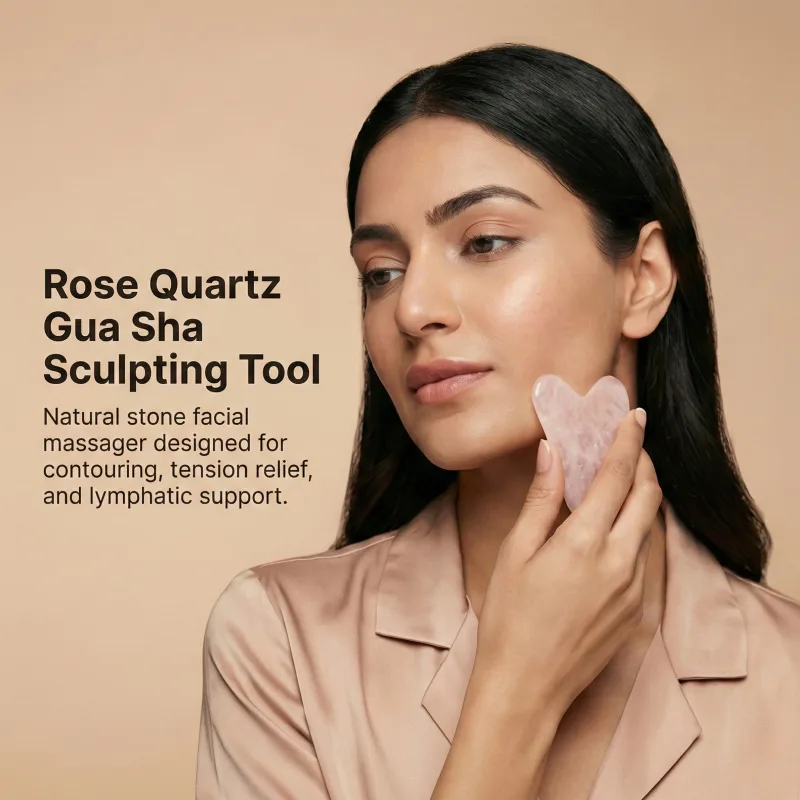
Facial gua sha is a slow massage with a smooth, flat stone. The gentle pressure moves fluid that collects overnight, relaxes tight muscles around the jaw and brows, and brings a short-lived flush of colour to the skin. That is why your face can look a little less puffy and more awake straight afterwards.
Here is what it does not do. It does not burn fat, permanently change your bone structure or remove a double chin. Social media before-and-afters are often taken minutes apart, when the depuffing effect is at its peak. Think of gua sha as a calming ritual that gives a temporary lift, especially on puffy mornings, and that helps you massage in your skincare properly.
What do you need before you start?
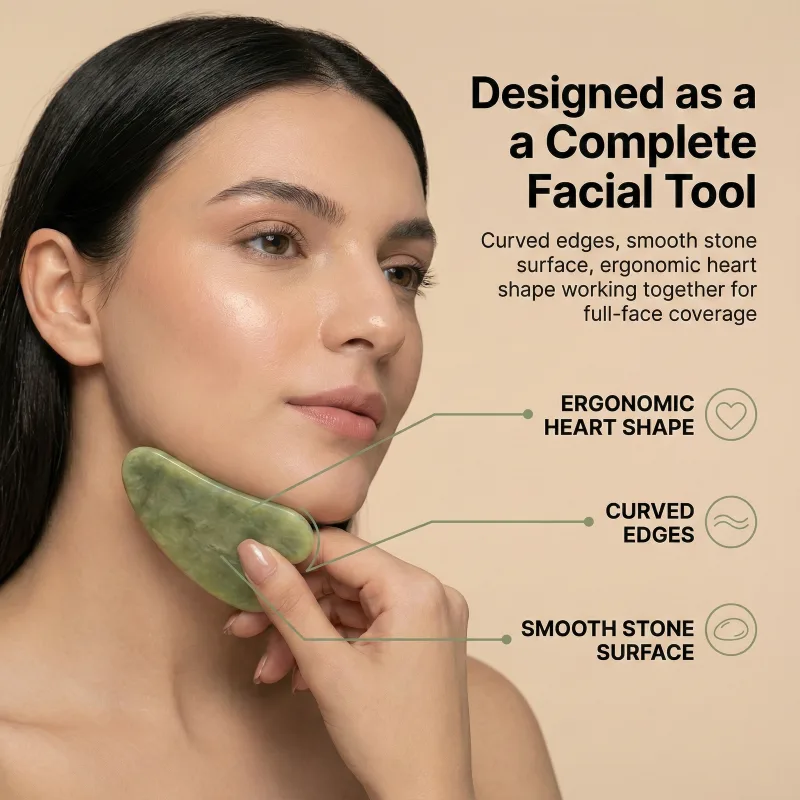
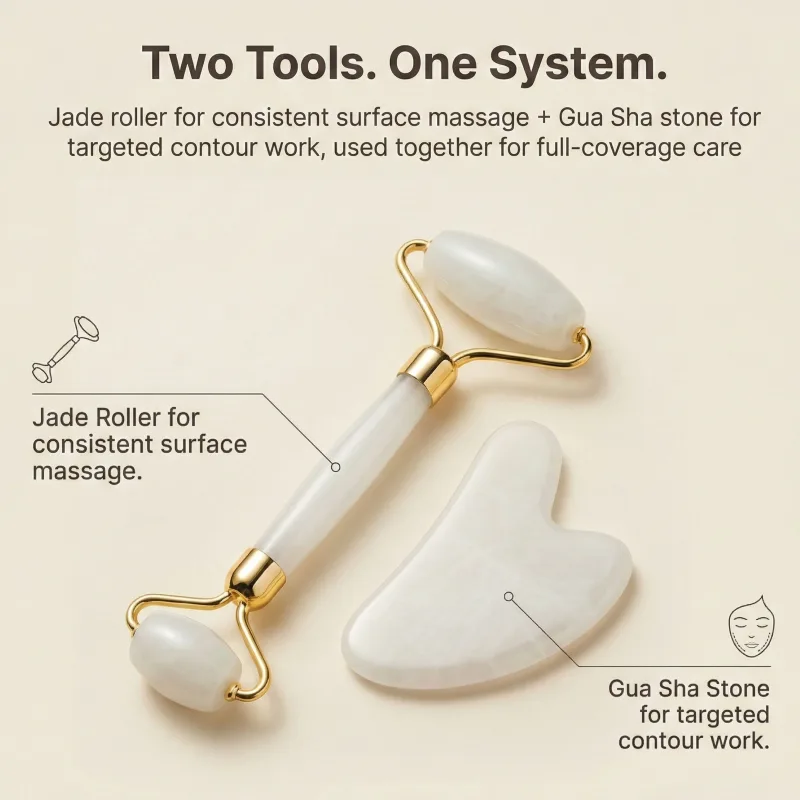
- A gua sha stone. Most have a long curved edge for cheeks and the neck, a notched edge that fits the jawline, and a smaller curve or point for brows and around the nose. Jade, rose quartz and white jade all work the same way. The choice mostly comes down to feel and weight.
- Slip. A face oil or a serum that stays wet long enough to glide on.
- Clean hands and a clean face. Remove makeup and sunscreen first, especially in a city with heavy pollution, so you are not pressing grime into your pores.
- Optional: keep the stone in the fridge for extra depuffing. This helps a lot on hot, humid mornings.
Which oil or serum suits Indian skin?
| Skin type | Good slip options | Go easy on |
|---|---|---|
| Dry or winter-dry skin | Sweet almond oil, squalane, or a hydrating serum followed by a drop of oil | Very thin, watery toners that dry out mid-stroke |
| Oily or acne-prone skin | A lightweight gel serum (for example with niacinamide or hyaluronic acid), jojoba or squalane in small amounts | Heavy coconut or mustard oil on the face, which can feel greasy and may clog pores |
| Combination skin (common in humid cities) | Gel serum all over, plus a drop of light oil on dry cheeks | Layering several rich products before massage |
| Sensitive skin | Plain squalane or your usual fragrance-free moisturiser | Essential oils and strongly scented blends |
If your skin feels tight after cleansing with hard water, apply your hydrating serum on damp skin first. Our guide on why skin needs hydration as well as moisturiser explains why that order helps.
How do you use gua sha on your face, step by step?
- Prep. Cleanse, pat dry, then spread 3–5 drops of oil or a generous layer of serum over your face and neck.
- Neck. Hold the long edge almost flat against your skin. Stroke slowly up the front of your neck from the collarbone towards the jaw, 3–5 times on each side. Then sweep lightly down the sides of the neck, from just below the ear towards the collarbone. Avoid pressing on the centre of the throat.
- Jawline. Fit the notched edge along your jaw. Glide from the chin out towards the earlobe, 3–5 times per side. People who clench their jaw often find this area the most satisfying.
- Cheeks. Use the long curved edge. Stroke from beside the nose, out across the cheekbone towards the ear, 3–5 times. Then do one lower pass from the corner of the mouth towards the ear.
- Under the eyes. Use the smallest curve with almost no pressure. Glide from the inner corner outwards towards the temple, 2–3 times. The skin here is thin, so let the tool's weight do the work.
- Brows and forehead. Run the small curve along the brow bone, from the inner brow outwards. Then stroke the forehead upward from brows to hairline, moving across in sections.
- Finish. Do a few light sweeps down the sides of the neck, then press in any leftover product. Wash and dry the stone.
The whole routine takes 5–10 minutes. Go slowly. Fast, scrubbing strokes do nothing extra and irritate the skin.
How much pressure, and what angle?
Hold the stone almost flat, around 15 degrees from the skin, so the broad edge rests on your face. Holding it upright concentrates pressure on a thin line, and that is how people end up with red streaks.
Press firmly enough to move the skin slightly, like a confident massage, but never to the point of pain. A light pinkness that fades within minutes is normal. Purple spots, bruising or visible broken veins are not. Body gua sha done by trained practitioners can leave marks on purpose, but on the face you should never aim for that.
If you have rosacea, easy flushing or visible capillaries on your cheeks, keep pressure feather-light and skip the cheeks if they get hot or blotchy afterwards.
How often should you do gua sha, and morning or night?
3–5 times a week suits most people. Gentle daily use is fine too if your skin stays calm. Timing depends on what you want from it:
- Morning: best for depuffing, especially after a late night, salty dinner or a long-haul journey. A chilled stone helps. Remove excess oil afterwards so your sunscreen and makeup sit well.
- Night: best for unwinding a tense jaw and brow, and for massaging in a richer serum or oil, which suits dry winter skin.
As the wedding and festive season approaches, gua sha is a useful pre-makeup step on event mornings. It gives a quick, low-risk freshness, unlike trying a new peel the week before. If you are planning ahead, it fits neatly into a bridal skin care countdown.
Which gua sha mistakes should you avoid?
- Using it dry. No slip means friction and tugging.
- Scraping downward on the face. On the face, work upward and outward. Downward sweeps are only for the sides of the neck at the end.
- Going over breakouts. Pressing over inflamed pimples can spread bacteria and make them angrier. Work around them.
- Too many strokes on one spot. 3–5 is enough. Twenty passes over the same cheek only adds redness.
- Skipping cleaning. Wash the stone with mild soap and water after each use, dry it fully and don't share it. A dirty stone in humid weather is an easy route to clogged pores.
- Dropping it on tiles. Natural stone chips easily, and a chipped edge can scratch skin. Stop using a stone with a sharp chip.
Who should avoid gua sha or check with a doctor first?
Gua sha is gentle, but it isn't for every face on every day. Skip it on active acne, cuts, sunburn, eczema flares, or freshly peeled or retinoid-irritated skin. Wait and ask your doctor before using it after fillers, Botox or any facial procedure, as massage can affect recently treated areas.
Speak to a doctor first if you bruise easily, take blood thinners, or have a skin condition you are being treated for. If puffiness is sudden, one-sided, painful, or comes with itching or breathing changes, see a doctor. That kind of swelling needs a medical check, not a massage.
Doing it at home: choosing a stone set
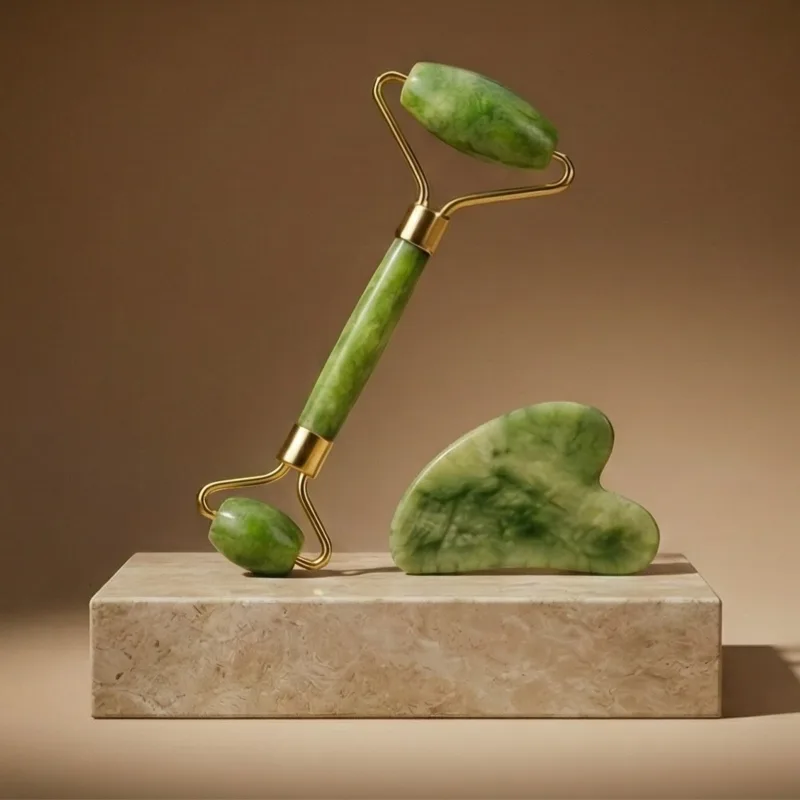
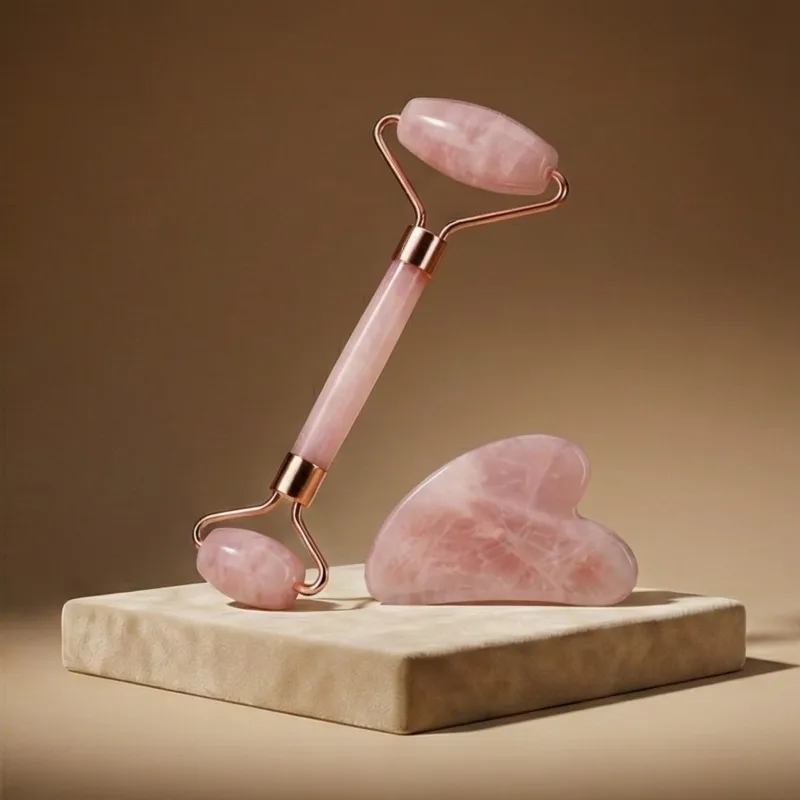
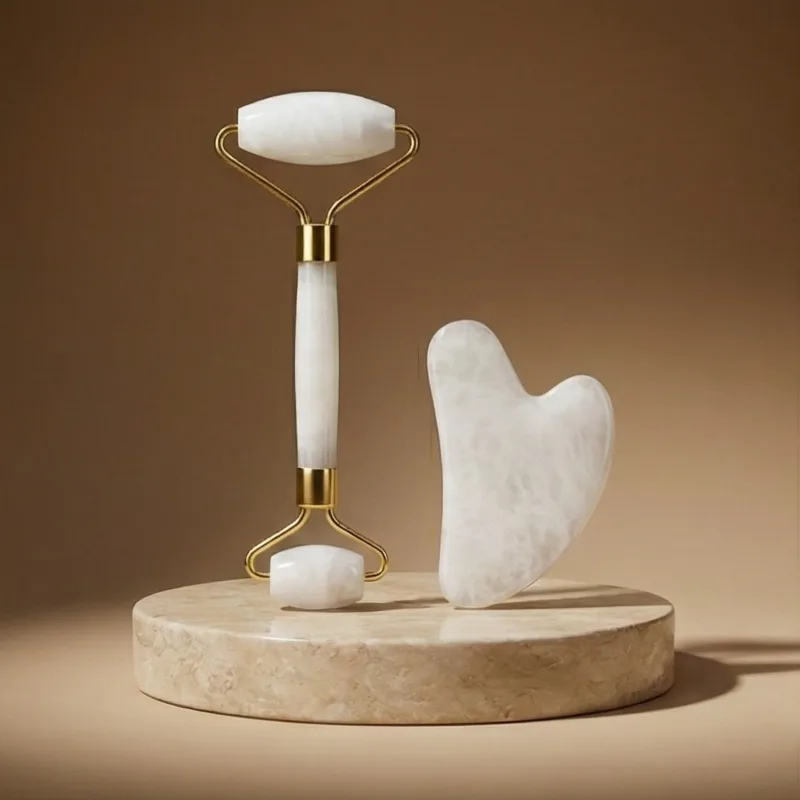
A set with both a roller and a gua sha is a practical start. Use the roller for quick morning depuffing and the gua sha for a slower evening routine. In the roller-and-gua-sha sets from Signaxo, the stones differ in feel rather than in what they do:
- The green jade roller and gua sha set has a smooth, slightly heavier feel and is a classic choice for a jaw that clenches.
- The rose quartz roller and gua sha set stays cool for a good while after time in the fridge, which is nice on humid mornings.
- The pearl white jade set suits anyone who prefers a lighter, softer-looking stone.
Whichever you pick, it is a massage tool, not a treatment. It won't change acne, pigmentation or deep wrinkles. For those, a dermatologist is the right first stop. You can browse other gentle tools in our facial essentials collection.
If your skin is turning dry as winter arrives, pair gua sha with the basics in our winter skin care routine for dry skin. Not sure which stone or tool suits you? Message the Signaxo team on WhatsApp at +91 98116-65715 and they will help you choose.