Short answer: Mild cracked heels usually improve at home with two habits: gently thinning the hard, dry skin around the heel once or twice a week, and sealing in moisture every night with a thick foot cream under cotton socks. Within a few weeks the skin is often softer and the cracks shallower. Deep cracks that bleed or hurt, signs of infection, or any cracks if you have diabetes or poor circulation need a doctor, not just a home routine.
Key takeaways
- Heels crack when thick, dry skin around the heel loses flexibility and splits under the pressure of walking and standing.
- Dry winter air, room heaters, hot baths, open-back chappals and walking barefoot on cold floors all make cracked heels more likely in India.
- A good routine is: smooth hard skin on dry feet once or twice a week, wash, then apply a thick cream every night and wear cotton socks.
- Foot creams with urea, lactic acid or salicylic acid soften thick skin; petroleum jelly seals moisture in. Never cut hard skin with a blade.
- People with diabetes, poor circulation, or bleeding, painful or infected cracks should see a doctor before trying any home treatment.
Why do heels crack more in winter in India?
The skin on your heels is naturally thick, and it has very few oil glands. When it dries out, it becomes stiff. Every step spreads the heel pad sideways, and stiff, dry skin cannot stretch, so it splits along the edge of the heel.
Indian winters add several triggers at once:
- Dry air: North Indian winters, especially in Delhi, Punjab, Rajasthan and the hills, are much drier than the monsoon months.
- Heaters and hot water: A room heater and a long, very hot bath strip the little oil your heels have.
- Open footwear: Chappals and open-back sandals let the heel pad spread with every step and expose it to dust and dry air.
- Barefoot at home: Walking on cold marble, tile or stone floors all day toughens and dries the heel.
- Hard water: In many cities, hard water can leave skin feeling drier and tighter after washing.
- Standing for long hours: Cooking, teaching, shop work and travel all put extra pressure on the heels.
Body weight, age and simply not moisturising feet also play a part. Many people notice their heels crack every winter, right around the time festivals and weddings mean more time in sandals.
Are cracked heels just dryness, or something else?
Most cracked heels are a dryness and pressure problem. Sometimes, though, they are linked to something that needs a doctor's opinion.
Signs it is likely simple dryness
The skin is thick, yellowish or white around the rim of the heel, it feels rough, and the cracks are shallow lines that do not hurt much. It gets worse in winter and better with cream.
Signs to get checked
Itching, peeling between the toes, redness, scaly patches elsewhere on the body, or cracks that do not improve after a few weeks of regular care. Fungal infections, eczema and psoriasis can all show up on the feet. Very dry skin can also be linked to conditions such as thyroid problems or diabetes, so if your feet have changed suddenly, mention it to your doctor.
How to heal cracked heels at home: a weekly routine
This routine suits mild to moderate cracks on otherwise healthy feet. If a crack is open, bleeding or sore, skip the smoothing step and only moisturise until it closes.
- Start with clean, completely dry feet. Electric callus removers and foot files work best on dry skin. Wet skin tears and is easy to over-file.
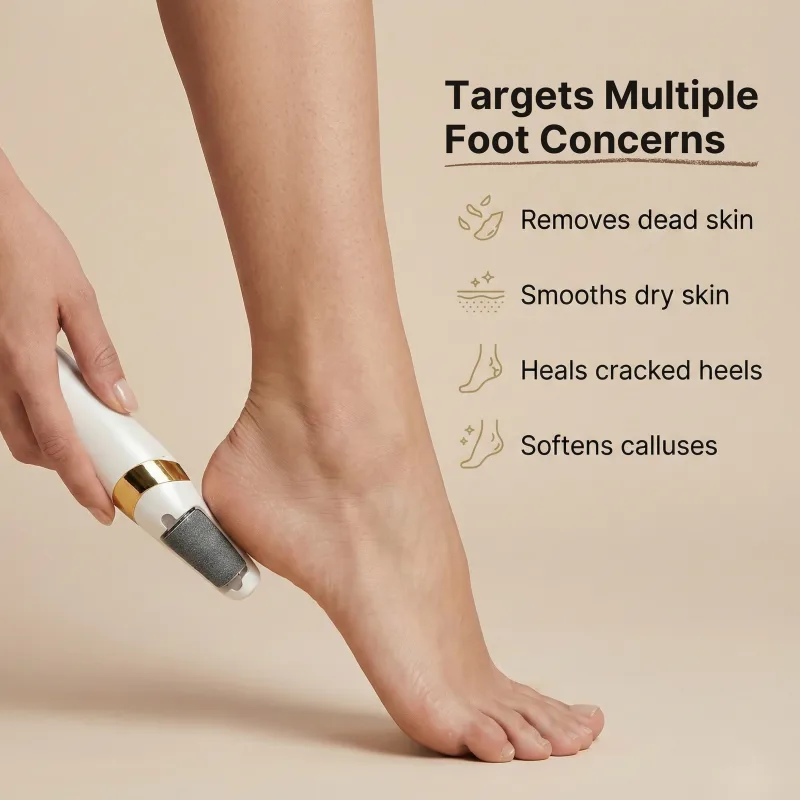
- Smooth the hard skin gently (once or twice a week). Work only on the thick, rough rim of the heel and the ball of the foot. Use light strokes or, with an electric roller, 2–3 seconds per spot without pressing. Stop while the skin is still slightly firm; you are thinning it, not removing it all.
- Wash and pat dry. Rinse your feet in lukewarm, not hot, water and dry them well, including between the toes.
- Apply a thick foot cream. Use a generous amount on the heels and edges. A urea or lactic acid cream is good on thick skin.
- Seal it in at night. On top, add a thin layer of petroleum jelly over the cracks and pull on clean cotton socks before bed.
- Moisturise every day. On non-smoothing days, just repeat steps 4–5 every night and add a lighter cream in the morning if your heels feel tight.
- Check progress after 2–3 weeks. Shallow cracks often look smaller and the skin softer by then. If nothing has changed, or the cracks are deeper, see a doctor.
Which foot cream ingredients actually help?
You do not need an expensive cream. Look at the ingredient list instead of the packaging.
| Ingredient | What it does | Good for | Note |
|---|---|---|---|
| Urea (10–25%) | Draws in water and softens thick skin | Rough, thick heels with shallow cracks | Can sting on open cracks; use lower strength there |
| Lactic acid | Gently loosens dead skin and hydrates | Hard, flaky skin | Avoid on raw or bleeding skin |
| Salicylic acid | Softens and loosens built-up hard skin | Very thick calluses | Ask a doctor first if you have diabetes |
| Glycerin | Attracts moisture to the skin | Everyday dryness | Works best with a thicker layer on top |
| Petroleum jelly | Seals moisture in and protects the surface | Night-time care, open cracks | Wear socks so it does not smear on floors |
| Coconut oil or shea butter | Softens and adds oil | Mild dryness, a light extra layer | Less effective alone on deep cracks |
A simple, effective pairing is a urea cream followed by petroleum jelly at night. Body lotion meant for arms and legs is usually too light for heels in winter. For more on why hydrating and sealing are different jobs, see our guide to hydration versus moisturiser.
What should you never do to cracked heels?
- Do not cut hard skin with a blade or razor. It is very easy to cut too deep and cause bleeding or infection.
- Do not pick or peel loose skin. It pulls on healthy skin and can open the crack wider.
- Do not over-file. Removing too much makes the skin thicken back faster as protection, and leaves the heel tender.
- Do not soak for long in very hot water. A long hot soak can dry skin out further once it evaporates.
- Do not use harsh scrubs on open cracks. Let them close first with cream and socks.
Can an electric callus remover help with cracked heels?
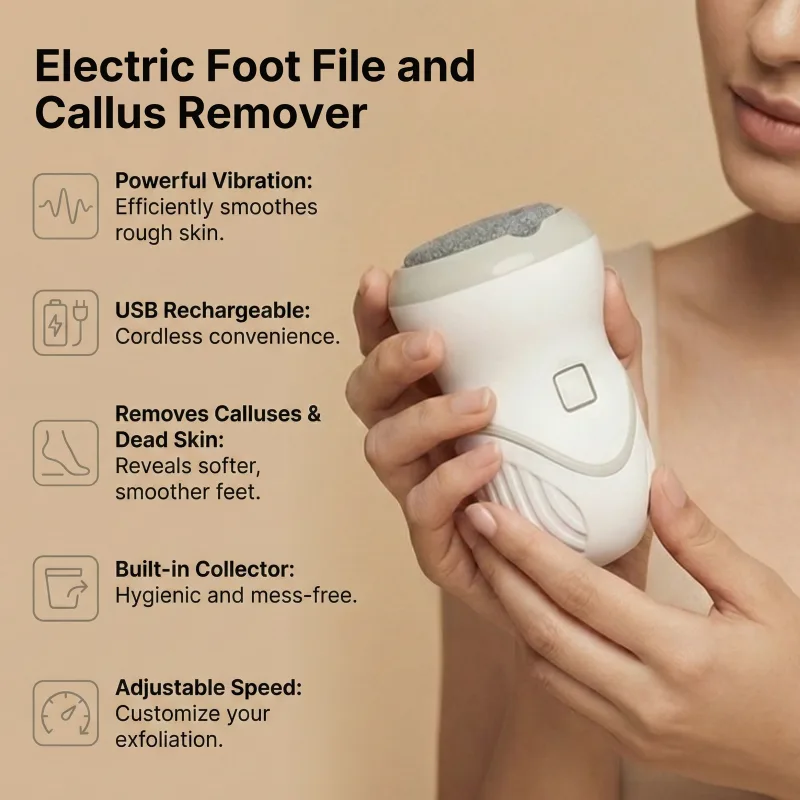
For many people the hardest part of the routine is step 2: thinning thick skin evenly without overdoing it. A rotating roller does that more gently and evenly than scraping by hand, and many people find it easier than bending over with a pumice stone.
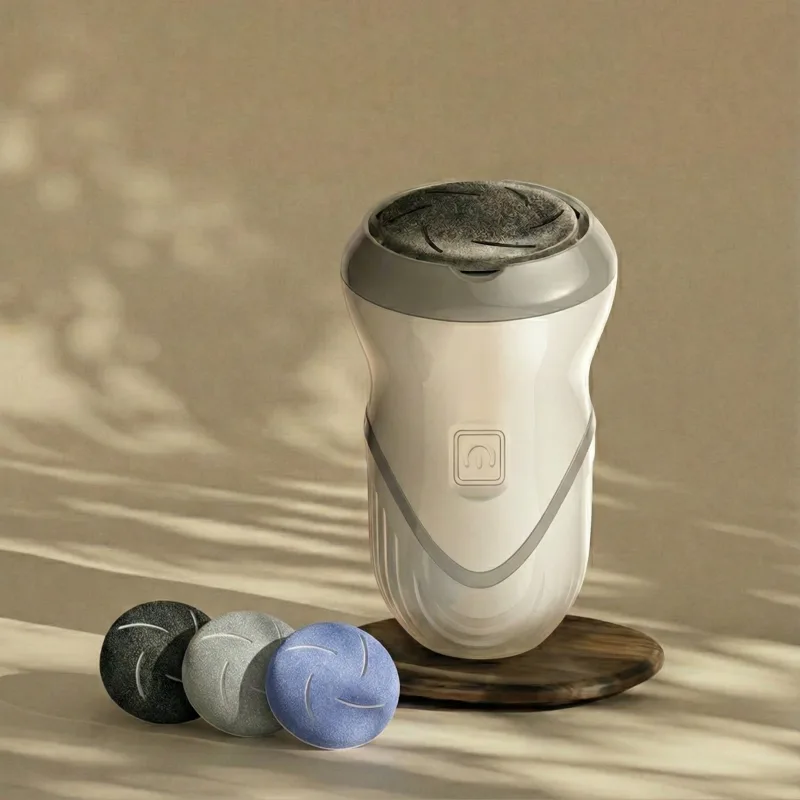
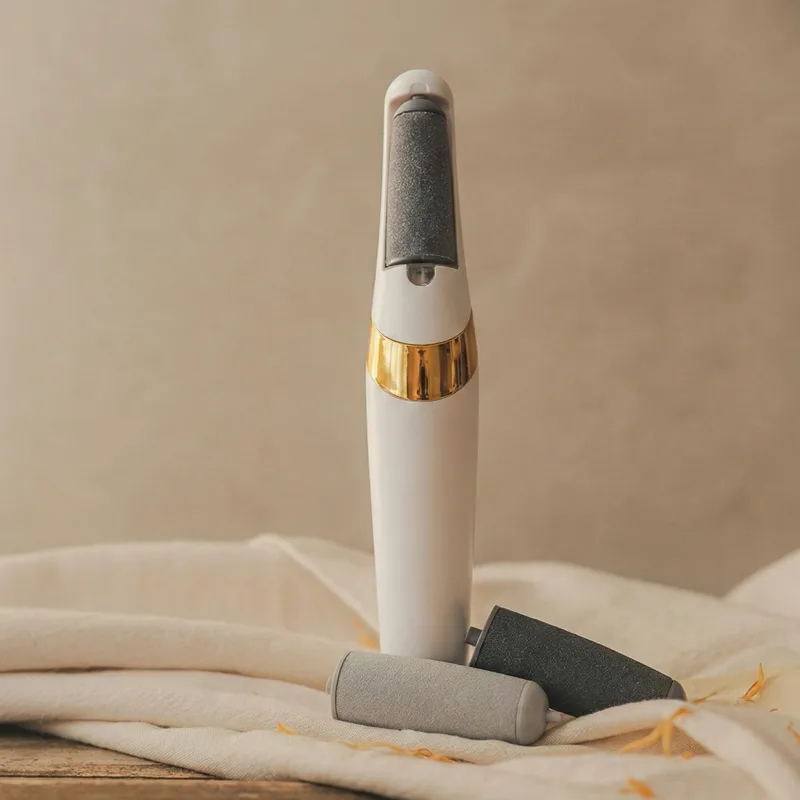
An option such as the PediXpert callus remover, which comes with three roller heads, or the rechargeable PediCare callus remover with dual rollers fits into the weekly routine above. Use either on dry feet only, glide for 2–3 seconds per spot without pressing, once or twice a week, then follow with foot cream.
Be realistic about what it does. A callus remover smooths the thick, dry skin that makes heels crack; it does not close a crack by itself. The nightly cream and socks do most of the work. Never use it on cuts, open or bleeding cracks, warts or infected skin, and if you have diabetes or poor circulation, ask your doctor before using any foot device. If you are weighing home foot care against a parlour pedicure, our guide to what really works at home may help.
When do cracked heels need a doctor?
Please see a doctor or dermatologist rather than relying on a home routine if:
- You have diabetes, nerve problems in your feet or poor circulation. Small cracks can become serious foot wounds, and you may not feel them.
- Cracks are deep, bleeding or painful when you walk.
- There are signs of infection: redness that spreads, warmth, swelling, pus, a bad smell or fever.
- The skin is itchy, scaly or peeling between the toes, which may point to a fungal infection or a skin condition.
- Nothing improves after 2–3 weeks of daily moisturising.
How can you stop heels cracking again?
| Habit | How often | Why it helps |
|---|---|---|
| Thick cream on heels | Every night | Keeps the skin flexible so it stretches instead of splitting |
| Cotton socks over cream | Every night in winter | Holds moisture in and protects bedsheets |
| Gentle smoothing of hard skin | Once or twice a week | Stops thick, stiff skin building up again |
| Closed or back-strap footwear | Daily, where practical | Stops the heel pad spreading with each step |
| Soft slippers at home | Daily in winter | Protects heels from cold, hard floors |
| Lukewarm, shorter baths | Daily | Strips less oil from the skin |
Drinking enough water and eating well matter for your skin generally, but on their own they rarely fix cracked heels. Consistency with cream matters far more than any single product.
If you are building a simple foot and body routine for the winter, you can browse our body care essentials. Not sure which callus remover suits your feet? Message us on WhatsApp at +91 98116-65715 and we will happily help you choose.