Short answer: Five festive hairstyles work well at home for most Indian hair: soft open waves, sleek straight hair, a bouncy blow-dry, a half-up with curled ends, and a low bun with face-framing curls. Each needs only one heat tool, a few pins and about 20–40 minutes. The secret is in the prep and the finish, not the tool: start with clean, completely dry hair and a heat protectant, style in small sections, and let curls cool fully before you touch or pin them.
Key takeaways
- Style only on clean, fully dry hair. Never use heat on oiled or damp hair, because curls drop and hair can get damaged.
- Always use a heat protectant, and keep the heat lower for fine, thin or colour-treated hair.
- Curls last longer through a long evening if you let each one cool completely before brushing, pinning or spraying.
- In humid weather, smaller sections, a light anti-frizz serum and a flexible hairspray help your style hold.
- Hairspray is flammable. Let it dry fully, and keep loose, sprayed hair well away from diyas, candles and phuljhadis.
What should you do to your hair the day before?
Most festive hair goes wrong before the tool is even switched on. Indian hair is often long and thick, and many of us oil our hair the night before a big day. That oil weighs hair down and stops curls from holding.
- Wash the day before, or the morning of. Hair washed one day earlier usually holds curls better than squeaky-clean hair. If your scalp gets oily fast, wash on the day itself.
- Skip heavy oil and rich masks for 24 hours. Save the champi for after the festival.
- Use a light conditioner on the lengths only. In hard-water cities, a good rinse helps reduce that rough, tangly feel.
- Dry your hair completely. "Almost dry" is not dry. Thick hair can stay damp at the roots for hours.
- Detangle and plan your parting. Decide on a centre or side part before you start. It is hard to change once the hair is styled.
Which festive hairstyles are easiest to do at home?
Choose by your hair length, your outfit and how long you will be out. A heavy lehenga with a dupatta draped over the head works better with a bun or a half-up. A saree with an open back looks lovely with waves.
| Hairstyle | Best for | Tool | Time | Holds best in humidity? |
|---|---|---|---|---|
| Soft open waves | Shoulder-length to long hair; sarees, anarkalis | Rotating curler | 25–40 min | Moderate (smaller sections help) |
| Sleek straight | Any length; Indo-western, short kurtas | Straightener comb or hot air brush | 15–30 min | Moderate (serum is key) |
| Bouncy blow-dry | Fine or flat hair, bobs, layers | Hot air brush | 20–30 min | Moderate |
| Half-up with curled ends | Medium to long hair; gajra or hair accessories | Rotating curler | 25–35 min | Good (the top part is pinned) |
| Low bun with face-framing curls | Long, heavy hair; dupattas, long evenings | Rotating curler or straightener comb | 20–30 min | Very good |
How do you do each hairstyle, step by step?
1. Soft open waves
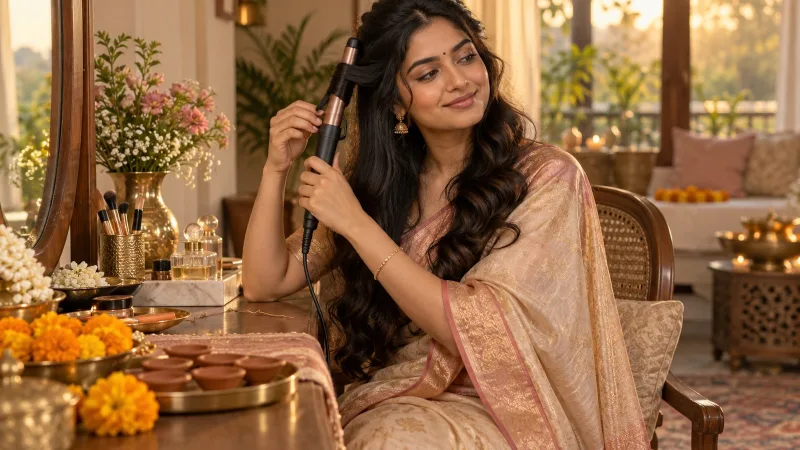
Divide dry, heat-protected hair into top and bottom layers. Work from the bottom up, taking sections about 2–3 cm wide. Curl each section away from your face, and alternate the direction now and then for a more natural look. Let every curl cool in your palm or pin it up as a loop. When the whole head is done and fully cooled, run your fingers through gently. Avoid a brush, or the waves turn into frizz. If you are new to rotating curlers, our guide to the best hair curler for Indian hair covers barrel size and anti-tangle tips.
2. Sleek straight hair
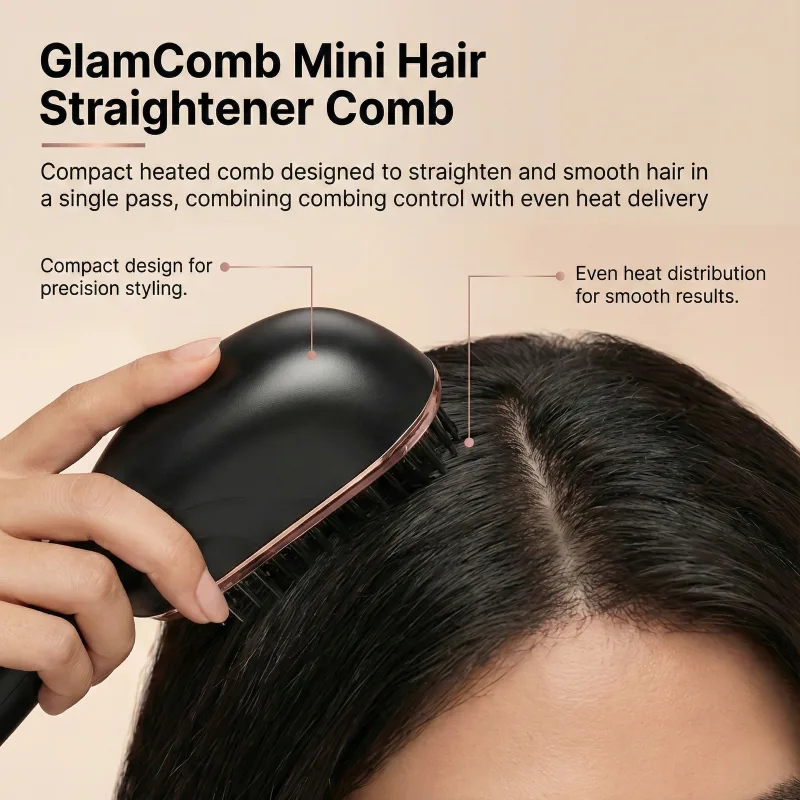
Start with a pea-sized amount of anti-frizz serum on the lengths, after your heat protectant has dried. Take thin 2–3 cm sections and glide a heated comb slowly from the roots to the ends, once or twice. One slow pass beats five quick ones. Finish with the smallest drop of serum on the ends and a sharp centre part. This look suits Indo-western outfits and is the quickest option if you are short on time.
3. Bouncy blow-dry
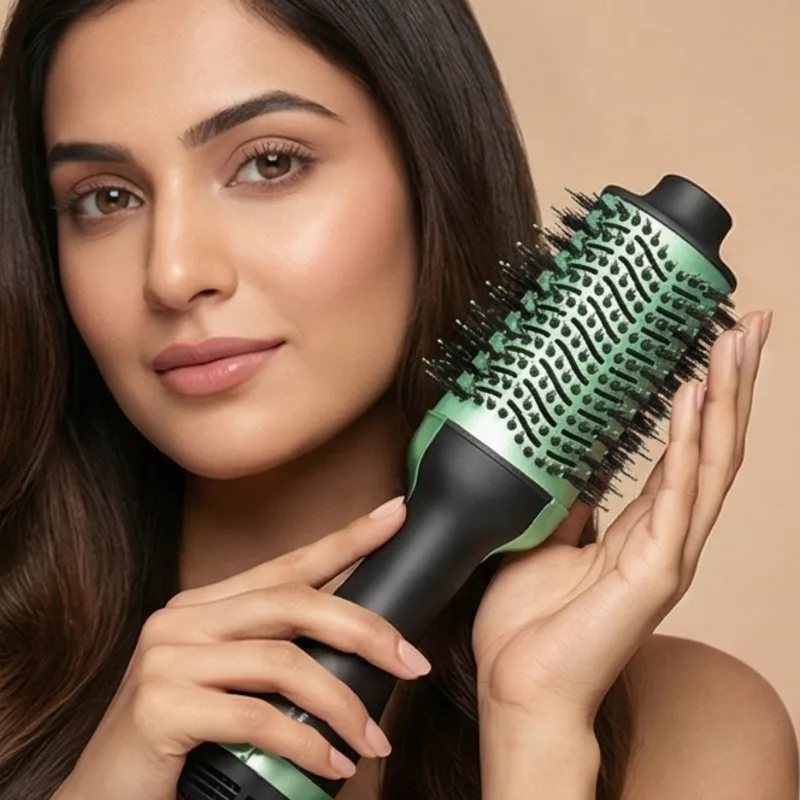
On hair that is about 80% towel- or air-dried (a hot air brush is designed for this, unlike a curler or comb), lift sections at the crown straight up from the scalp and roll the brush under towards the ends. Hold for a few seconds, then release. Do the front sections away from your face. This look adds volume to fine or flat hair and works well on bobs and layered cuts.
4. Half-up with curled ends
Curl only the lower half of your lengths, the last 10–15 cm. Then take the hair from temple to temple, twist it loosely and pin it at the back of your crown with two crossed bobby pins. This is the easiest style for adding a gajra or a jewelled clip, because the pinned section gives the flowers something firm to sit on.
5. Low bun with face-framing curls
Leave out two thin sections at the front, one on each side of your face. Brush the rest into a low ponytail at the nape, twist it and wrap it into a bun. Secure it with U-pins, pushing them in against the direction of the twist. Then curl the front sections loosely away from your face. This is the most humidity-proof look, and it stays put under a dupatta all evening.
How do you make a festive hairstyle last all evening?
Festive evenings in India are long. There is puja, then dinner, then dancing, sometimes in a crowded, warm room. A few habits make a real difference.
- Let curls set cold. Pinning each curl as a loop while it cools is the single best trick for curls that last.
- Spray from a distance. Hold a flexible hairspray an arm's length away and mist lightly. Heavy spray makes hair crunchy and sticky.
- Don't touch. Running your fingers through your hair again and again is what flattens waves by 9 pm.
- Carry a mini kit. Four bobby pins, a small comb and a tiny bottle of serum fit in any potli bag.
- Plan for humidity. In coastal or still-humid cities, take smaller sections and choose a half-up or bun over fully open waves.
- Keep away from flames. Loose, sprayed hair and dupattas near diyas or sparklers are a genuine risk. Tie hair back when you light diyas.
Can you use heat tools during the festive season without damaging your hair?
Styling a few times across the festive weeks is fine for most healthy hair if you are sensible about heat. Damage usually comes from very high heat, damp hair and going over the same section again and again.
| Hair type | Heat setting | Extra care |
|---|---|---|
| Fine, thin or colour-treated | Lowest to low | One slow pass per section; skip heat on back-to-back days |
| Normal, medium thickness | Low to medium | Heat protectant every time |
| Thick, coarse or very curly | Medium | Smaller sections rather than higher heat |
| Dry, breaking or chemically straightened | Lowest | Choose heatless styles or a bun most days |
After the festival, give your hair a few heat-free days, a gentle oil massage if you like, and a nourishing conditioner on the lengths.
Which heat tool suits which look at home?
You don't need a drawer full of tools. One well-chosen tool covers most festive looks. A few honest pointers:
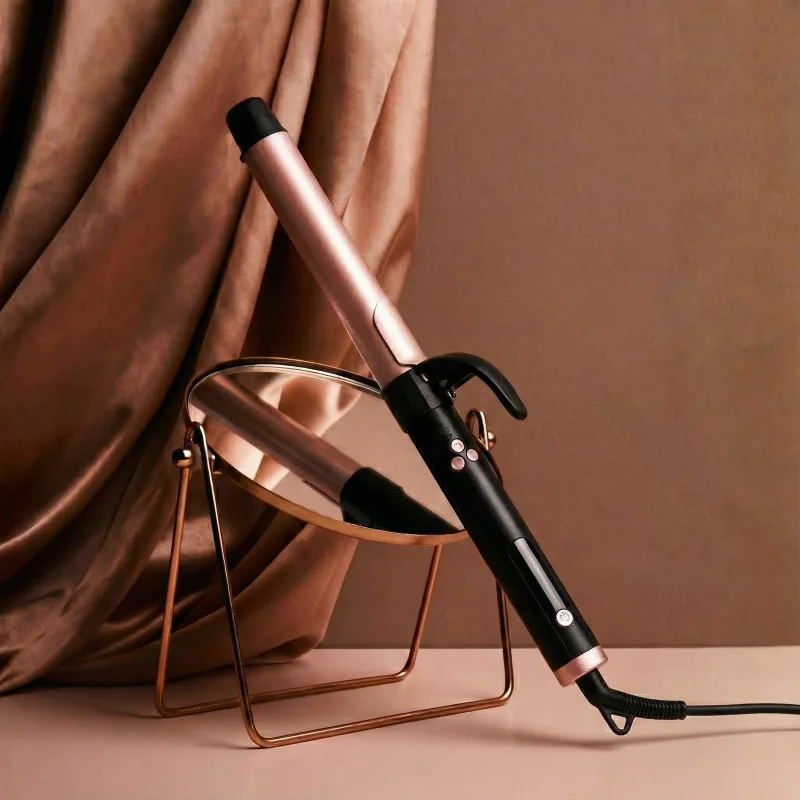
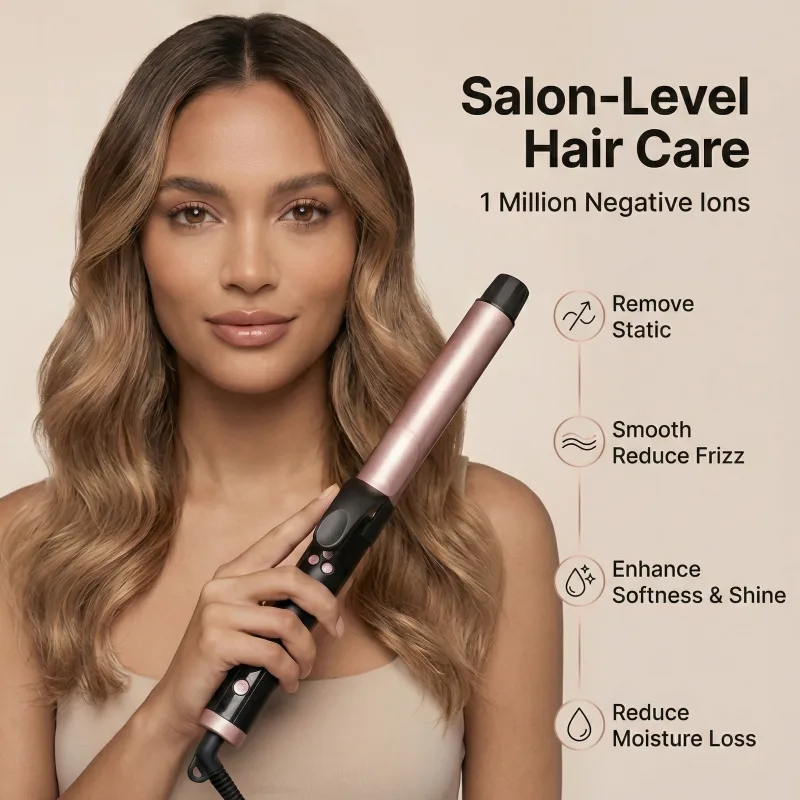
- For waves, half-ups and face-framing curls: an automatic rotating curler such as the Twirl rotating curler does the wrapping for you and spreads heat evenly. It is easier than a manual tong if you struggle to curl the back of your head. Use it on dry hair only.
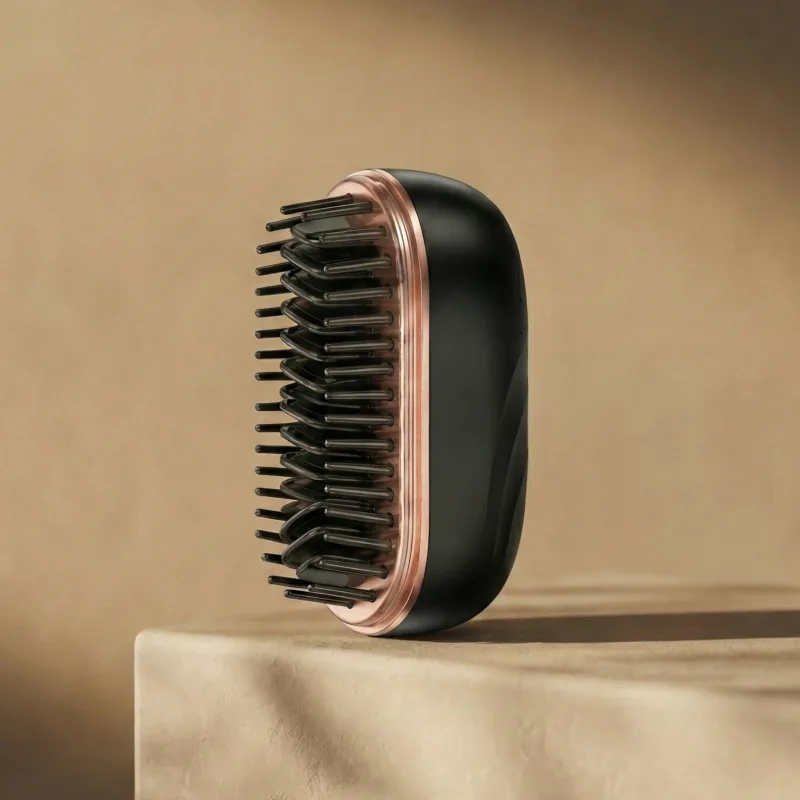
- For sleek, straight hair: a compact heated comb such as the GlamComb mini straightener comb warms up in about 30–60 seconds and has adjustable heat. It gives a softer, more natural straightness than a flat iron and is small enough to fit in a travel bag for family functions. Style completely dry hair in 2–3 cm sections.
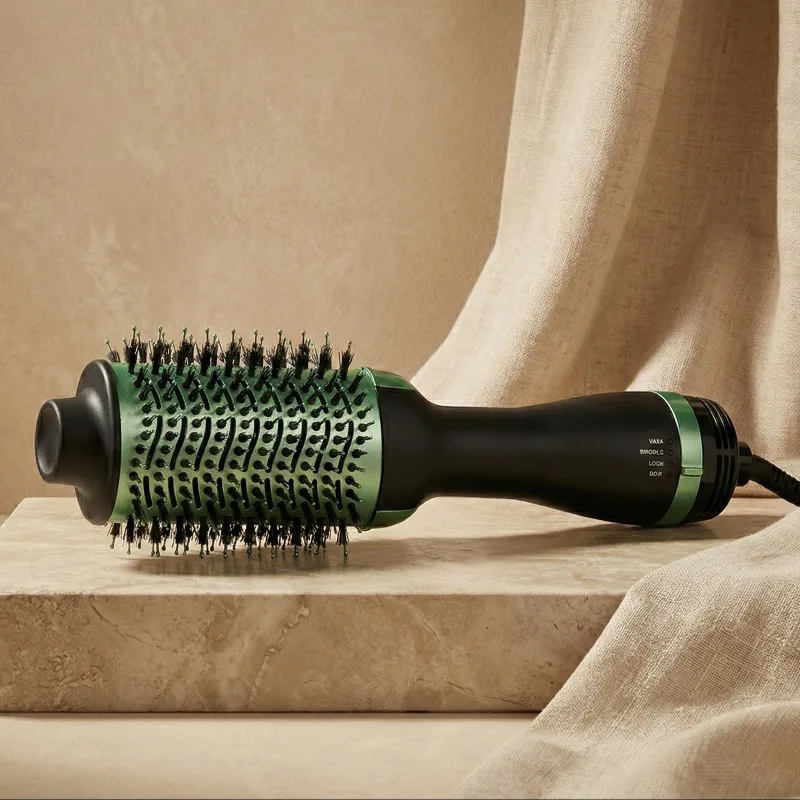
- For volume and a quick blow-dry finish: the StyleAir 3-in-1 hot air brush dries, smooths and adds volume in one step. It gives smooth, bouncy hair, not tight curls.
None of these tools can make a style hold if your hair is oily, damp or skipped the heat protectant, and very thick hair will simply take longer. You can browse all styling tools in the hair collection.
When should you skip heat styling altogether?
Give heat a miss if your hair is breaking off, feels gummy when wet, or you have just had a chemical treatment and your stylist told you to wait. Try a braid, a twisted bun or overnight heatless waves instead. Don't use heat tools on a scalp that is sore, peeling or has open patches. If you notice sudden hair fall, bald patches or a flaky, itchy scalp that won't settle, see a dermatologist, as styling won't fix these. Keep tools away from children, and unplug them as soon as you are done.
Planning your whole festive look? Pair your hair plan with our 3-week skin care plan before Diwali. If you can't decide which styling tool suits your hair, send a photo to our team on WhatsApp at +91 98116-65715 and they will help you choose.