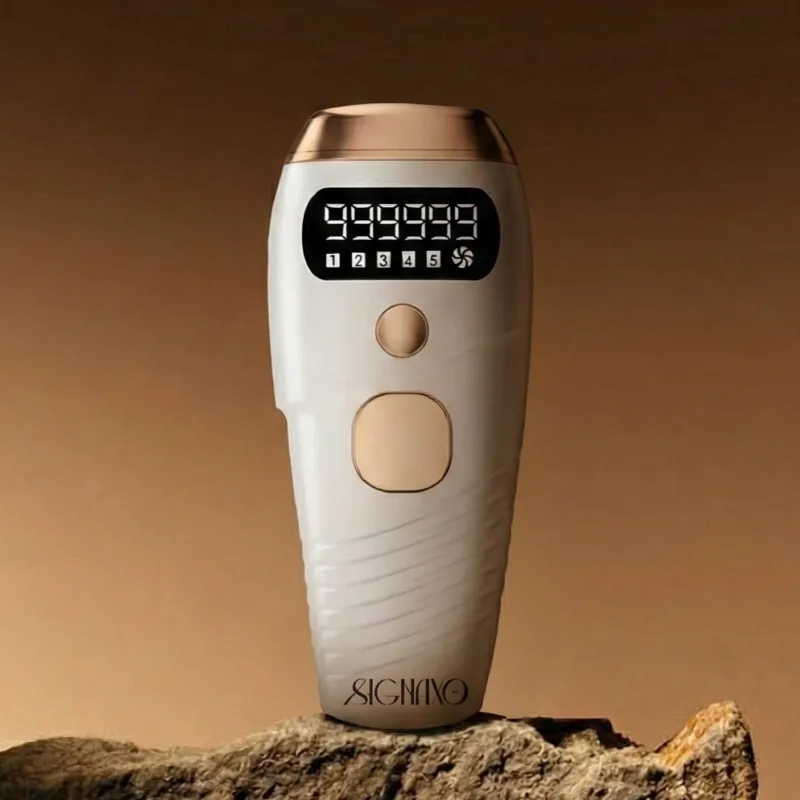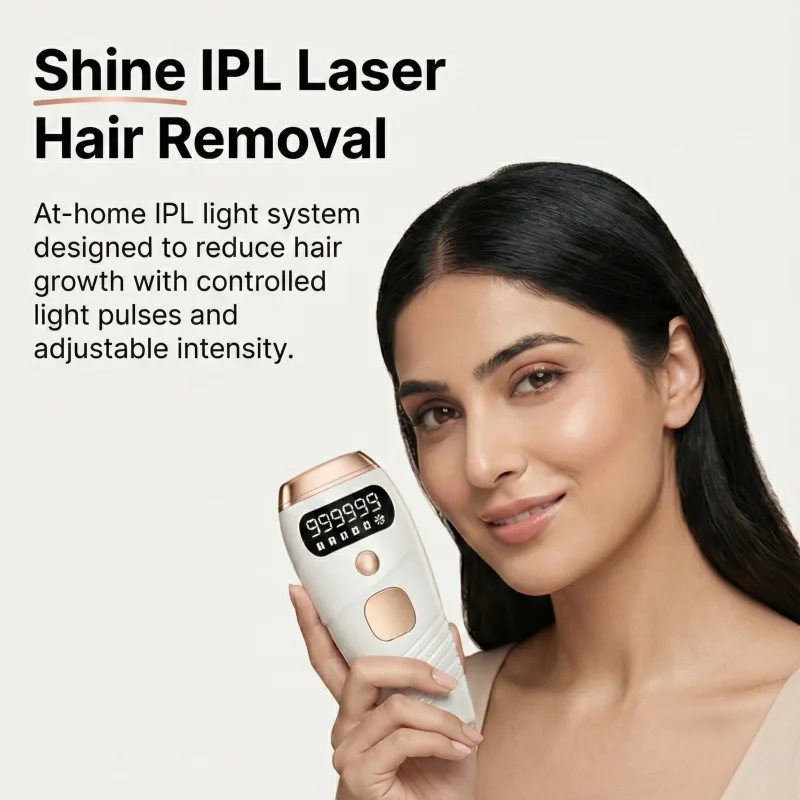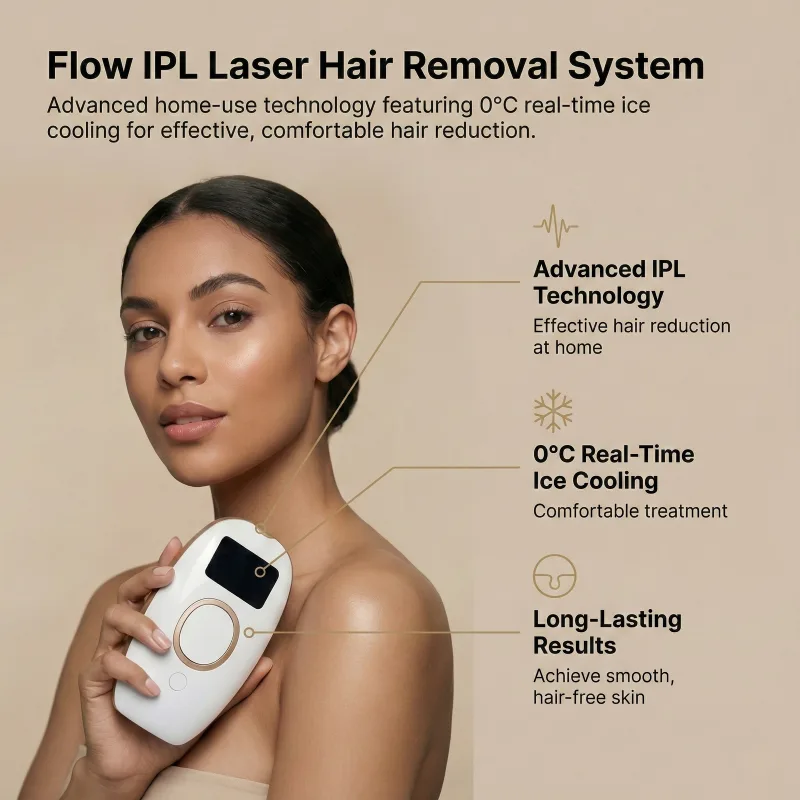
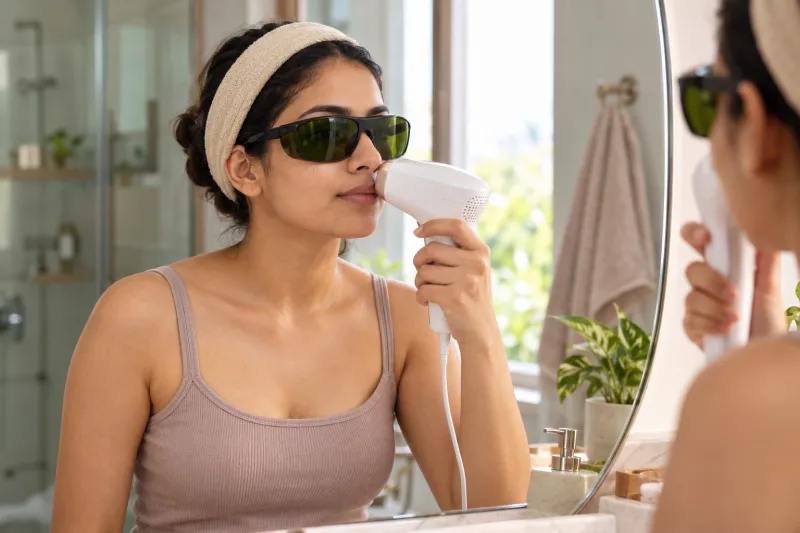
Short answer: yes, you can use at-home IPL on your upper lip, chin, jawline and lower cheeks if your skin tone and hair colour suit IPL. Stay below the cheekbones, never flash near your eyes or eyebrows, and start on the lowest level. Facial hair, especially hormonal hair, often takes longer to respond than leg hair. Results vary.
Can you use IPL on your face?
Most at-home IPL devices can be used on the lower face. The same rules apply as for the body: IPL needs dark hair on lighter skin. But the face needs a little more care, for three reasons:
- Facial skin sees the most sun. Even a daily commute can tan your face, and tanned skin shouldn't be treated.
- Facial hair is often finer or lighter than body hair, so it may respond more slowly.
- Dark patches are common on the face, such as melasma or pigmentation marks, and these shouldn't be flashed.
Check your suitability first with our IPL skin-tone checker. Then choose a device from our IPL collection and read its manual for any face-specific settings or attachments.
Face zones: where to flash, and where never to
Areas you can treat (if your skin and hair suit IPL):
- Upper lip: the skin above the lip line, not the lips themselves.
- Chin and under the chin.
- Jawline.
- Lower cheeks and sideburns, below the cheekbone line.
Never flash:
- Eyes, eyelids or the area around the eyes.
- Eyebrows. Keep threading or trimming for brows.
- The lips themselves, or inside the nose or ears.
- Dark patches, melasma, moles, freckle clusters or birthmarks.
- Any area with active breakouts, cuts or irritation.
How do you use IPL on the upper lip, chin and jawline?
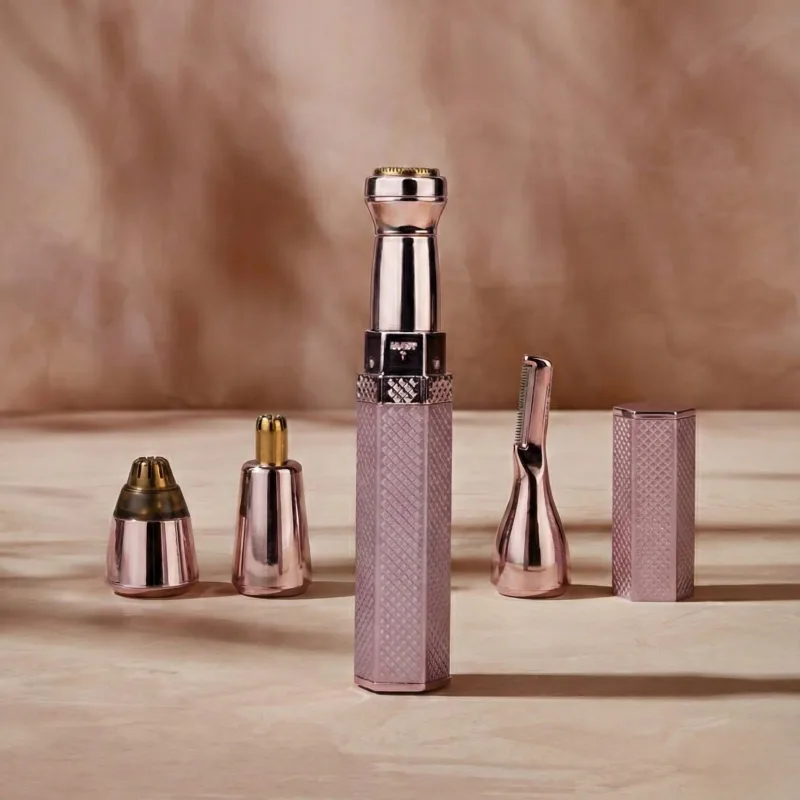
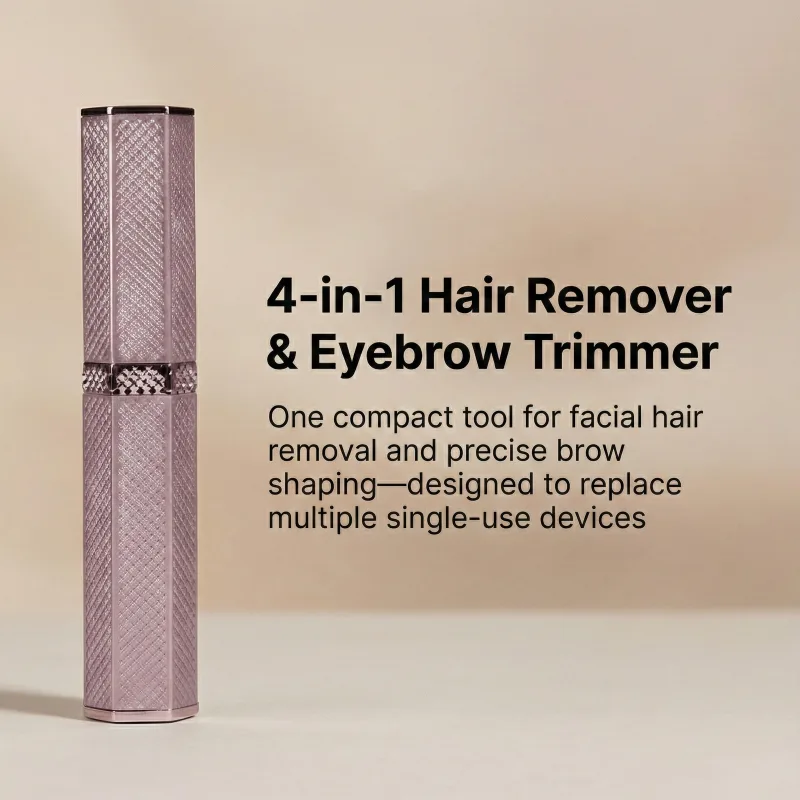
- Shave or trim close. A small face trimmer such as the Define 4-in-1 portable trimmer is handy for the upper lip and chin. Don't thread or wax.
- Cleanse. Remove all makeup, sunscreen and skincare. Skin should be completely dry.
- Patch-test on the jawline. Flash once on the lowest level and wait 24 hours (24–48 hours for Type V skin).
- Stay on a low level to begin with. Facial skin is thinner. Increase only if the patch test and first session felt comfortable.
- Press flat and flash once per spot. For the upper lip, keep your mouth closed and gently stretch the skin. Some people find it easier to press their tongue behind the upper lip to make the surface flatter.
- Keep your eyes closed or look away from the flash, and never angle the device towards your eyes.
What is the session plan for facial hair?
Follow the standard plan: one session every 2 weeks for 12 weeks, then touch up about once a month. Many people notice finer, slower regrowth by session 4–6, but the chin often needs longer. Our full 12-week IPL plan has a session-by-session table.
Hormonal hair and PCOS: what should you expect?
Facial hair on the chin, jawline and upper lip is often driven by hormones. That affects how IPL performs:
- Results are usually slower. It may take longer than 12 weeks to see a clear difference.
- Touch-ups are ongoing. As long as the hormonal trigger is there, new hair can keep appearing.
- IPL doesn't address the cause. It reduces hair; it doesn't treat PCOS or any hormonal condition.
If you have PCOS or notice sudden new facial hair, please speak to your doctor about the underlying cause. Some people with rapid regrowth choose a doctor-led clinic laser plan and use at-home IPL for maintenance. Our guide to at-home IPL vs clinic laser can help you decide.
Why might upper-lip hair respond slowly?
Upper-lip hair is often finer and lighter than hair on the chin or body, so it has less pigment to absorb the light. It can also be partly hormonal. Both mean slower progress. If after 12 weeks you see little change on very fine, light hair, IPL may simply not be the right tool for that spot, and a face trimmer is the easier option. That's why we always set slower expectations for the face than for legs or underarms.
How should you care for your face after IPL?
- Sunscreen every day, and reapply if you're outdoors. This matters more on the face than anywhere else.
- Pause actives for 24–48 hours: retinol, AHAs, BHAs and exfoliating toners can sting treated skin.
- Skip heavy makeup for the rest of the day if the skin still feels warm.
- No steam, facials, scrubs or hot water on the face for 24 hours.
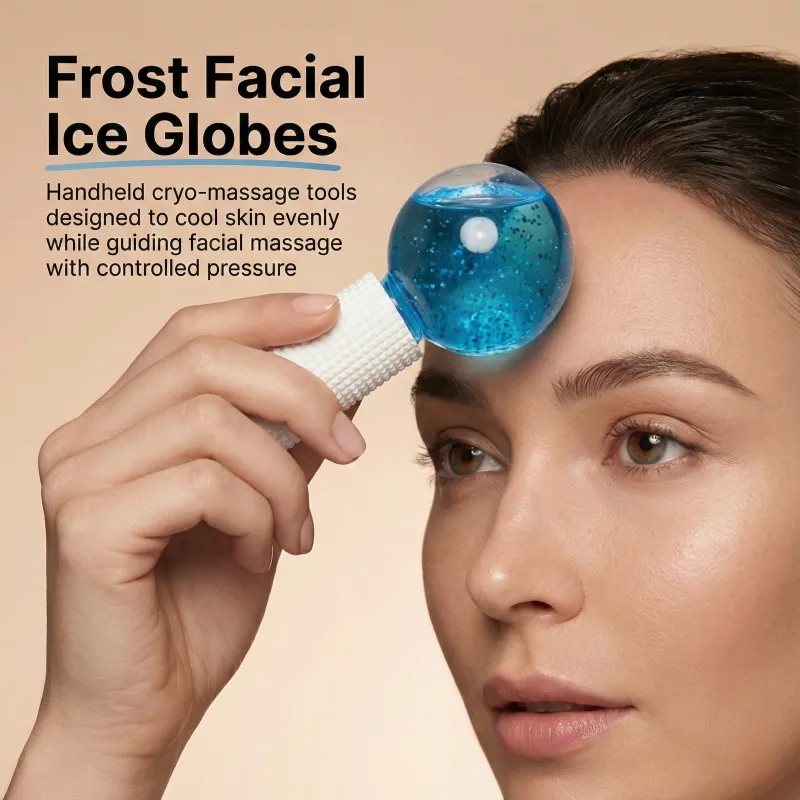
- Cool gently with chilled Frost ice globes if you feel warmth.
- No threading or waxing on treated areas between sessions.
What is normal after a facial IPL session, and what isn't?
Usually normal:
- Mild warmth or slight pinkness that settles within a few hours.
- Skin that feels a little like mild sunburn for the rest of the day.
- Treated hairs that shed gradually over the following days or weeks, rather than falling out straight away.
Not normal, so stop and see a doctor:
- Blisters, burns or crusting.
- New dark or light patches.
- Swelling or redness that lasts beyond a day.
If anything on this second list happens, don't treat that area again until a doctor has checked it.
How does facial IPL fit into a typical Indian routine?
A few everyday habits can quietly work against facial IPL. Worth checking before you start:
- Facial bleach: many people bleach upper-lip or side-face hair. Bleached hair loses the pigment IPL needs, and bleach can irritate treated skin, so skip it during your IPL plan.
- Parlour visits: if you go for eyebrow threading, ask for the upper lip and chin to be left alone.
- Weddings and festivals: plan sessions so the last one is at least a few days before a big event, in case your skin is a little pink.
- The daily commute: even short trips in the sun add up on the face. Sunscreen every morning keeps skin untanned and treatable.
Trimmer vs threading vs IPL for facial hair
Most people use more than one of these. Here's how they compare:
| Trimmer | Threading | At-home IPL | |
|---|---|---|---|
| How it works | Cuts hair at the surface | Pulls hair out from the root | Light weakens the follicle over sessions |
| Smoothness lasts | A few days | A few weeks | Long-lasting reduction with monthly touch-ups |
| How it feels | Gentle | A sharp sting | A warm snap |
| Works on light hair? | Yes | Yes | No |
| Good for eyebrows? | Yes, for tidying | Yes | No, never near eyes |
| Can you combine it with IPL? | Yes, use it as prep | No, not on treated areas | — |
Who should not use IPL on the face?
- Best suited: skin Types I–IV (very fair to wheatish or medium brown) with black, dark brown or brown hair.
- Type V (deep brown): patch-test on the lowest level and wait 24–48 hours. A dermatologist-supervised laser is often the safer choice for deeper skin.
- Not for: Type VI (very deep brown to black) skin, or blonde, red, grey or white hair.
- Never flash: tattoos, dark moles or birthmarks, tanned or sunburnt skin, broken or infected skin, or anywhere near the eyes.
- Ask your doctor first if you are pregnant or breastfeeding, take photosensitising medication (for example isotretinoin or some antibiotics), have epilepsy or light sensitivity, or have eczema or psoriasis in the area.
Also skip facial IPL if you have melasma or dark pigmentation in the area, have recently had a peel or clinic laser treatment, or are using prescription retinoids, unless your dermatologist says it's fine.
Results vary from person to person. Not sure? WhatsApp us a photo. We'll tell you honestly.