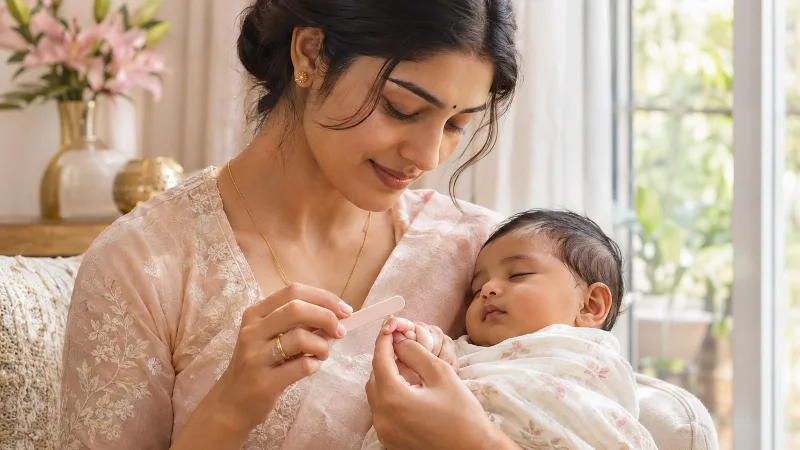
Short answer: Trim or file your baby's nails when they are asleep or calm, ideally after a bath once the hands are dry, in bright daylight or a good lamp. Hold one finger at a time, press the fingertip pad gently away from the nail and follow the natural curve on fingers. Cut toenails straight across. In the first few weeks, a soft baby file is usually gentler than clippers, because newborn nails are thin and still closely attached to the skin underneath.
Key takeaways
- The easiest time to trim baby nails is during a deep nap or right after a bath, when nails are softer and the baby is relaxed.
- For newborns, filing is often safer than clipping, because their nails are paper-thin and the skin sits very close under the edge.
- Baby fingernails grow fast and usually need attention once or twice a week. Toenails grow more slowly and need it about every 2–4 weeks.
- Biting a baby's nails short is not a good idea. It can tear the nail and pass germs from your mouth into tiny cuts.
- If you nick the skin, press gently with clean cotton or gauze until it stops. Skip a plaster, which a baby can pull off and put in their mouth.
Why do baby nails need trimming so often?
Baby fingernails grow surprisingly fast, and they are thin, sharp and flexible. Babies wave their hands near their faces all day, so long edges easily leave little scratches on cheeks, eyelids and around the nose. Many Indian families use cotton mittens for the first weeks. That is fine for short stretches, but babies also need their hands free to touch, grasp and explore. Keeping nails short and smooth is the better long-term fix.
Toenails grow much more slowly. They are also very soft and can look as if they are growing into the skin. In most babies this is normal and settles as the nails firm up.
Should you file or clip a newborn's nails?
In the first weeks, the white edge of a newborn's nail is tiny and the skin underneath sits right against it. That makes it very easy to catch skin with a clipper. Most parents find that a soft, fine-grit baby file or emery board is the calmest option at this age. It smooths the sharp edge without any risk of a snip.
As your baby grows and the nails become firmer, small rounded-tip baby scissors, baby nail clippers or an electric clipper-and-file can make the job quicker. Pick what you feel steadiest with. A shaky hand with scissors is riskier than a slow file.
| Age | Gentlest option | How often (fingers) | How often (toes) |
|---|---|---|---|
| Newborn (first weeks) | Soft baby file or emery board | 1–2 times a week | Only if sharp or long |
| 1–6 months | File, or rounded baby scissors / clippers | About once or twice a week | Every 2–4 weeks |
| 6–12 months | Baby clippers or electric clipper-file, then file edges | About once a week | Every 2–4 weeks |
| Toddlers | Clippers or electric clipper-file, with distraction | About once a week | Every 2–4 weeks |
These are rough guides. Check your baby's nails every few days and trim whenever an edge looks long or feels sharp.
What is the best time of day to trim baby nails?
The best time is whenever your baby is still and relaxed. For most families, that means one of three moments:
- During a deep nap. Wait until your baby's arms go floppy and their breathing slows. Night-time sleep works too if you have a good lamp.
- After a bath. Warm water softens nails. Pat the hands and feet completely dry first so nothing slips.
- During a feed. Some babies stay calm enough while feeding for a partner to file one hand.
If your family does a daily oil massage, trim before the oil or after the bath has washed it off. Oily little fingers are very hard to hold steady. Some households also prefer not to cut nails after sunset. A daytime nap near a bright window suits that well.
How to trim baby nails step by step
- Get everything ready first. Keep a clean baby file, rounded scissors or clippers, a soft cloth and some clean cotton or gauze within reach. Wipe the tool with soap and water, or an alcohol swab, and let it dry.
- Find good light. Daylight near a window or a bright lamp matters more than anything else. If you can't see the edge clearly, wait.
- Get comfortable. Sit with your baby in your lap facing away from you, or lie them down after they fall asleep. Brace your own elbow on your knee or a table.
- Hold one finger at a time. Hold the hand securely and isolate one finger between your thumb and forefinger.
- Press the pad away. Gently push the fingertip pad down and away from the nail. This creates a small gap between the skin and the nail edge.
- Trim or file the edge. On fingers, follow the natural curve of the fingertip. On toes, cut straight across and don't dig into the corners. Take off only the white tip, never down to the pink.
- Smooth any sharp points. Run a file lightly over the edge so nothing catches on clothes or skin.
- Stop when your baby stops cooperating. One hand today and one tomorrow is perfectly fine. A wriggling baby is when nicks happen.
How do you trim nails of a toddler who won't sit still?
Toddlers want control, so make nail time short and predictable. Here are a few things that help:
- Name the steps. Count fingers out loud or sing a short song, one line per finger.
- Use a distraction. A favourite cartoon or toy in the other hand can buy you a minute.
- Let them watch first. Trim a teddy's "nails" or your own so they see it doesn't hurt.
- Do a few nails at a time. Spread the job over the day if needed.
- Ask for help. One adult can hold and cuddle while the other trims, especially for toes.
Never hold a toddler down hard to finish the job. It makes the next session harder, and a sudden jerk is when skin gets caught.
What should you do if you accidentally cut your baby's finger?
It happens to almost every parent, so don't panic. Usually it is a tiny nick that bleeds briefly.
- Press clean cotton or sterile gauze gently on the spot for a minute or two until the bleeding stops.
- Rinse with clean running water and pat dry.
- Leave it uncovered. Avoid plasters on small fingers, because babies pull them off and can put them in their mouth.
- Keep an eye on it for the next few days.
See your paediatrician if bleeding doesn't stop with gentle pressure, if the cut looks deep, or if you notice infection signs. These include spreading redness, swelling, warmth, pus or a sore, puffy fold of skin beside the nail. For any fever in a young baby, especially under three months, call your doctor promptly.
Is it okay to bite or peel a baby's nails?
It's a common habit, especially with newborns, but it's best avoided. Biting gives you little control over length. It can tear the nail below the tip and leave a rough edge, and it carries germs from your mouth to the fingertip. Peeling off a loose bit of nail can rip it into the skin. A soft file does the same job more neatly.
Also avoid using adult nail clippers on a newborn. The blades are too large for such tiny nails, and it's harder to see what you're cutting.
Using an electric nail clipper for babies and toddlers
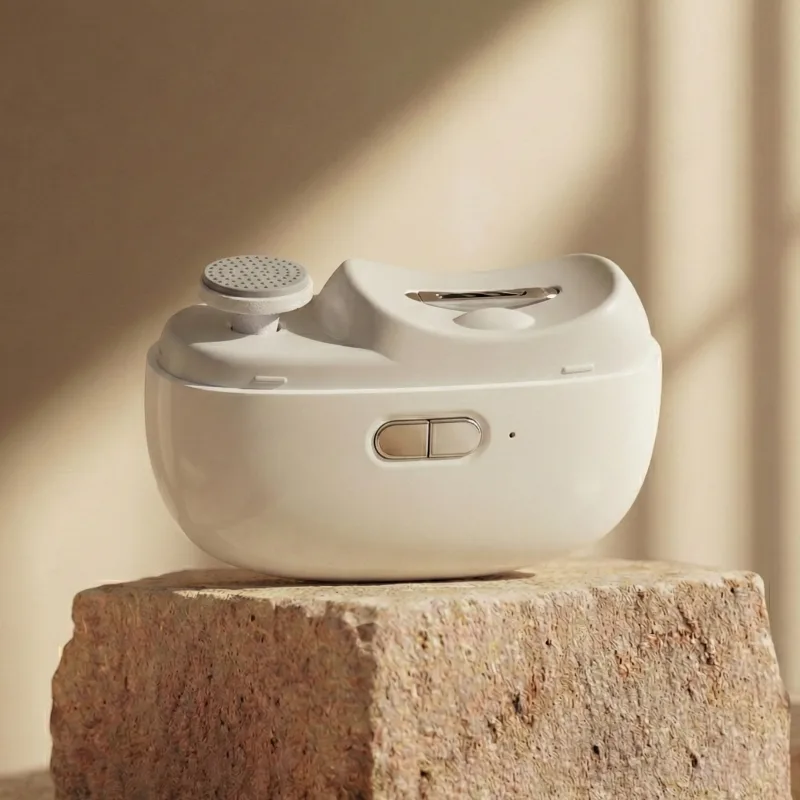
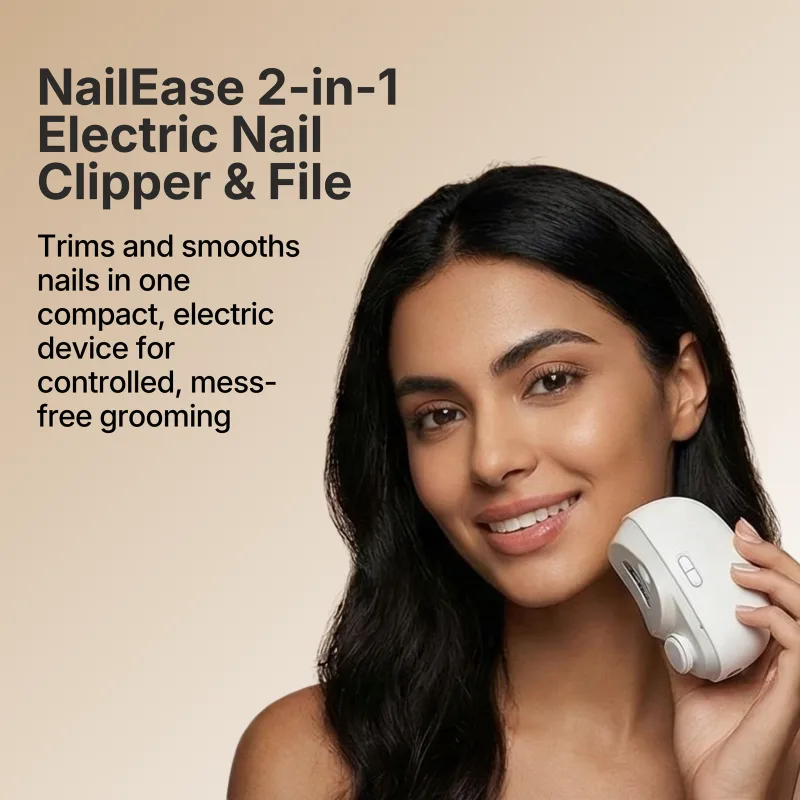
Once nails are a little firmer, some parents find an electric clipper and file less stressful than scissors. A device such as the NailEase 2-in-1 electric nail clipper & file trims quietly and has a built-in file for smoothing. That helps with fidgety toddlers who flinch at the click of a clipper. It is also handy in homes where the same tool helps grandparents with tough nails. Our guide on cutting nails of elderly parents safely covers that side.
Be realistic about its limits:
- For a newborn's very soft, tiny nails, a hand-held soft file is still the gentlest choice.
- Follow the age and usage guidance in the product instructions.
- Keep your baby's fingertip pressed away from the nail, just as you would with scissors.
- Clean the tool after every use.
- Keep it as a family-only tool, and store it out of a toddler's reach.
You'll find it with other everyday grooming tools in Body Care Essentials. If you're unsure whether it suits your child's age, the Signaxo team on WhatsApp (+91 98116-65715) can help you decide.
When should you see a doctor about baby nails?
Most nail worries in babies are harmless. Check with your paediatrician if you notice any of these:
- Redness, swelling or pus around a nail, which may be an infection.
- A toenail edge that looks red and sore, not just soft.
- Nails that change colour, look unusually thick, or keep peeling for no clear reason.
- Your baby seems in pain when the finger or toe is touched.
Nail trimming gets easier with every week. Your baby gets used to it, and your hands get steadier. Start with a file, pick calm moments, and don't worry about doing all ten fingers in one go. Grandparents at home need nail help too, so our gentle guide for elderly parents is worth a read next.