
Short answer: Most of the tiny dots on your nose are probably sebaceous filaments, not blackheads. Sebaceous filaments are flat, grey or beige and evenly spaced. They are a normal part of every pore and fill back up within a few weeks. Blackheads are fewer, darker (often truly black), slightly raised and come out as a firm plug. You can't get rid of filaments for good, only make them less visible. Blackheads can be cleared, but squeezing either one usually leaves you with redness, marks and bigger-looking pores.
Key takeaways
- Sebaceous filaments are normal structures that guide oil to the skin's surface. Everyone has them, especially on the nose, chin and inner cheeks.
- Filaments look like even, flat, grey-beige dots. Blackheads look like scattered, darker, raised plugs.
- Squeezing can leave dark marks (post-inflammatory hyperpigmentation) on Indian skin tones, and these can take months to fade.
- Salicylic acid 2–3 times a week, gentle twice-daily cleansing and daily sunscreen help both look less noticeable over 4–8 weeks.
- Pore vacuums and strips only give a temporary result on filaments. Use them gently, at most once or twice a week.
What are sebaceous filaments?
Every pore on your face holds a hair follicle and an oil (sebum) gland. A sebaceous filament is a thin, thread-like collection of sebum and skin cells that lines the pore. It helps oil travel up to the surface. It isn't dirt, it isn't a clog and it isn't a sign of poor hygiene.
You notice them most on the nose, chin and the cheeks next to the nose, because that is where oil glands are largest. Oily skin and humid weather make them look more obvious. So does the monsoon in Mumbai, Chennai or Kolkata, when sweat and oil sit on the skin all day. If you press them out, they simply refill, usually within a few weeks.
What is a blackhead, and how is it different?
A blackhead (an open comedone) forms when oil and dead skin cells build up and actually block a pore. The top of the plug is open to air, and the oil darkens as it oxidises. That is why it turns black, not because of dirt. Blackheads tend to be larger, darker and fewer than filaments, and they can sometimes become inflamed pimples.
| Feature | Sebaceous filaments | Blackheads |
|---|---|---|
| Colour | Grey, beige or light brown | Dark brown to black |
| Pattern | Evenly spread, many dots in a neat grid | Scattered, fewer, uneven |
| Texture | Flat; skin feels smooth | Slightly raised; you may feel a bump |
| If pressed (please don't) | Soft, pale, thread-like strand | Firm, darker plug |
| Normal? | Yes, part of healthy pores | A type of clogged pore (mild acne) |
| Comes back? | Always refills within weeks | Can be cleared; new ones may form |
| Realistic goal | Make them less visible | Clear them and prevent new ones |
How can you tell which one you have?
Do this check in natural daylight, on clean, dry skin with no makeup.
- Look at the colour. Grey or beige dots point to filaments. Dots that are clearly black point to blackheads.
- Look at the pattern. If the dots cover your nose evenly, like a fine grid, they are almost certainly filaments. A handful of darker dots here and there are more likely blackheads.
- Run a clean fingertip over the area. Smooth skin suggests filaments. Small bumps suggest blackheads.
- Check other areas. Blackheads often turn up on the chin, forehead, behind the ears or on the back. Filaments mostly stay on the nose and centre of the face.
- Notice how fast they return. Dots that come back in the same spots within two or three weeks of any cleanup are filaments.
Many people have both: a nose full of filaments with a few true blackheads mixed in. That is completely normal.
Why does squeezing make things worse?
Pressing with fingers or a metal tool pushes some of the contents deeper and stretches the pore wall. It can also break tiny blood vessels and trigger inflammation. On light-to-deep brown skin, that inflammation often leaves a dark mark (post-inflammatory hyperpigmentation). This mark can last far longer than the blackhead ever would. Repeated squeezing can also make pores look larger and, in some cases, lead to infection or small scars.
With filaments, squeezing is especially pointless, because they refill regardless. Before a big event, such as a wedding, Diwali or a photoshoot, avoid any extractions in the final week. Our 3-week pre-Diwali skin plan explains why you should keep things calm before an occasion.
What routine works for sebaceous filaments?
The aim is to keep the oil inside the pores loose and the surface clean, so the dots look softer and lighter.
- Cleanse gently twice a day. Use a gel or foaming cleanser for oily skin and lukewarm water. Harsh scrubbing makes skin produce more oil, not less. If you have hard water and your skin feels tight afterwards, use a lighter hand and moisturise straight away.
- Add salicylic acid 2–3 times a week. This oil-soluble acid (BHA) gets into pores and helps loosen what is inside. Start slowly to avoid dryness.
- Try niacinamide. Many people find it helps oily skin look more balanced and pores look less obvious.
- Use a clay mask once a week on the nose and chin. It soaks up surface oil for a fresher look.
- Don't skip moisturiser. A light, non-comedogenic gel is enough in humid weather. Skin that is stripped dry often looks oilier by afternoon. Our guide on hydration versus moisturising explains why.
- Wear sunscreen daily. Sun damage weakens the skin around pores, which makes them look larger over time.
Give it 4–8 weeks. Filaments will still be there, because they're meant to be, but they should look lighter and flatter.
How do you clear blackheads without damaging skin?
Blackheads respond to the same routine, plus a little more patience. Keep salicylic acid as your base. If blackheads are stubborn or come with regular pimples, a retinoid (such as adapalene) can help keep pores from clogging. Ask a dermatologist before starting one, especially if your skin is sensitive or you are pregnant.
A few habits help more than any extraction:
- Remove makeup and sunscreen fully every night, especially after long, sweaty days.
- Choose non-comedogenic products and avoid heavy oils on the T-zone.
- Change pillowcases often and keep your phone screen clean.
- If you oil your hair, keep it off your forehead and wash it off properly. Hair oil and heavy styling products can add to clogged pores on the forehead.
Can a blackhead remover vacuum help at home?
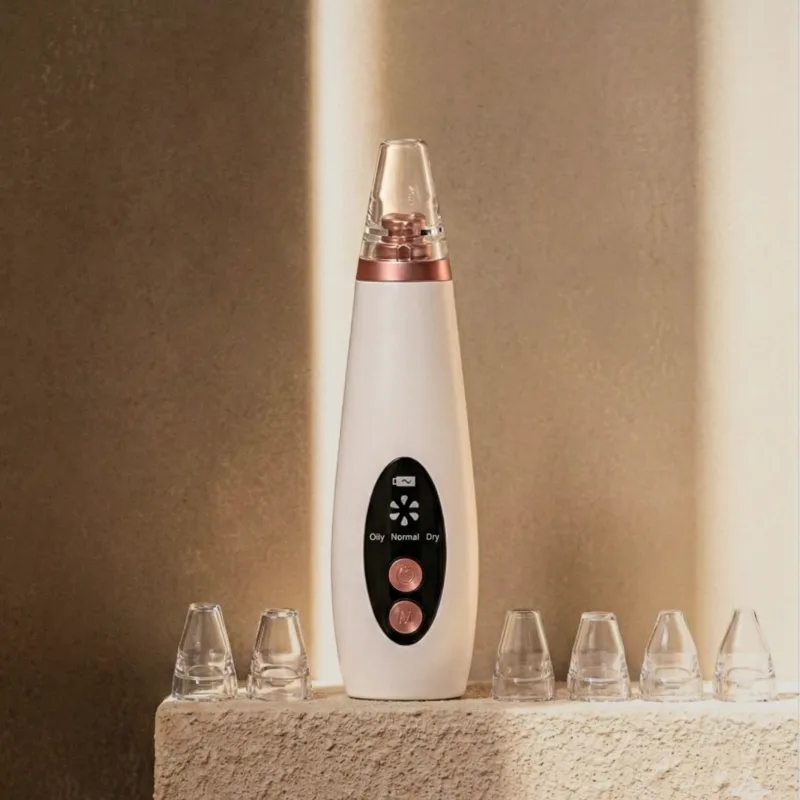
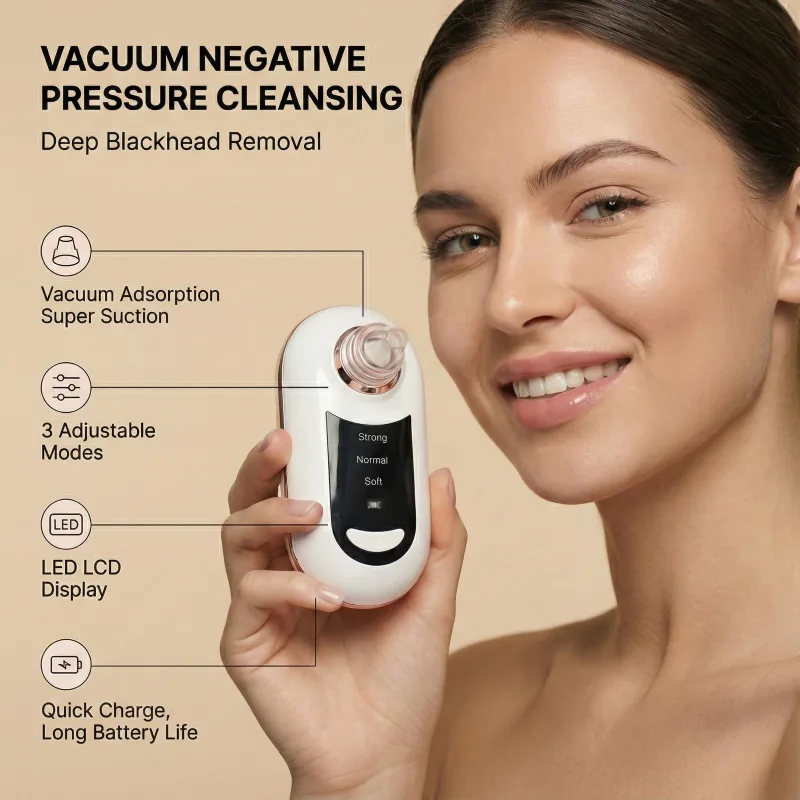
A pore vacuum can lift loosened oil and some blackheads from the surface, especially after skin has been softened. Be realistic about what it does. On sebaceous filaments, the effect is temporary, and the dots will refill. On deep or inflamed blackheads, it won't do much, and strong suction can cause redness or broken capillaries.
If you want to try one, an adjustable suction device such as the Clear blackhead remover lets you start very low. A compact option like the ClearPore mini suits spot use on the nose and chin. Use it like this:
- Soften pores first with a warm shower or a warm towel for 3–5 minutes.
- Start on the lowest suction level. Use only the lowest level on thin cheek skin.
- Keep the device moving. Never hold it on one spot for more than 1–2 seconds.
- Glide over the nose and chin once or twice. Stop there; more passes don't help.
- Rinse with cool water and apply a light moisturiser.
- Use it once or twice a week at most.
Mild redness that fades within an hour is normal. Cool ice globes rolled gently outwards can help calm the area. Keep them moving and see our notes on safe icing. Skip suction completely if you have inflamed acne, rosacea or broken capillaries, retinoid-irritated skin or a fresh peel. If you see bruising or redness that lasts, stop.
When should you see a dermatologist?
Book an appointment if:
- Blackheads are spreading or turning into painful pimples or lumps.
- Dark marks from past squeezing aren't fading after a few months.
- You get many tiny, skin-coloured bumps that don't behave like blackheads.
- Your skin gets red, flushed or burns with most products.
A dermatologist can confirm what you're seeing, suggest prescription options and carry out professional extraction safely if needed.
Not sure where to start? Begin with salicylic acid and a steady, gentle routine for a month before adding any tool. If you would like help choosing gentle pore-care or soothing tools for your skin, browse our facial essentials or message the Signaxo team on WhatsApp at +91 98116-65715.