
Short answer: Icing your face constricts blood vessels for a short time, so skin can look less puffy, less red and a little firmer for a while afterwards. The effect is temporary. It won't permanently shrink pores, clear acne or slow ageing. Used gently for a few minutes with ice globes or ice wrapped in cloth, it is a pleasant refresh for most people. Pressing a bare ice cube on one spot can cause redness, stinging or even a mild cold burn.
Key takeaways
- Facial icing gives short-term results: less puffiness, calmer redness and a fresher look that usually lasts from a few minutes to a couple of hours.
- Icing does not permanently shrink pores, treat acne or reduce wrinkles. Pores only look smaller while skin is cold.
- Keep a facial icing session to about 5 minutes and keep the cold surface moving. Never hold ice on one spot.
- Bare ice cubes can stick to skin and cause a cold burn. Wrap ice in a thin cotton cloth, or use chilled ice globes.
- Skip icing if you have rosacea, broken capillaries, cold-triggered hives, Raynaud's, very dry or eczema-prone skin, or broken or freshly peeled skin.
What does rubbing ice on your face actually do?
Cold makes the small blood vessels near the surface of your skin narrow for a while. That one change explains most of what people notice after icing:
- Less puffiness. Narrower vessels and gentle rolling towards the ears and neck help fluid that has pooled under the eyes and along the cheeks move on.
- Calmer-looking redness. Skin that is flushed from heat, a workout, waxing or extractions often looks more even after a minute or two of cold.
- A tighter, fresher feel. Cold skin feels firmer and pores look a little less open. This lasts only while the skin stays cool.
- A soothing feeling. On a sticky, humid Mumbai or Chennai afternoon, or after hours over a hot stove, cold simply feels good.
Once your skin warms back up, blood flow returns to normal. Treat icing as a quick refresh. It won't change your skin over time.
Ice facial benefits: what's real and what's hype?
Social media makes many claims about skin icing. Here is an honest sorting.
| Claim | Honest answer |
|---|---|
| Reduces morning puffiness | Yes, temporarily. This is the most reliable benefit. |
| Calms redness after waxing, extractions or IPL | Often helps skin feel and look calmer for a while. |
| Makes makeup sit better | Can help, especially in humid weather. Let skin dry fully before primer. |
| Permanently shrinks pores | No. Pores look smaller only while skin is cold. |
| Cures or clears acne | No. Cold can make a swollen spot feel less sore, but it doesn't treat acne. |
| Removes dark spots or tan | No. Pigmentation needs daily SPF and suitable actives, not cold. |
| Prevents wrinkles | No good reason to believe so. |
If puffiness is your main reason for icing, our guide on reducing morning face puffiness covers the causes, from salty dinners to short sleep, and other quick fixes.
What are the side effects of icing your face?
Most problems come from using ice that is too cold, for too long, on one spot. Watch out for these:
- Cold burn (ice burn). A bare cube held still can stick to the skin. Signs include white or greyish patches, numbness, stinging or a burning feeling that lingers after you stop.
- Rebound redness or flushing. Some people go bright red once the skin rewarms. This is more common with rosacea or visible broken capillaries.
- Dryness and tightness. Repeated cold and water can leave dry skin feeling tight, especially in a North Indian winter.
- Irritation on sensitised skin. Skin that is already stinging from retinoids, exfoliating acids or a peel can react badly to extreme cold.
- Hives in cold-sensitive people. A small number of people get itchy welts from cold. If this happens, stop and speak to a doctor.
If you see blistering, skin that stays white or numb, or redness that doesn't fade within an hour or so, stop icing. Check with a dermatologist before trying again.
Who should avoid icing their face?
Skip facial icing, or ask a dermatologist first, if any of these apply to you:
- Rosacea, frequent flushing or broken capillaries on the cheeks and nose
- Cold urticaria (hives triggered by cold) or Raynaud's phenomenon
- Very dry, eczema-prone or barrier-damaged skin that stings easily
- Open cuts, active cold sores, broken skin or freshly peeled skin
- Skin that is currently irritated from retinoids, isotretinoin or strong acids
- Reduced feeling in the face, since you may not notice when it's too cold
On inflamed acne, gentle cold over a cloth can make a sore spot feel calmer. Don't rub hard over active breakouts, and don't expect icing to clear them. Persistent, painful or cystic acne is worth showing to a dermatologist.
How long and how often should you ice your face?
Keep it short and gentle:
- Session length: about 5 minutes for the whole face, roughly 30–60 seconds per area.
- Bare or wrapped ice: no more than a few seconds on any one spot before moving on.
- How often: once a day is fine for most people with comfortable skin. Many find a few mornings a week, or only before events, is plenty.
- When to skip: any day your skin feels tight, stingy or irritated.
More cold isn't better. A longer or colder session won't give a bigger or longer-lasting result. It only raises the chance of irritation.
Ice cube, ice globes or cold water: which is best?
| Method | How cold | Good for | Watch out for |
|---|---|---|---|
| Bare ice cube | Very cold, gets wet and drippy | Rarely the best choice | Sticking, cold burns, hard to control |
| Ice wrapped in a thin cotton cloth | Cold but buffered | A cheap, quick depuff | Still keep moving; cloth gets soggy |
| Chilled ice globes | Cool, steady, mess-free | Daily depuffing, calming redness, before makeup | Rest a minute after the freezer; keep them moving |
| Cold water splash or chilled compress | Mildly cool | Sensitive skin, a gentle wake-up | Effect is milder and brief |
If you have hard water at home and your skin already feels tight, a chilled tool used over a light serum may suit you better than repeated splashes of icy tap water.
How to ice your face safely: step by step
- Cleanse first. Wash with a gentle cleanser and pat dry so you're not pushing sweat and pollution around.
- Add a thin layer of serum or light gel. It helps the cold surface glide and acts as a small buffer. Plain hydrating serums work well.
- Prepare the cold. Wrap ice in a thin, clean cotton cloth. If you use globes from the freezer, let them rest for a minute at room temperature.
- Start in the centre and move outward. Glide from the nose across the cheeks towards the ears, from the chin along the jaw, and from the middle of the forehead to the temples.
- Keep moving. Never hold the cold on one spot. A few seconds per pass is enough.
- Finish down the neck. Light downward strokes from below the ears to the collarbone feel good after the outward strokes.
- Stop at about 5 minutes, or sooner if anything stings or goes numb.
- Moisturise, and add sunscreen in the daytime. Then let skin settle for a minute before makeup.
Using ice globes at home
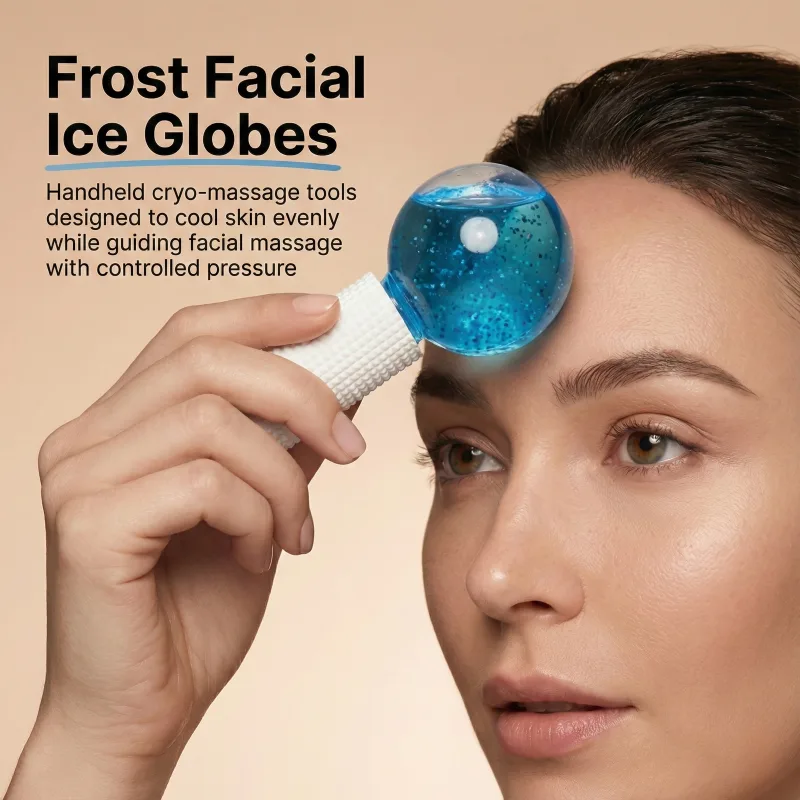
For people who like the cold but not the drips, chilled facial ice globes are the easier option. A pair such as the Frost facial ice globes can live in the fridge. For extra chill, put them in the freezer for about 10 minutes, then let them rest a minute before use. Roll them from the centre of the face outward and keep them moving.
They are handy for:
- A puffy morning
- A quick refresh before makeup in sticky weather
- Calming redness after salon waxing
- Calming redness after using a pore suction blackhead remover
- Calming warmth after an at-home IPL session, if you follow a routine like our 12-week IPL plan
Be realistic about what they do. Ice globes give the same short-term cooling as any other icing method, just with more control. They won't remove pigmentation, treat acne or replace sunscreen and a good moisturiser. The same cautions apply: skip them with rosacea, cold sensitivity or broken skin, and use only light pressure.
Can you ice your face before makeup or a function?
Yes. This is one of the most popular uses in India, especially through the festive and wedding season. A short icing session 15–20 minutes before makeup can help:
- Calm puffiness after a late night of sangeet practice
- Cool skin after a hot commute
- Help base makeup feel less heavy in humidity
Make sure your skin is completely dry and moisturised before primer, or makeup may slide. Don't try icing for the first time on the big day; test it a few times in the weeks before. For a wider plan, see our bridal skin care countdown.
If your skin feels tight or dry this season, pair icing with a richer routine like the one in our winter guide for dry skin. Not sure whether a cooling tool suits your skin? Our team on WhatsApp (+91 98116-65715) is happy to help you think it through.