
Short answer: To shape your eyebrows at home, first map where each brow should start, arch and end using a pencil. Next, brush the hairs upward and trim only the tips that stick out past your natural line. Finally, tidy stray hairs underneath and between the brows with a precision trimmer or tweezers. Work in daylight, take off a little at a time, and leave the top edge mostly alone. Most brow mistakes come from removing too much, not too little.
Key takeaways
- Three points map your natural brow shape: the start lines up with the side of your nose, the arch sits above the outer edge of your iris, and the end falls on a line from your nostril past the outer corner of your eye.
- Trimming shortens hairs, and tweezing or threading removes them from the root. For beginners, trimming is the safest first step because a mistake grows out in days, not months.
- Shape from below and between the brows. Removing hairs from the top line is the most common way people end up with thin, uneven brows.
- Over-plucked brow hairs often take several months to grow back, and some may not return. Patience and filling in usually work better than more plucking.
- Never use IPL or any light-based device on or near the eyebrows, and shape brows two to three days before a wedding or function so any redness has settled.
How do I find the right eyebrow shape for my face?
You don't need to copy a trend. The best shape usually follows your own bone structure and only tidies what grows outside it. Full, natural-looking brows suit most Indian faces, and they are far easier to keep up than a thin, sharp arch.
To map your brows, use an eyebrow pencil or a thin makeup brush as a straight edge:
- Find the start. Hold the pencil straight up against the side of your nose. Where it crosses your brow is where the brow should begin. Hairs between the two starting points can be tidied.
- Find the arch. Look straight ahead into a mirror. Angle the pencil from the side of your nose so it passes over the outer edge of your iris. The highest point of the brow sits there.
- Find the end. Angle the pencil from the outer edge of your nostril past the outer corner of your eye. The brow should end roughly where it meets that line.
- Mark each point with a small dot of pencil, then repeat on the other side.
- Join the dots lightly along the bottom edge of your natural brow. Hairs outside this outline are the ones you will deal with. Everything inside stays.
Brows are sisters, not twins. One is often a little higher or fuller, and chasing perfect symmetry is how many people over-pluck.
Should I trim, tweeze or thread my eyebrows at home?
Each method does a different job, and many people use two together. Here is how they compare when you are doing it yourself:
| Method | What it does | Best for | How long it lasts | Watch out for |
|---|---|---|---|---|
| Precision trimmer | Cuts hair at or near the skin, painlessly | Long, unruly hairs; clearing between the brows; beginners | Regrowth shows in 2–4 days | Trimming without a guard on the brow itself can leave a bald patch |
| Small scissors and spoolie | Shortens long hairs that stick up | Thick or coarse brows that look messy even when shaped | 2–4 weeks | Cutting the hair too short so it pokes straight out |
| Tweezers | Pulls single hairs from the root | A few stray hairs under the arch | 3–6 weeks | Over-plucking; ingrown hairs; redness |
| Threading at home | Removes rows of hair from the root | People already skilled at it | 3–6 weeks | Hard to control on your own face; easy to take a whole row by mistake |
| Parlour threading | Professional shaping from the root | A first full shape, or a reset before a wedding | 3–6 weeks | Ask for a natural shape and check the mirror before they finish |
A practical routine for many readers is to get a parlour threading done once if your brows have never been shaped. After that, maintain them at home with a trimmer and tweezers so the shape does not drift. If you are deciding how to handle the rest of your facial hair as well, our guide to removing facial hair at home compares every option.
How do I shape eyebrows with a trimmer, step by step?
A trimmer is forgiving because it does not pull hair from the root. The skin around the eyes is thin, so slow and gentle wins here.
- Start clean and dry. Wash your face, pat it dry and skip creams on the brow area. Oil makes hairs slippery and lies flat against the skin.
- Use good light. Natural daylight near a window is best. Harsh bathroom lighting hides fine hairs and exaggerates others.
- Map your brows with the pencil method above.
- Brush hairs upward with a clean spoolie or old mascara wand.
- Trim the length first. Fit the brow comb or guard if your trimmer has one. Then gently trim only the tips that rise above your natural top line. Brush the hairs back down and check.
- Clear between the brows. Remove the guard and use the precision head to tidy hairs between your two start points. Hold the skin taut with your other hand and move with the hair growth.
- Tidy underneath. Work along the lower edge, staying outside your pencil outline. Take small passes, and step back from the mirror after every few.
- Compare both sides at arm's length before doing anything more.
- Finish gently. Wipe away the pencil and apply a plain, fragrance-free moisturiser. Clean the trimmer head with its brush.
Choosing a trimmer for brows
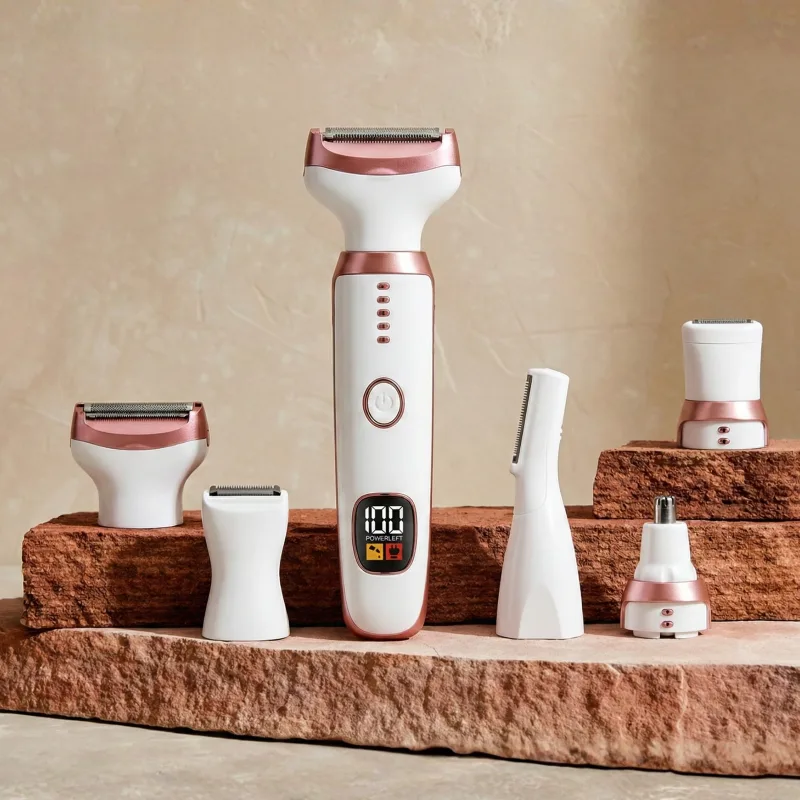
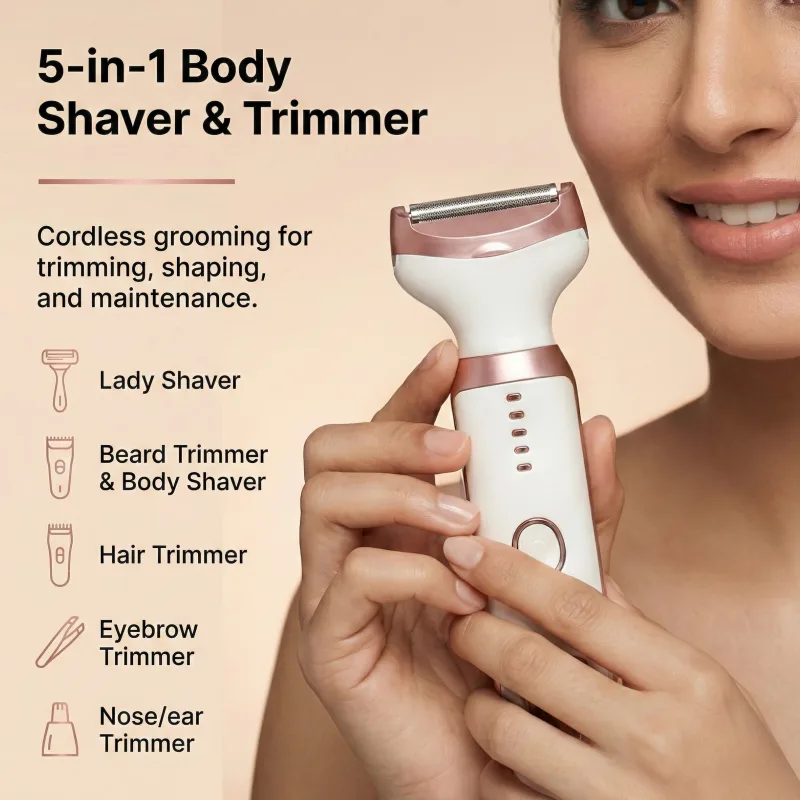
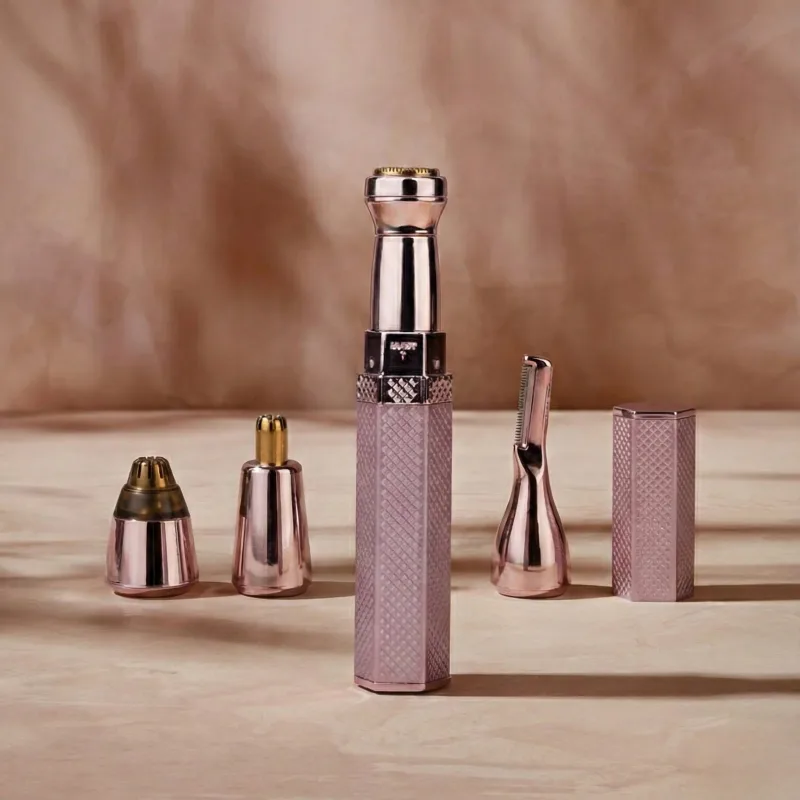
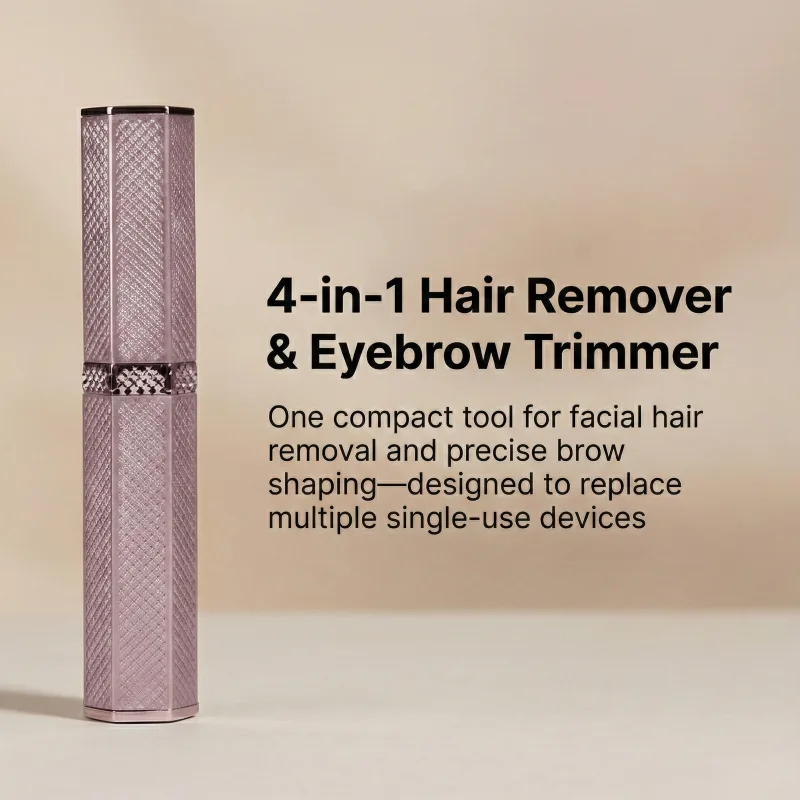
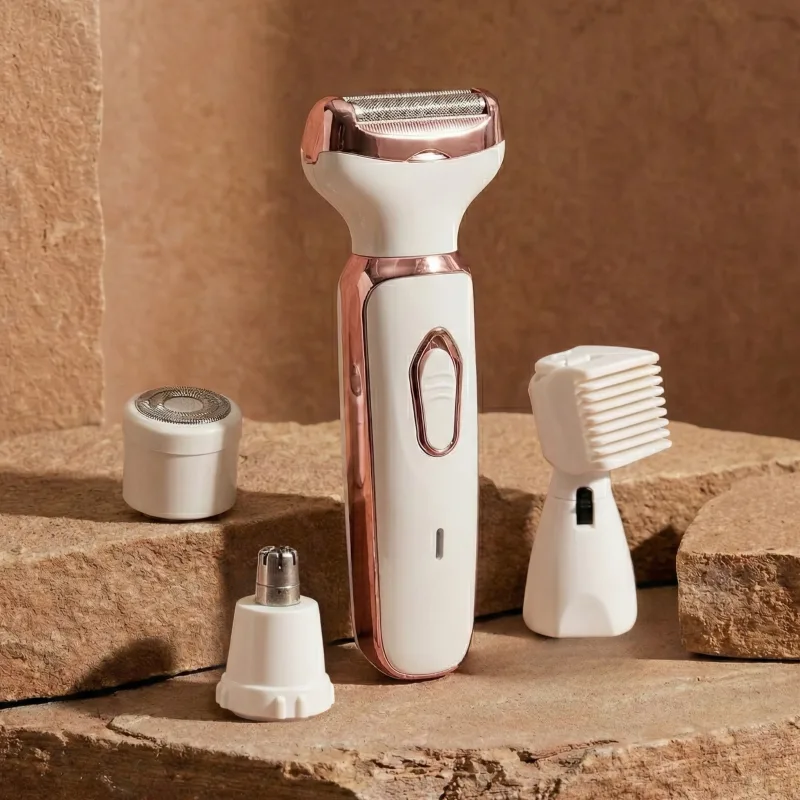
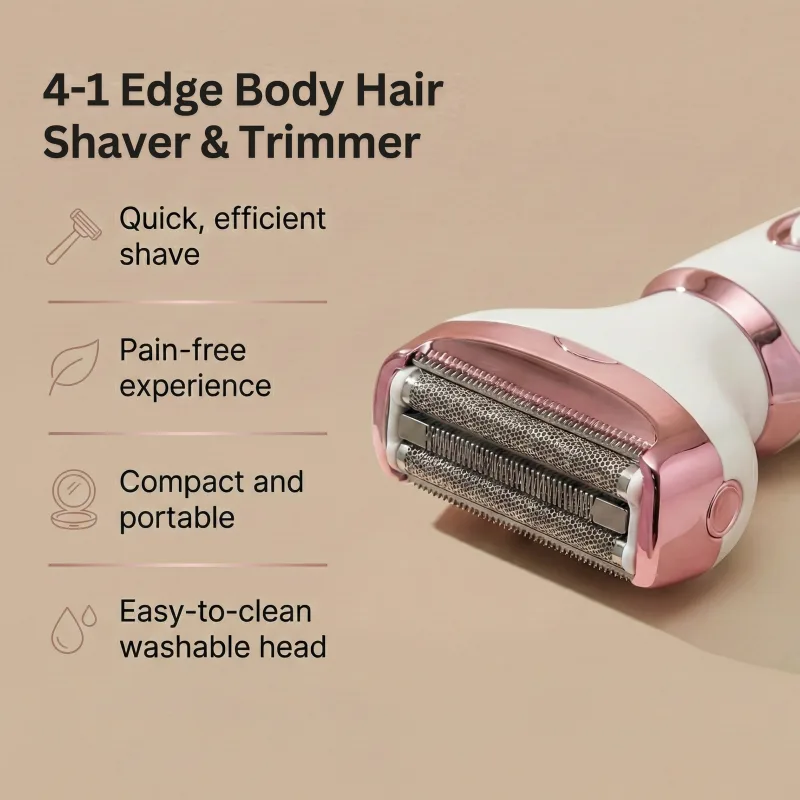
Look for a slim precision head and a brow comb attachment, and make sure it is rechargeable so it doesn't lose power mid-brow. A multi-head body trimmer such as the Sharp 5-in-1 trimmer includes a head for eyebrows alongside face, underarm and bikini heads. If you want something small enough for a handbag or travel kit, the Define 4-in-1 portable trimmer does the same tidy-up job. Keep the brow head for your face only, and clean it after every use.
How do I tweeze stray hairs without overdoing it?
Tweezing is useful for a handful of strays the trimmer leaves behind, especially under the arch.
- Tweeze after a warm shower. Softer skin and open follicles make it less uncomfortable.
- Grip one hair close to the root and pull quickly in the direction it grows.
- Use the "three-hair rule". After every three hairs, stop and look at both brows from a distance.
- Never tweeze from the top line unless a hair clearly sits far above the brow.
- Use a magnifying mirror carefully. At close range every hair looks like a stray. Do your final check in a normal mirror.
Mild redness that fades within an hour or two is normal. A cool compress or a chilled ice globe kept moving over the area can make it settle faster. Small bumps that keep returning may be ingrown hairs. Our guide to preventing ingrown hairs explains how gentle exfoliation helps.
What should I avoid when shaping brows at home?
- Shaving the brows bare with a razor. The regrowth is stubbly and patchy, and it's easy to slip near the eye.
- Shaping right before an event. In wedding season, do your brows two to three days before the function so redness, small bumps or a slight mistake have time to settle.
- Using light-based hair removal near the brows. IPL must never be used on or near the eyebrows or eye area. Our guide to IPL on the face and upper lip explains where it is safe to stop.
- Plucking or waxing on irritated skin. Skip any method that pulls hair from the root if you use a retinoid around the brows, are on isotretinoin, have had a recent peel, or have a rash, cut or active pimple there. Trimming is the gentler option, and you can check with your dermatologist.
- Shaping when tired or rushed. Most "I took too much off" stories start at midnight.
How can I fix over-plucked or uneven eyebrows?
If you have removed too much, the fix is mostly time and restraint.
- Put the tweezers away and stop all removal from the brow itself for at least three months. Only trim between the brows if needed.
- Fill in while you wait. A brow pencil in feathery strokes, or a powder one shade lighter than your hair, makes gaps look natural. Tinted brow gel adds fullness.
- Brush the brows daily so new hairs grow in the right direction.
- Shape again only when the gaps have filled. Consider a parlour threading as a reset, with clear instructions to keep it full.
Be wary of oils or serums promising fast brow regrowth. Evidence for most home remedies is limited, and anything new near your eyes should be patch-tested first. Brow hairs grow slowly, so regrowth often takes several months. Years of heavy plucking can leave some follicles that do not grow back fully.
See a dermatologist or doctor if your brows are thinning when you have not been removing hair. The same applies if you notice patches of loss, if the outer third of your brows is fading, or if hair is thinning elsewhere too. These changes can be linked to thyroid, nutrition or other health issues that need a proper check.
How often should I shape my eyebrows?
Most people need a light tidy every one to two weeks with a trimmer, or every three to six weeks if they tweeze or thread. Between full shapes, just brush your brows and clear the strays below and between them. Keep your map dots in mind and avoid reshaping the arch every time.
Before a big occasion, plan your brows the way you would the rest of your prep. Our bridal skin care countdown covers when to schedule shaping, facials and other treatments so nothing is too fresh on the day.
If you are tidying brows as part of a wider grooming routine and aren't sure which trimmer heads you need, you can message the Signaxo team on WhatsApp at +91 98116-65715 for help choosing. Start small, step back often, and let your natural shape lead.