
Short answer: Cleanse your face, soften your pores with a warm shower or towel for 3–5 minutes, and start on the lowest suction. Keep the tip moving and never hold it on one spot for more than 1–2 seconds. Finish with a cool-water rinse and moisturiser, and use the device no more than once or twice a week. Skip inflamed acne, rosacea, broken capillaries and skin that is irritated or freshly peeled.
Key takeaways
- Bruises and broken capillaries from a pore vacuum usually come from too much suction or holding the tip still for too long.
- Keep the tip moving and spend no more than 1–2 seconds on any one spot.
- Use only the lowest suction on thin cheek skin, and keep the device away from the under-eye area.
- Mild redness that fades within an hour is normal. A purple or brown mark means you should stop and let the skin recover fully.
- A pore vacuum clears some surface build-up, but it won't stop blackheads returning, so regular skin care still matters.
Does a blackhead remover vacuum actually work?
It can help, within limits. Gentle suction may lift soft oil and debris sitting near the surface of softened pores, and the nose or chin can look a little cleaner afterwards. Firm, long-settled blackheads often stay put, and pushing the suction higher to shift them is how skin gets marked.
Pores also fill up again, especially if you have oily skin or live in a humid city such as Mumbai, Chennai or Kolkata. Think of a vacuum as occasional upkeep, not a permanent fix.
Before you start, check what you're actually looking at. Those small, flat, grey-beige dots spread evenly across the nose are often normal pore lining and oil, not blackheads. Our guide to blackheads vs sebaceous filaments explains how to tell them apart, which may save your skin from a lot of unnecessary suction.
Who should not use a pore vacuum?
Suction is a physical stress on the skin, so it isn't for everyone. Skip it if any of these apply to the area you want to treat:
- Inflamed acne, such as red, sore pimples or pustules
- Rosacea or visible broken capillaries
- Skin irritated by a retinoid
- A recent chemical peel or any freshly peeled skin
- Cuts, sunburn, or an active rash or skin infection
Check with your doctor or dermatologist first if you bruise easily, take blood-thinning medicine, or are using isotretinoin or another prescription skin treatment. On brown Indian skin tones, irritation can leave dark marks that last for weeks, so if you're unsure, take the cautious route.
How do you use a blackhead remover vacuum step by step?
- Cleanse thoroughly. Remove all makeup and sunscreen, then wash with a gentle cleanser. City pollution and sweat can leave a film on the skin, so don't skip this. Clean the tip as your device manual directs.
- Soften your pores. Do this straight after a warm shower, or hold a warm, damp towel on the area for 3–5 minutes. It should feel comfortably warm, never hot. Softened skin needs less suction.
- Pat your skin gently. Remove any dripping water and check your manual for specific guidance on skin preparation.
- Set the lowest suction. Start here every time, even if you used a higher level last week. Your skin's sensitivity can change with your cycle, the weather and your skin care.
- Test a small area. Try one short pass on the side of your nose or chin, then wait a moment. Move on only if the skin looks and feels fine.
- Keep the tip moving. Hold your skin lightly taut and glide across each area in short strokes. Never stay on one spot for more than 1–2 seconds.
- Limit your passes. One or two passes over an area are enough. If nothing comes out, stop instead of repeating the stroke or raising the level.
- Rinse and moisturise. Rinse with cool water, pat dry and apply a simple, fragrance-free moisturiser.
- Clean the tip again. Follow your manual and let it dry fully before you store it, so you aren't bringing old residue back to your skin next time.
Which suction level should you use on each area?
Skin thickness and oiliness vary across the face, so one setting won't suit every area. Use this as a cautious guide, and treat your skin's response as the final word.
| Area | Suction level | How to use it |
|---|---|---|
| Nose | Start lowest; go up one level only if needed | Short strokes from the sides towards the tip; avoid visible capillaries |
| Chin | Start lowest; go up one level only if needed | Short strokes; steer around any active pimples |
| Forehead | Low | Glide with the skin held taut; stay well away from the eyes |
| Cheeks | Lowest only | Light, quick passes; this skin is thin and marks easily |
| Under-eyes and eyelids | Do not use | This skin is very delicate |
| Lips | Do not use | Not a target area and bruises easily |
How often can you use a pore vacuum?
Once or twice a week is the upper limit, and many people need it less often. If your skin is dry or sensitive, or you're new to the device, start with once a week. Using it more often won't keep blackheads away for longer, and it may leave skin irritated and tight.
Evenings work best because any redness can settle overnight. Leave out retinoids and exfoliating acids that night so you aren't stacking irritation.
Don't try a vacuum for the first time just before a wedding, a festival or a big function. Do a trial run weeks ahead, and keep the final week free of new treatments and extractions. Our pre-festive skin care plan follows the same simple approach.
How can you avoid bruises and broken capillaries?
A pore vacuum can leave marks when suction pulls too hard on small blood vessels or holds the skin for too long. Most mistakes come down to a few habits:
- Raising the suction because "nothing is coming out"
- Pausing on a stubborn spot
- Going over the same area again and again
- Pressing the tip hard into the skin
- Using it on cold, unprepared skin
This table can help you decide what to do after a session:
| What you notice | What it likely means | What to do |
|---|---|---|
| Pink flush that fades within an hour | Normal response to suction | Moisturise and carry on as usual |
| Redness lasting several hours, or stinging | The session was too strong or too long | Keep skin care simple, skip actives and go lower next time |
| Circular or purple mark | Likely bruising | Stop using the device until it fades completely |
| Thin red lines that don't fade | Possible broken capillaries | Stop using it there and ask a dermatologist |
| Dark patch after redness settles | Possible pigmentation from irritation | Use SPF daily and see a dermatologist if it isn't fading |
What should you do after using a blackhead remover?
Aftercare is simple. Rinse with cool water and apply a moisturiser suited to the season: a light gel in humid weather, or something richer during a dry North Indian winter. For a cooling step, chilled ice globes can feel soothing. Roll them from the centre of your face outward and keep them moving. Our guide to icing your face safely covers the limits.
Next morning, use sunscreen as usual, because recently irritated skin is more prone to dark marks in strong sun. Leave a day or two before going back to strong actives, or longer if your skin still feels sensitive.
How do you keep blackheads from coming back?
Your daily routine probably matters more than the device. These habits can help:
- Cleanse in the evening to remove sunscreen, sweat and pollution.
- Consider a low-strength salicylic acid product a few times a week if your skin tolerates it. Don't use it on the same night as your vacuum session.
- Choose light, non-comedogenic textures, especially during the monsoon.
- Keep moisturising even if your skin is oily, since stripped skin often feels tight and uncomfortable.
- If you have hard water, use a gentle cleanser and moisturise soon after washing, particularly if your skin feels tight.
See a dermatologist if you have many painful bumps or deep pimples, if breakouts leave marks or scars, or if blackheads don't improve despite a consistent routine. These may need professional care, not more suction.
Which type of device suits you?
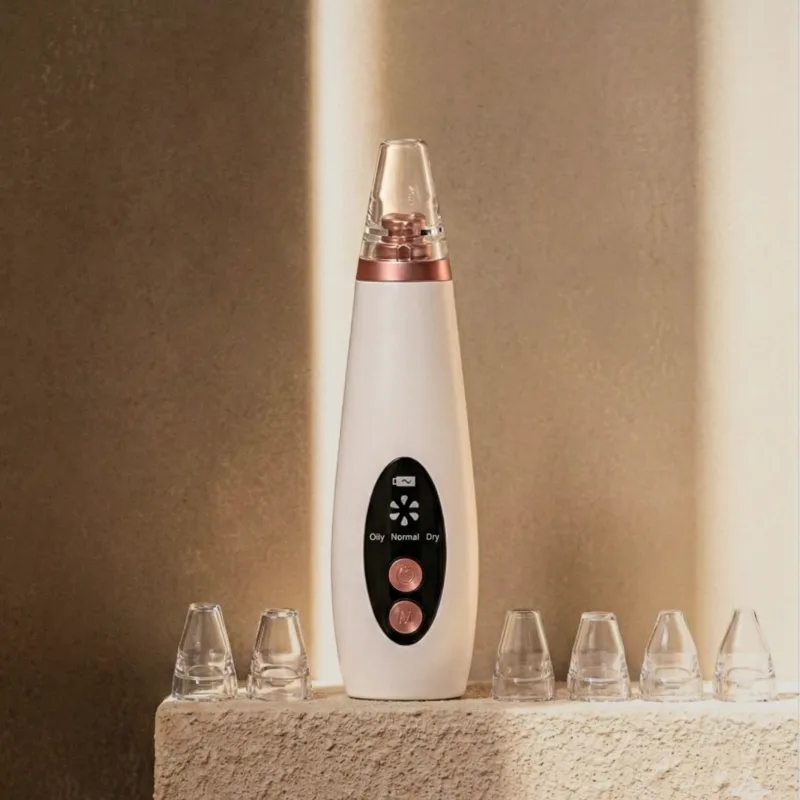
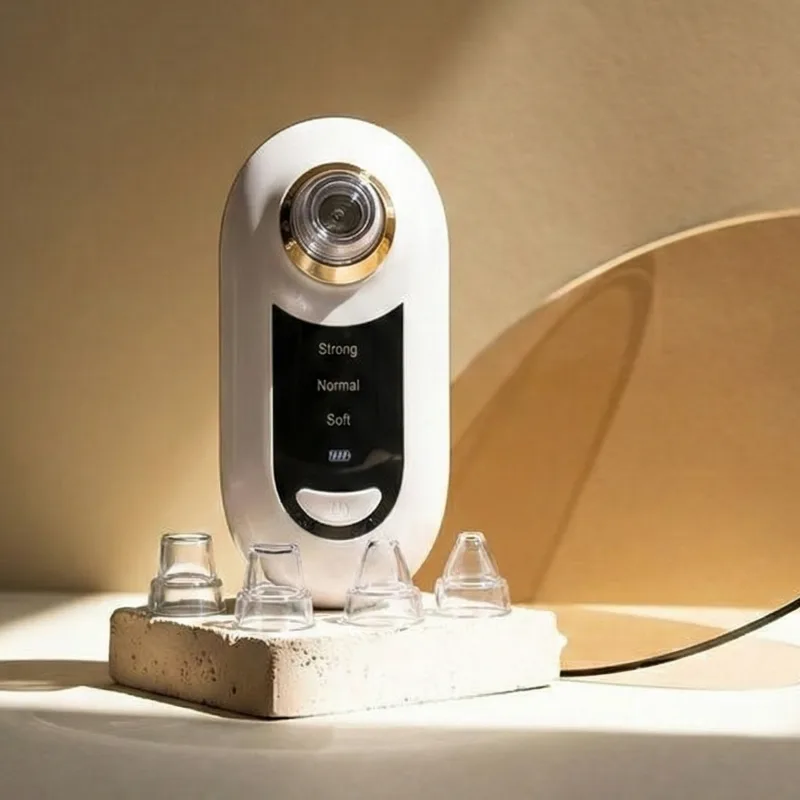
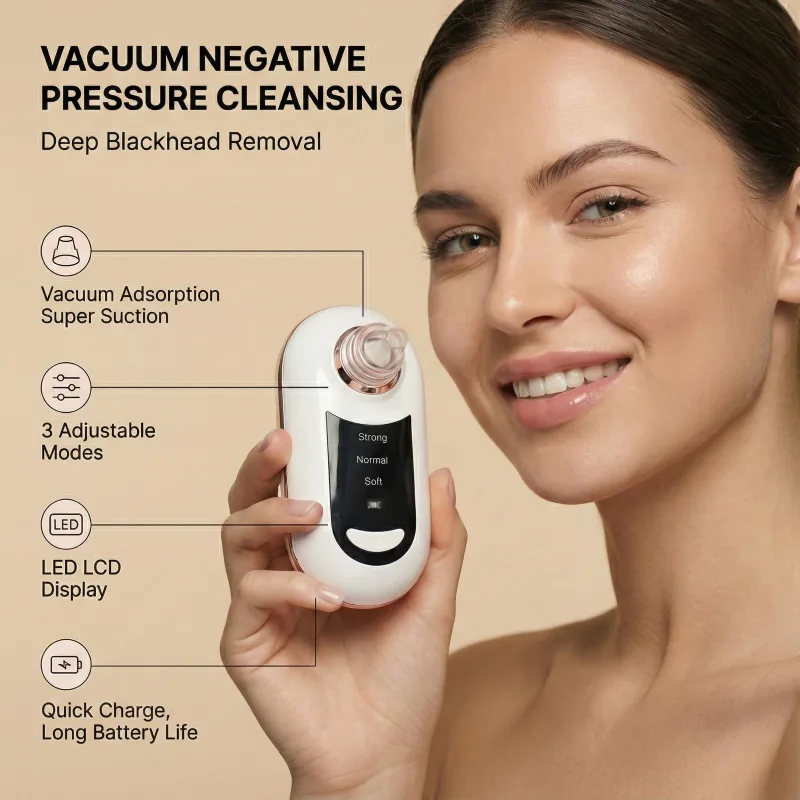
The right choice depends on where you get blackheads. If they are mainly on your nose, chin and forehead, a device with adjustable suction, such as the Clear blackhead remover, lets you match the level to each area. If you only want to deal with the occasional spot, a compact option such as the ClearPore mini may be enough.
Both come with the same limits: results vary, deep or firm blackheads may not budge, and neither one should be used on inflamed skin. If your skin is reactive or you have rosacea, it's better to skip suction altogether.
If you're not sure whether a pore vacuum suits your skin, start with the blackhead and sebaceous filament check, or browse other gentle tools in our facial essentials. You can also message us on WhatsApp at +91 98116-65715 for help choosing.