Short answer: A salon-style blow-dry at home comes down to four habits: start with hair that is mostly dry, work in small sections, lift every root before smoothing down, and set each section with cool air before you let it go. The tool matters less than the technique. A hot air brush makes it easier because it dries, smooths and adds volume in one step, but the same method works with a dryer and a round brush.
Key takeaways
- Rough-dry hair until it is about 70–80% dry before you style. Smoothing soaking-wet hair takes longer and exposes it to more heat.
- Sections no wider than your brush give a smoother, longer-lasting finish than big chunks of hair.
- Volume comes from the roots: lift each section up and away from the scalp and hold for a few seconds.
- Point the airflow down the hair, from root to tip, to flatten the cuticle and cut frizz.
- A few seconds of cool air at the end of each section sets the shape. In Indian humidity, this step makes the biggest difference to how long a blow-dry lasts.
Why does a salon blow-dry look better than one at home?
A salon blow-dry looks better mostly because of patience and tension, not secret products. A stylist dries the roots completely, works through the head in neat sections and keeps the brush tight against the hair as it moves. They also let each section cool in shape before moving on.
At home, most of us do the opposite. We blast wet hair on the highest heat, hold the dryer close and pointed at the scalp, and stop when the hair feels "mostly dry". The result is volume at the crown that collapses within an hour and ends that frizz as soon as you step outside. Once you slow down the steps below, a home blow-dry gets much closer to a salon one.
How dry should hair be before you start blow-drying?
Aim for hair that is about 70–80% dry, so it feels cool and slightly damp but no longer wet. Getting there gently protects your hair and saves time.
- Blot, don't rub. Squeeze water out with a microfibre towel or an old cotton T-shirt. Rubbing with a rough towel roughens the cuticle and causes frizz before you have even started.
- Rough-dry the roots first. Use your fingers and a low or medium setting to dry the roots, lifting hair away from the scalp. Damp roots are the main reason a blow-dry goes flat.
- With a hot air brush, you can start on towel-dried hair (not dripping). Even so, rough-drying very thick or long hair for a few minutes first shortens the styling time.
How to blow dry hair at home like a salon: 8 steps
- Wash and condition. Use a gentle shampoo and always condition the mid-lengths and ends. If you have hard water, rinse thoroughly, because product left on the hair weighs it down.
- Detangle and protect. Comb through with a wide-tooth comb, starting at the ends and working up. Apply a heat protectant to the mid-lengths and ends, and a lighter mist at the roots if your hair is fine.
- Rough-dry to 70–80%. Use low to medium heat and your fingers, roots first, until hair is mostly dry.
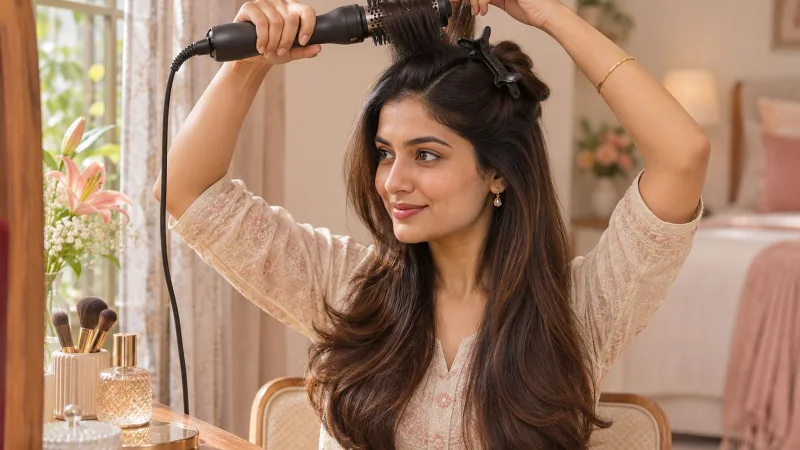
- Section. Clip the top and sides out of the way and start with the bottom layer at the nape. Each section should be about as wide as your brush and 3–5 cm deep.
- Lift the root. Place the brush under the section, right at the scalp. Pull it up and slightly away from your head, aiming the air at the root for 3–5 seconds.
- Glide down with tension. Move the brush slowly down the length, keeping the hair taut against it. The airflow should always point down the hair, never straight at the scalp. One or two slow passes are better than five fast ones.
- Shape the ends. At the ends, roll the brush under for a polished bend or flick it outward for movement. Hold for 2–3 seconds.
- Set with cool air. Switch to the cool setting, or simply hold the section in shape until it cools. Then move up the head layer by layer and finish with a drop of light serum on the ends only.
Do the front and the parting last. These are the sections people notice first, so they get your full attention when your arms are less tired. If you want a stronger lift on top, dry the crown against the direction of your parting, then flip it back into place.
How do I get volume at the roots that actually lasts?
Lift up, not out
Overdirecting means pulling each section upward, roughly 90 degrees from the scalp, while you dry the root. The root sets standing up instead of lying flat. For the crown, you can pull hair slightly forward over your face.
Keep products light at the scalp
Heavy oils or rich serums at the roots will undo the lift. Keep hair oil for a pre-wash treatment, not after washing, and use serum only on the lengths.
Let it cool before you touch it
Hair holds its shape as it cools. Running your fingers through warm hair, or tying it up straight away, flattens the volume you just created.
Which heat setting and technique suit your hair type?
Indian hair ranges from fine and straight to thick, wavy and curly, so one setting does not suit everyone. Use the lowest heat that gets your hair dry and smooth.
| Hair type | Heat | Section size | What helps most |
|---|---|---|---|
| Fine or thin | Low | Medium | Root lift and a cool set; light protectant mist instead of cream |
| Thick or coarse | Medium | Small | Rough-dry well first; slow passes with firm tension |
| Wavy or frizz-prone | Low to medium | Small | Airflow always pointing down; dry completely so waves don't return |
| Colour-treated or chemically straightened | Low | Medium | Fewer passes; never go over the same section repeatedly |
| Curly, wanting a stretched or smooth look | Medium | Small | Detangle well; expect a smoother, softer finish rather than pin-straight |
For more on settings and protectants, see our guide on how to protect hair from heat damage.
Why does my blow-dry go flat or frizzy by evening?
Usually it is one of these:
- Hair was not fully dry. Even slightly damp roots or ends will revert, especially in coastal cities and during the monsoon.
- Humidity. Hair absorbs moisture from the air and swells, which brings back waves and frizz. A light anti-humidity serum on the ends and a proper cool set help. Our guide to controlling frizzy hair in humidity covers this in detail.
- Sweat and oil at the scalp. In the heat, roots flatten faster. A little dry shampoo or powder at the parting on day two helps revive them.
- Too much product. Heavy creams and oils weigh hair down. Use less than you think you need.
- Hard water build-up. Mineral residue can make hair look dull and rough. Rinse well, and use a clarifying wash occasionally if your hair feels coated.
To make it last longer, sleep on a satin or silk pillowcase or in a loose, high bun. In the morning, refresh only the front sections on low heat instead of redoing the whole head.
Can a hot air brush give a salon blowout at home?
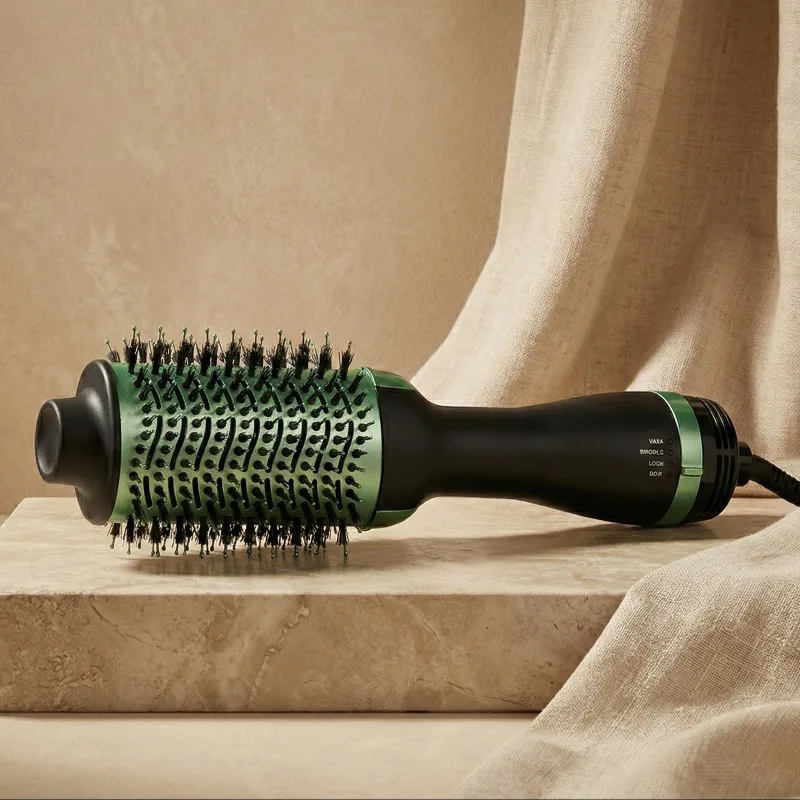
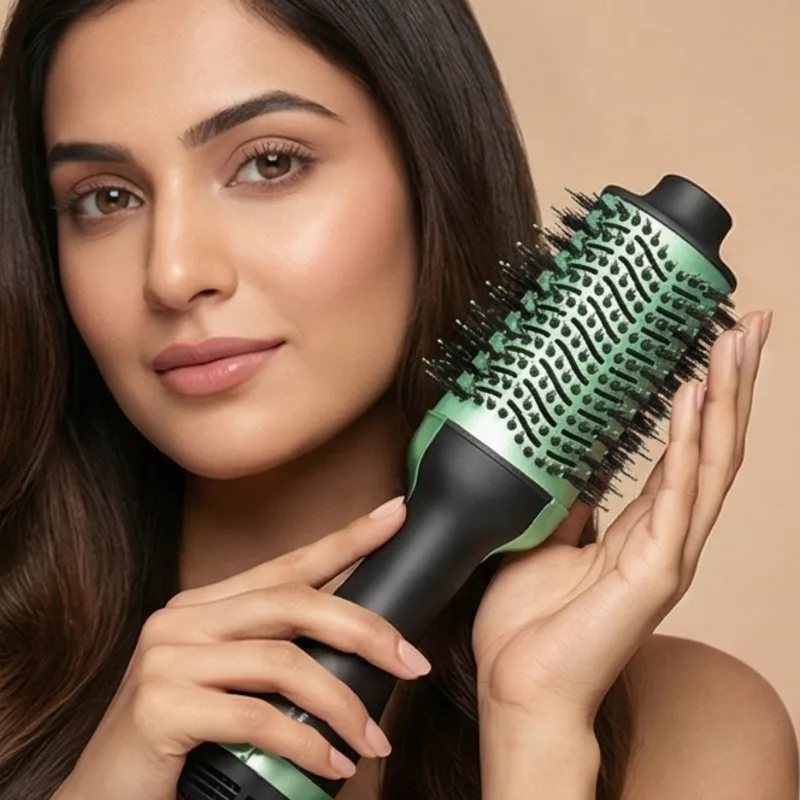
For many people, yes, and it is the easiest way to get there. A hot air brush combines the dryer and the round brush, so you have one hand free to hold the section taut. That free hand is what makes the salon technique hard to copy with two separate tools. A 3-in-1 tool such as the StyleAir hot air brush dries, smooths and adds root volume in one step, which suits busy weekday mornings and festive or wedding-season styling.
It does have limits. It gives a smooth, bouncy blow-dry finish, not the glass-flat result of a regular flat iron, and very curly hair will look smoother and softer rather than poker-straight. On very long or thick hair, it still takes time and careful sectioning. Use it on towel-dried, not dripping, hair. Use a heat protectant every time, and choose lower heat for fine or colour-treated hair. If you are unsure which tool fits your hair, our hot air brush vs straightener guide walks through the choice. You can also browse other styling tools in our hair collection.
Once your blow-dry is smooth and lifted, it makes a great base for party looks. Try these easy festive hairstyles at home. If you would like help choosing a styling tool for your hair type, message Signaxo on WhatsApp at +91 98116-65715 and describe your hair. The team is happy to help.