Short answer: A hot air brush dries and styles in one go. It gives smooth hair with soft volume and bend at the ends, and it suits fine, medium or wavy hair and busy mornings. A straightener presses fully dry hair between heated plates for a sleek, flat, pin-straight finish. It suits thick, curly or very frizzy hair when you want that glassy look. Many people with long Indian hair end up using both: the brush for everyday and the straightener for occasions.
Key takeaways
- A hot air brush uses moving hot air and bristles, so it works on towel-dried hair and adds volume. A straightener uses direct plate contact and works only on fully dry hair.
- For soft, bouncy, everyday hair, a hot air brush is usually enough. For a sleek, poker-straight finish on thick or curly hair, a straightener does the job better.
- Neither tool is damage-free. Heat protectant, the lowest heat that works and fewer passes matter more than which tool you pick.
- In Indian humidity, any heat style lasts longer if hair is dried completely, smoothed with a light serum and kept away from steam.
- Fine, colour-treated or chemically straightened hair should stay on lower heat with either tool.
What is the difference between a hot air brush and a hair straightener?
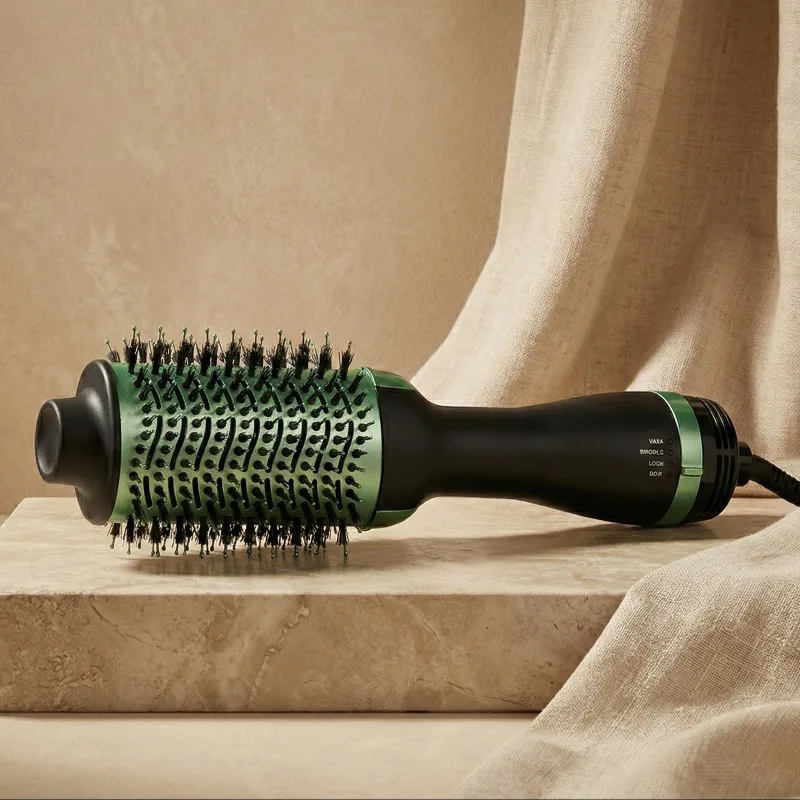
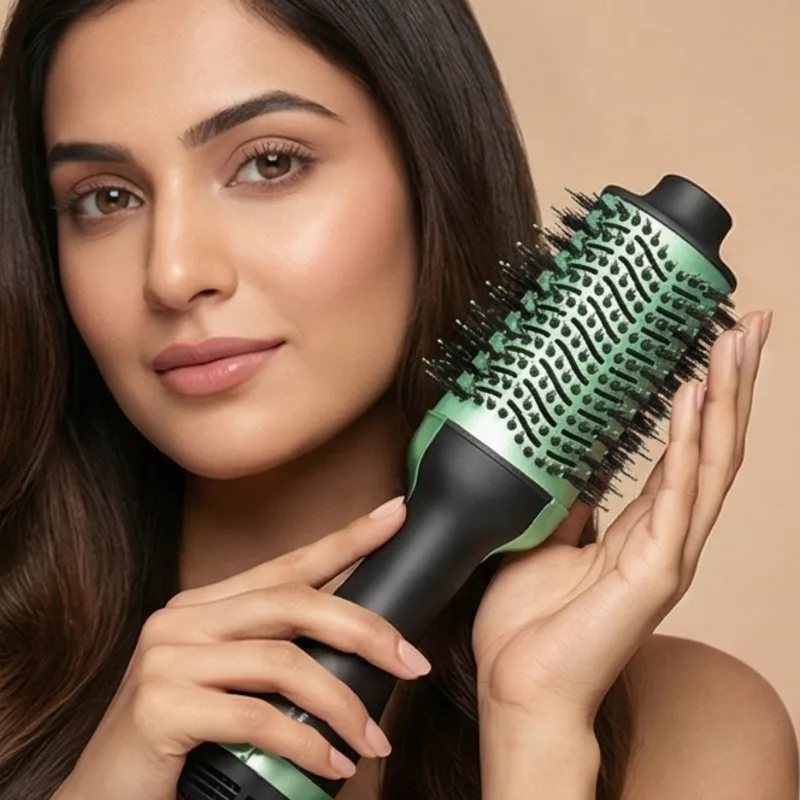
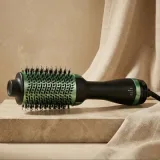
A hot air brush looks like a round or oval paddle brush with vents. Warm air flows through the bristles while you brush, so it dries the hair and shapes it at the same time. It smooths by tension and airflow, not by pressing. That is why the result looks blow-dried: lifted at the roots, smooth along the lengths and slightly curved at the ends.
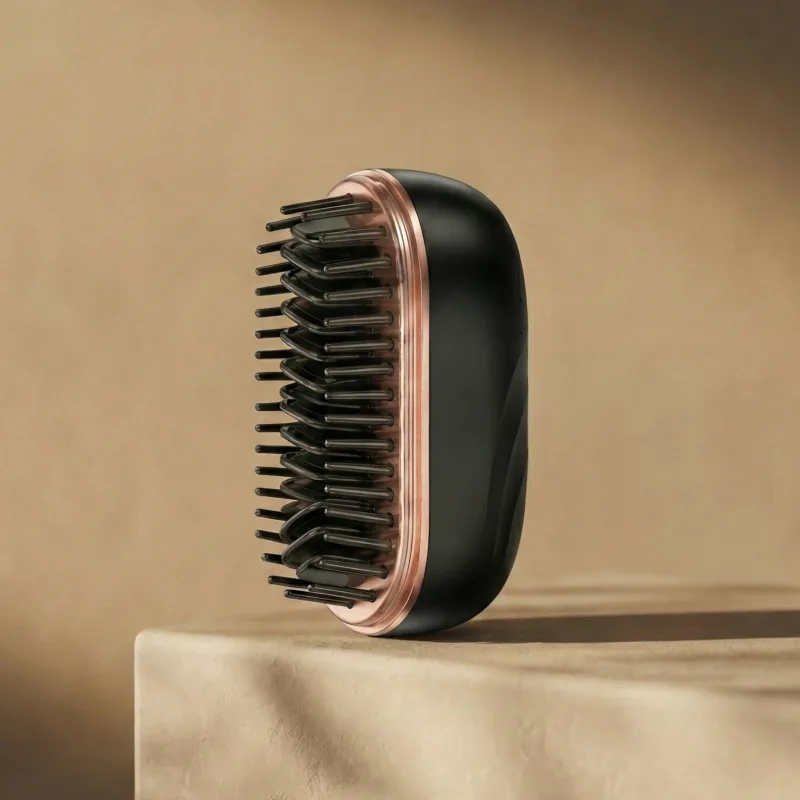
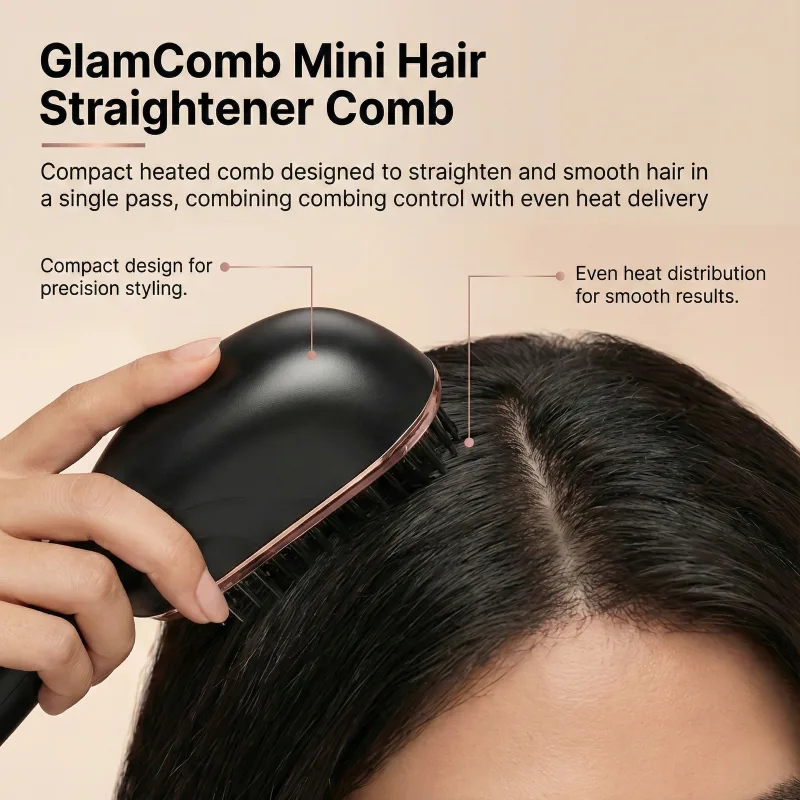
A straightener (flat iron) has two heated plates that clamp a section of hair and glide down it. Direct contact flattens the hair and closes down frizz, giving a sleek, close-to-the-head finish. It works only on completely dry hair. A heated straightener comb sits between the two: heated bristles comb through dry hair for a natural, less flat straight look, and it is handy for quick touch-ups.
Which is better for volume, and which for sleek hair?
This is the main deciding question. Think about the look you reach for most days, not your wedding-day look.
| Your goal or hair | Better choice | Why |
|---|---|---|
| Soft, bouncy, blow-dried look | Hot air brush | Lifts roots and bends ends while drying |
| Sleek, glassy, poker-straight | Straightener | Plate contact flattens hair fully |
| Fine or flat hair | Hot air brush | Adds body; a straightener can make it look limp |
| Thick, coarse or very curly hair | Straightener (or brush, then straightener on ends) | Brush alone may leave some wave and puff |
| Wavy hair you want smoother, not flat | Hot air brush or straightener comb | Tames frizz while keeping movement |
| Fringe, flyaways, quick fixes | Straightener comb | Small, heats fast, easy on short sections |
| Rushed mornings, damp hair | Hot air brush | Skips the separate blow-dry step |
If you love curls or open waves for functions, a straightener can also twist hair into waves. A dedicated curler is easier, though. Our guide to the best hair curler for Indian hair covers that.
Which tool causes less heat damage?
A hot air brush spreads heat through air instead of pressing hot metal against the hair, so it often feels gentler. That holds especially when you use a medium setting and avoid going over the same section again and again. But it is used on damp hair for longer stretches, and over-drying still leaves hair rough.
A straightener reaches higher surface heat. On thick hair it is tempting to turn it right up and run it over each section many times, and that is where most damage comes from. One slow, steady pass at a moderate setting is kinder than five quick passes on high.
So the honest answer is that how you use the tool matters more than which tool you use. Whichever you choose:
- Use a heat protectant every time.
- Start on the lowest heat and go up only if hair isn't smoothing.
- Keep fine, colour-treated, bleached or keratin- or chemically treated hair on lower heat.
- Give hair a few heat-free days each week where you can.
If your ends snap, feel straw-like or smell burnt, step back from daily heat and trim the damaged length. If you also notice unusual hair fall or an itchy, flaky scalp, see a dermatologist.
Which holds up better against frizz in humid weather?
Indian humidity, whether it is a Mumbai monsoon or a sticky Chennai afternoon, pulls moisture back into the hair and undoes styling. Hard water adds mineral build-up that makes hair feel rough and frizz faster.
A straightener finish usually resists humidity a little longer, because the hair is pressed fully flat. A hot air brush finish keeps more body, but it can puff up sooner if any moisture is left at the roots. A few habits help either style last:
- Dry hair completely, especially at the roots and nape. Damp patches frizz first.
- Finish each section with a cooler setting or let it cool on the brush for a few seconds before releasing.
- Smooth a pea-sized drop of light serum through the lengths, not the roots.
- Style after your bath, not before, and keep away from steamy kitchens for the first few minutes.
- Carry a straightener comb for quick fixes to the front sections before an event.
In the monsoon, softer styles such as a smooth blow-dry or a low bun forgive humidity better than pin-straight hair. Our festive hairstyles at home guide has some easy looks.
Which is faster for long, thick Indian hair?
If you count from wet hair, a hot air brush usually wins, because you skip a separate blow-dry. Towel-dry, then brush section by section. Very long, thick hair still takes time, so rough-dry it to about 70–80% first with a regular dryer or a cooler brush setting.
A straightener is quick only if your hair is already dry. On waist-length, dense hair, straightening in small sections can take a while, but the result needs less touching up through the day. Many people with thick hair use a mix: hot air brush to dry and smooth, then a few passes of a straightener or straightener comb only on the frizzier ends and front.
How do you use each tool for the best result?
Hot air brush
- Wash and condition, then gently squeeze water out with a cotton T-shirt or microfibre towel. Don't rub.
- Apply heat protectant through the lengths and comb out tangles.
- Rough-dry thick hair until it is mostly dry, with no dripping.
- Clip hair into sections; work from the bottom layer up.
- Place the brush under a section at the root, lift for volume, then slowly pull down to the ends, turning slightly inward or outward.
- Repeat until each section is fully dry, then give it a few seconds to cool before moving on.
- Finish with a drop of serum on the ends.
Straightener or straightener comb
- Start with completely dry, detangled hair and apply heat protectant.
- Set the lowest heat that works for your hair type.
- Take small sections, about 2–3 cm wide for a comb, so the heat reaches all the hair evenly.
- Glide slowly from root to tip in one steady pass; don't clamp or pause in one spot.
- Let hair cool before brushing or tying it up.
What should you check before buying? Doing it at home
Before you buy, ask yourself these questions:
- Adjustable heat: essential, so fine and thick hair in the same house can both use it safely.
- Size and weight: a heavy tool is tiring on long hair. A compact one is easier to travel with.
- Bristle and plate quality: smooth, snag-free bristles and plates that glide without tugging.
- Heat-up time: useful on rushed mornings.
- Cord and safety: a swivel cord helps, and so does a stand or cool tip to rest it on.
- Warranty and support: worth checking for any heated tool you'll use often.
If your everyday goal is a smooth, full blow-dry from damp hair, a 3-in-1 hot air brush such as the StyleAir hot air brush dries, straightens and adds volume in one step. It won't make very curly or coarse hair glass-flat, though. If you want something small for dry hair, fringes and touch-ups, the GlamComb mini straightener comb is ready in about 30–60 seconds and has adjustable heat. Use it on completely dry hair in 2–3 cm sections. It gives a natural straight look rather than the sharp flatness of plates. With both, use heat protectant and lower heat for fine or colour-treated hair. You can browse all styling tools in the hair collection.
Not sure which suits your hair? Send a photo of your hair to our team on WhatsApp at +91 98116-65715 and they'll help you choose. If you plan to style for a function soon, read our easy festive hairstyles guide first and try your look once before the big day.