Short answer: Hair frizzes in humidity because a dry, slightly raised outer layer soaks up moisture from the air and swells unevenly. To control it, wash gently and always condition, seal damp hair with a leave-in or a few drops of serum, and dry it fully on low heat with the airflow pointing down the hair shaft. Style only dry hair with a heat protectant, then protect it overnight. You won't stop humidity, but you can make your hair far less thirsty for it.
Key takeaways
- Frizz is mostly a moisture problem. Dry or porous hair pulls water from humid air, and each strand swells unevenly.
- Hair that is left half-damp frizzes the most. Drying it completely, on low heat, with air pointing from root to tip helps the outer layer lie flat.
- Hard water can leave a mineral film that makes hair feel rough and look duller and frizzier. A clarifying wash every week or two can help.
- Heat styling lasts longer in humid weather when hair is fully dry, sections are small and each section cools before you touch it.
- Frizz with heavy breakage, sudden hair fall or an itchy, flaky scalp is worth showing to a dermatologist.
Why does hair frizz in humidity?
Each hair strand has an outer layer of overlapping scales called the cuticle. When the cuticle is smooth and closed, hair reflects light and stays put. When it is lifted or worn, through colouring, heat, rough towelling or simply natural texture, the strand is more porous. On a sticky Mumbai, Kolkata or Chennai day, or through the post-monsoon dampness many cities get in November, that porous hair absorbs water vapour from the air. Parts of the strand swell more than others, so hairs bend, separate and stand away from each other. That is frizz.
Some hair is simply more prone to it:
- Wavy and curly hair, very common in India, has a cuticle that naturally lifts at each bend.
- Colour-treated, bleached or chemically straightened hair is usually more porous.
- Fine hair shows frizz quickly because it is light and moves easily.
- Long, thick hair often has dry, older lengths and ends, even when the roots are oily.
Does hard water make frizzy hair worse?
It can. Hard water carries minerals such as calcium and magnesium that can build up on hair as a thin film. Over weeks, hair may feel rough or straw-like, tangle more, look dull and refuse to soak up conditioner properly. All of that tends to make frizz worse. Many Indian homes on borewell or tanker water notice this most.
What usually helps:
- Use a clarifying or chelating shampoo once every 1–2 weeks, followed by a generous conditioner.
- Do your final rinse with cooler, filtered or stored drinking water if that's practical. Even a mug or two helps.
- A shower filter may reduce some build-up. Results depend on your water.
- Don't over-wash with harsh shampoos to remove the film. That dries hair further.
How should you wash frizzy hair?
Most frizz is set on wash day, so this is where small changes pay off most.
- Oil before, not after (optional). If you like oiling, apply a light oil to the lengths 30–60 minutes before washing rather than leaving it in for days. That can soften dry ends without weighing down the scalp.
- Shampoo the scalp only. Use a gentle, sulphate-free or mild shampoo and work it into the roots. Let the suds rinse through the lengths rather than scrubbing them.
- Condition every single time. Squeeze out excess water, then apply conditioner from mid-lengths to ends. Leave it for 2–3 minutes and detangle with a wide-tooth comb while it's in.
- Add a mask once a week. A deeper conditioning mask on the lengths helps very dry or colour-treated hair.
- Finish with lukewarm or cool water. Very hot water dries hair and scalp. A cooler final rinse feels better and leaves hair less roughed up.
How often should you wash? Often enough that your scalp feels clean. In humid weather that may be every 2–3 days for oily scalps. Sweat and pollution build up faster, and an itchy scalp makes people scratch and rough up hair. If your scalp also gets very oily in the heat, the routine in our guide to skin care for oily skin in humid weather follows the same gentle-but-regular logic.
How do you dry hair without frizz?
Drying is where most people lose the battle. Hair that air-dries slowly in a humid room, or goes out half-damp, has hours to swell and fluff.
Towel drying
Skip rubbing with a rough towel. Instead, squeeze and blot sections with a soft cotton T-shirt or a microfibre towel until hair stops dripping. Then apply a leave-in conditioner or 2–3 drops of a light serum to the lengths, plus a heat protectant if you'll use heat.
Blow-drying
- Use medium or low heat, not the hottest setting.
- Point the airflow down the hair shaft, from root to tip, never up against it or randomly in circles.
- Work in sections clipped out of the way so every part dries fully, including the nape and the layer underneath.
- Finish with a cool blast for 20–30 seconds to help hair set.
If you prefer to air-dry
Curly and wavy hair often looks best air-dried. Apply a leave-in or curl cream to soaking-wet hair, scrunch gently, then don't touch it until it's completely dry. Sit near a fan rather than in a closed, steamy bathroom. Touching damp curls is the quickest way to frizz.
What actually causes your frizz, and what fixes it?
Not all frizz is the same. Match the fix to what you see.
| What you notice | Likely cause | What usually helps |
|---|---|---|
| Fluffy halo on top, smooth underneath | Short new hairs and a lifted cuticle on top | A tiny bit of serum smoothed over with palms; dry the crown with air pointing downward |
| Dry, frizzy ends | Older, worn lengths or split ends | Weekly mask, leave-in on ends, a regular trim |
| Rough, dull, tangly all over | Hard-water build-up | Clarifying wash every 1–2 weeks, cooler filtered final rinse |
| Waves turn into undefined fuzz | Touching or brushing curls while damp | Detangle only with conditioner in; scrunch, then leave alone until dry |
| Frizz appears an hour after straightening | Hair wasn't fully dry, or sections were too big | Dry completely, smaller sections, let each one cool |
Which styling lasts longest in humid weather?
Heat styling lasts longer when you remove every bit of moisture first. That means fully dry hair, small sections and letting each one cool before you touch it. For sleek looks, use the lowest heat that works for your hair. Fine or colour-treated hair needs less. Pass over each section once or twice rather than going back again and again. Our guide on protecting hair from heat damage explains heat settings in more detail.
Some looks are simply more humidity-friendly than others. Very pin-straight hair is the hardest to hold on a sticky day. Soft, smooth blow-dries, loose low buns, braids and sleek ponytails hold up better and still look polished at a wedding or a festival evening. If you're dressing up, the looks in our festive hairstyles at home guide include several that work well in damp weather.
Using a hot air brush or straightener comb at home
If you style at home, two tool types suit frizz-prone hair:
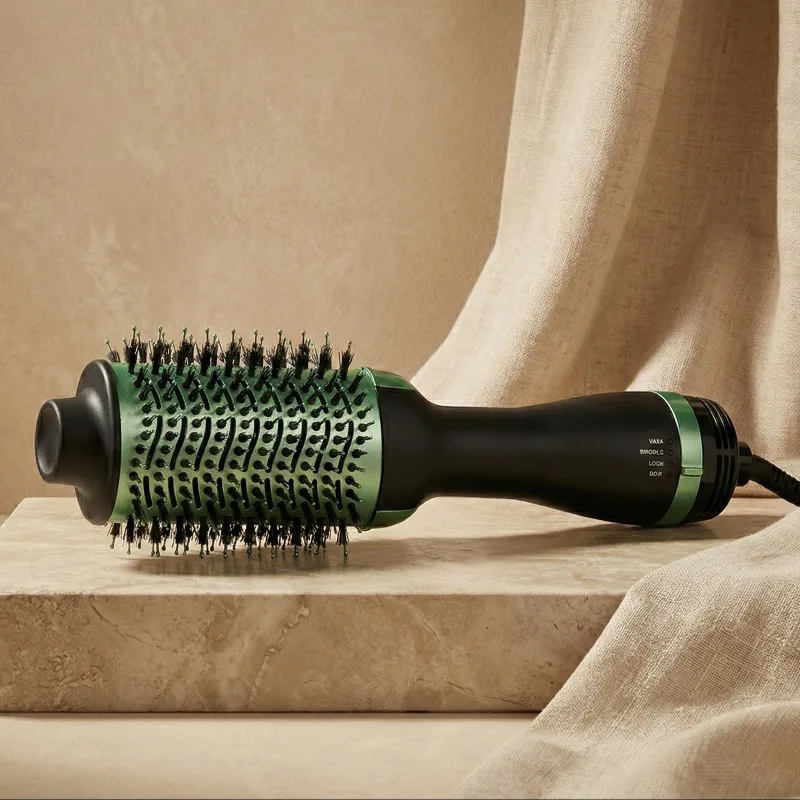
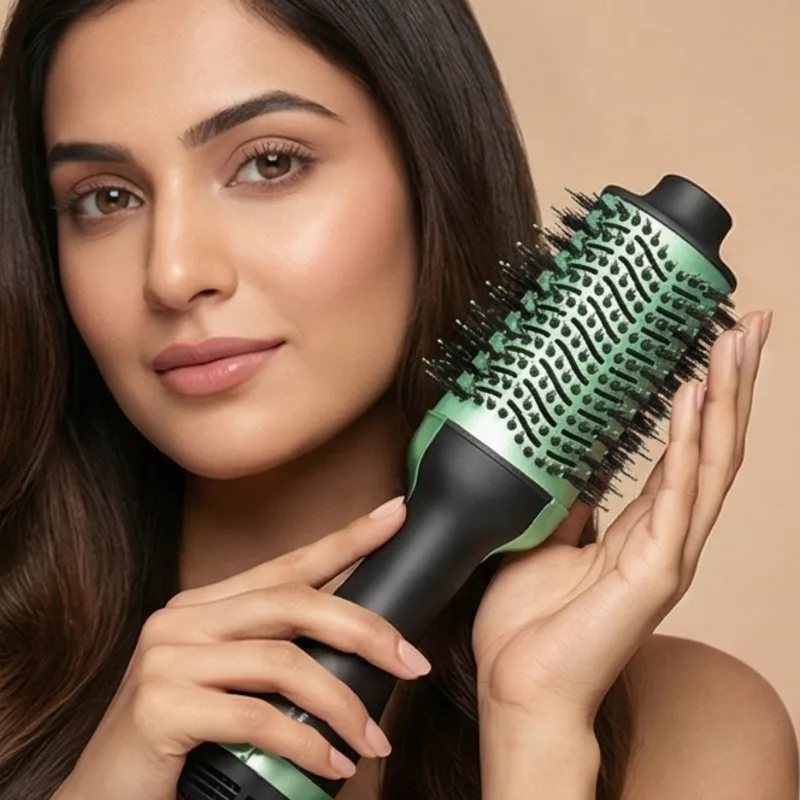
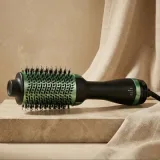
- A hot air brush, such as the StyleAir 3-in-1 hot air brush, dries, smooths and adds volume in one step from towel-dried hair. Because it dries and brushes in the same pass, it can leave the cuticle lying flatter than air-drying. Use heat protectant and the lower setting for fine hair.
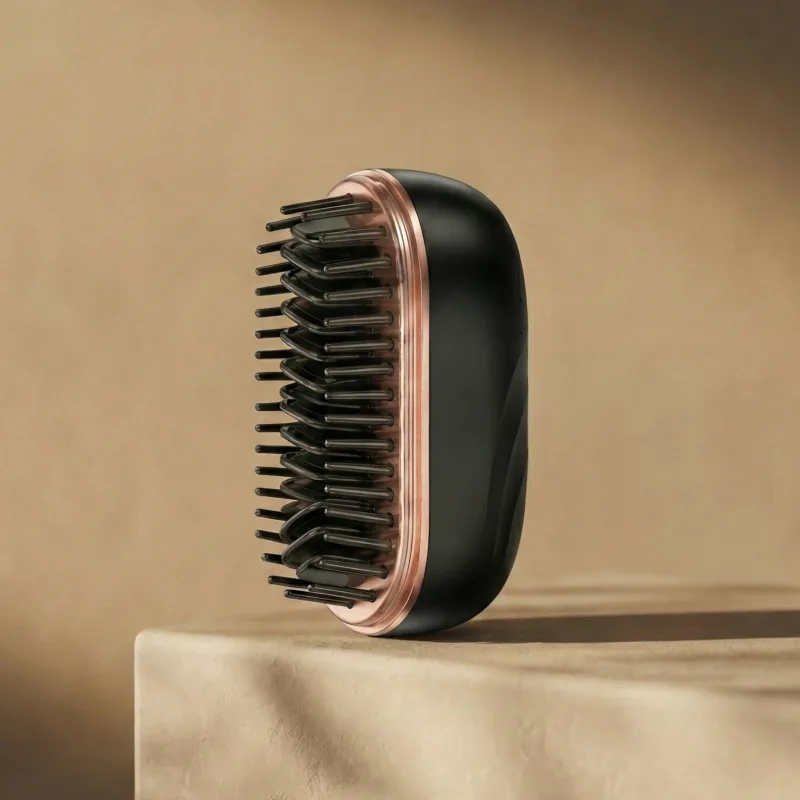
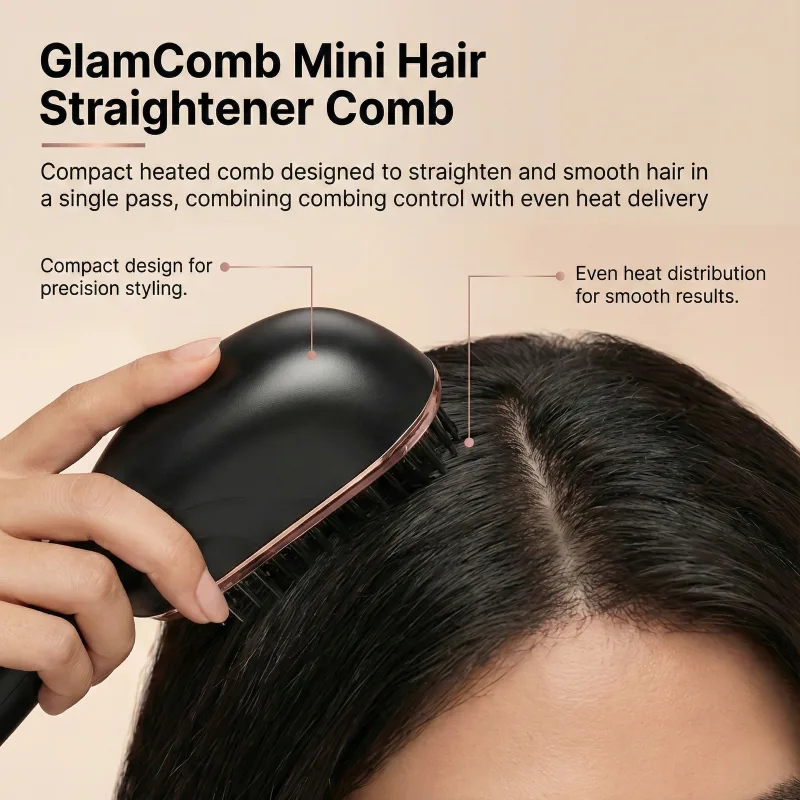
- A heated straightener comb, such as the GlamComb mini straightener comb, is handy for quick touch-ups of a frizzy crown or ends. It is ready in about 30–60 seconds and is small enough for a handbag. Use it only on completely dry hair, in 2–3 cm sections, with heat protectant. It gives a smooth, natural finish rather than a glass-straight one.
Neither tool changes how porous your hair is. In very high humidity, some frizz will still come back by evening. Not sure which suits you? Our hot air brush vs straightener comparison breaks it down by hair type.
How can you keep frizz down overnight and between washes?
- Sleep on a smooth pillowcase. A satin or silk-feel pillowcase causes less friction than rough cotton.
- Loosely tie long hair. A loose plait or a soft high bun with a scrunchie (no metal clips) stops tangling and creasing.
- Never sleep on wet hair. It tangles, frizzes and stays damp for hours in humid weather.
- Refresh, don't re-wet. In the morning, smooth a drop of serum between your palms and press it over the top layer. Re-heat only the frizzy parts.
- Carry a backup. A small comb, a scrunchie and a tiny bottle of serum rescue most frizz after a commute in the rain.
When is frizz a sign of something more?
Everyday frizz is cosmetic. But speak to a dermatologist if you notice any of these:
- Hair snapping off in short pieces or breaking easily when combed
- Noticeably more hair fall over several weeks, or thinning patches
- An itchy, flaky, red or painful scalp, which may be dandruff or another scalp condition
- Sudden changes in texture after illness, a new medicine or childbirth
These can have causes that conditioners and styling won't touch, and a doctor can look at diet, thyroid, iron levels or scalp health where relevant.
Frizz control is mostly about consistency: gentle washing, conditioning every time, drying fully and styling dry hair. Try the routine for two or three wash days before judging it. For help choosing a styling tool for your hair type, browse our hair tools or send a photo of your hair to our team on WhatsApp at +91 98116-65715.