
Short answer: Blue light is usually chosen for oily skin with surface pimples because it acts on the bacteria linked to acne. Red light is usually chosen for redness and skin that looks irritated after breakouts. If you have both, alternating them across the week is a sensible place to start. LED can support a good skincare routine for mild to moderate breakouts, but it won't clear deep, painful or cystic acne, and results vary.
Key takeaways
- Blue light works closer to the skin's surface and is mainly used for active, oily, breakout-prone skin.
- Red light reaches a little deeper and is mainly used to calm the look of redness and support skin between breakouts.
- An LED routine of 3–4 sessions a week suits most people, and many notice changes around weeks 4–6.
- Check with a doctor before using LED if you take isotretinoin, doxycycline or another photosensitising medicine.
- Painful cysts, scarring or sudden adult acne should be seen by a dermatologist, not managed with a device alone.
What is the difference between red and blue light for acne?
Both are low-level visible light, not UV, and neither heats or burns the skin the way a clinic laser can. The main difference is the wavelength, which affects how far the light travels into the skin and what it is likely to act on.
Bacteria linked to acne make natural compounds that react to blue light, which is why blue is the colour most associated with breakouts. Red light travels deeper and is thought to influence inflammation and skin repair, so it is used more for redness and overall skin comfort. Research on both is promising but still limited, and results differ from person to person. For a wider look at every colour, see our guide to LED face mask benefits and limits.
| Blue light | Red light | |
|---|---|---|
| Main use | Oily skin with active surface pimples | Redness and irritated-looking skin |
| Depth | Shallower | Deeper |
| Best suited to | Frequent small breakouts, often on the forehead or chin | Skin that stays red or sensitive after breakouts |
| Main limit | Won't reach deep cysts or nodules | Doesn't remove blackheads or stop oil production |
| Extra care | Go slowly if you get dark marks or melasma | Can still be unsuitable with light sensitivity or photosensitising medicine |
Which light should you choose for your type of breakout?
Start by looking at what is actually on your skin, because LED doesn't help every kind of bump equally.
Red or yellow-headed pimples that come and go
Start with blue, and add red if the skin around the pimples looks angry. This is the pattern LED is most often used for.
Redness that lingers after a pimple settles
Lean towards red. On many Indian skin tones, what remains after a pimple is more often a brown mark than redness, and that needs a different approach, which we cover below.
Blackheads and tiny bumps on the nose
Neither colour is likely to do much here, because these are mostly about oil and dead skin sitting in the pore. Some of those dots may not even be blackheads, so it is worth learning how to tell blackheads from sebaceous filaments. Salicylic acid is usually the more useful first step.
Deep, sore lumps under the skin
Don't rely on LED for these. They sit deeper than home light devices are likely to help with and can scar, so book a dermatologist visit.
Can you use red and blue light together?
Yes. Most people with both active pimples and redness can use the two colours on different days. It keeps the routine simple and lets you notice how your skin responds to each one. Here is a simple starting plan, which you can adjust to your skin:
| Day | Mostly active pimples | Pimples and redness | Mostly redness |
|---|---|---|---|
| Monday | Blue | Blue | Red |
| Wednesday | Blue | Red | Red |
| Friday | Blue | Blue | Red |
| Sunday (optional) | Red | Red | Rest |
More light is not better. If your skin feels tight, stays red or starts breaking out differently, drop a session and give it a few days to settle.
How do you add LED to an acne routine at home?
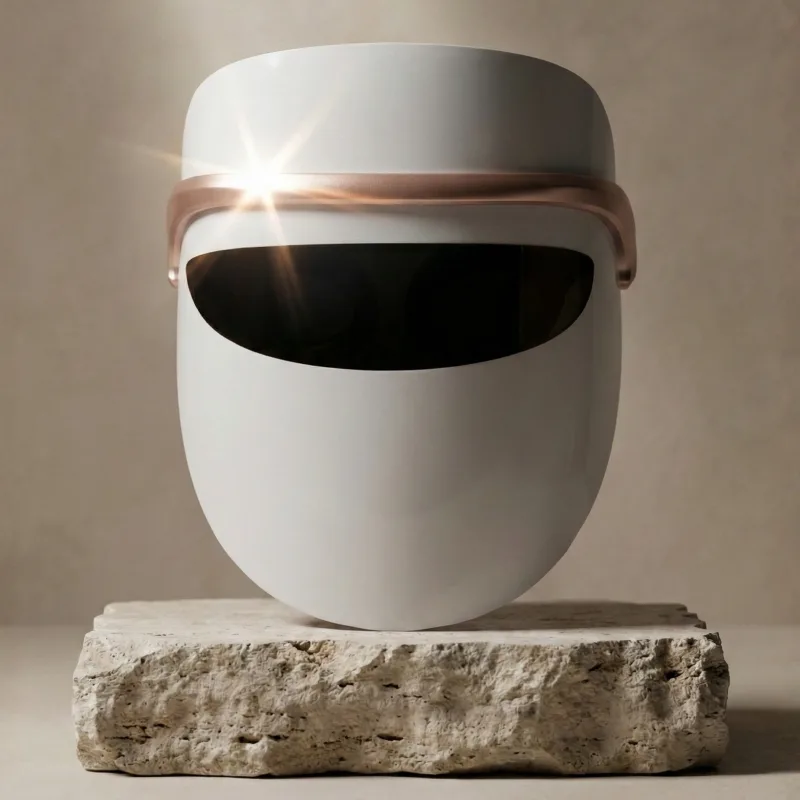
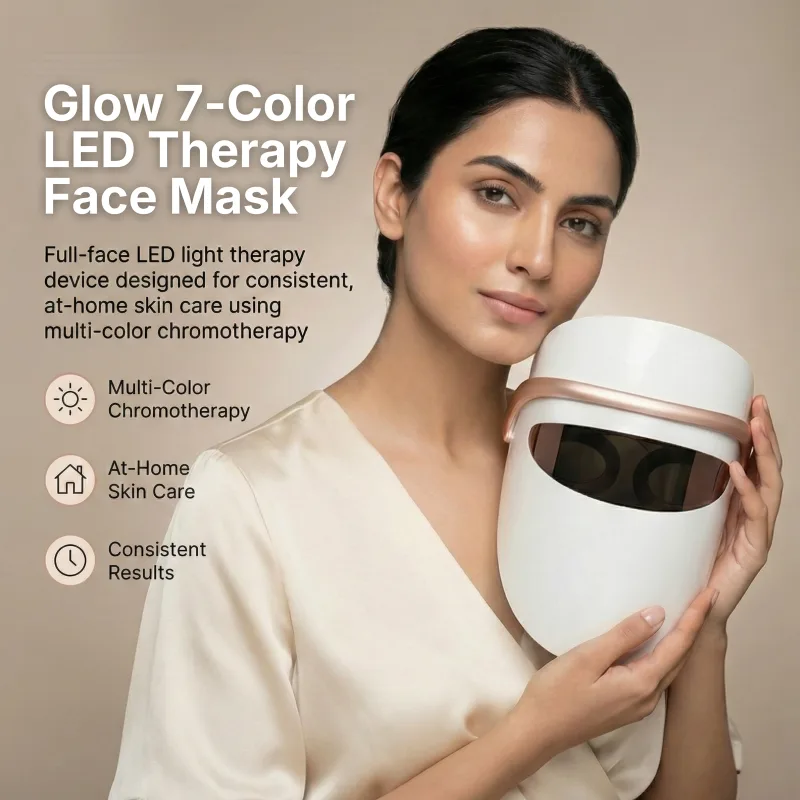
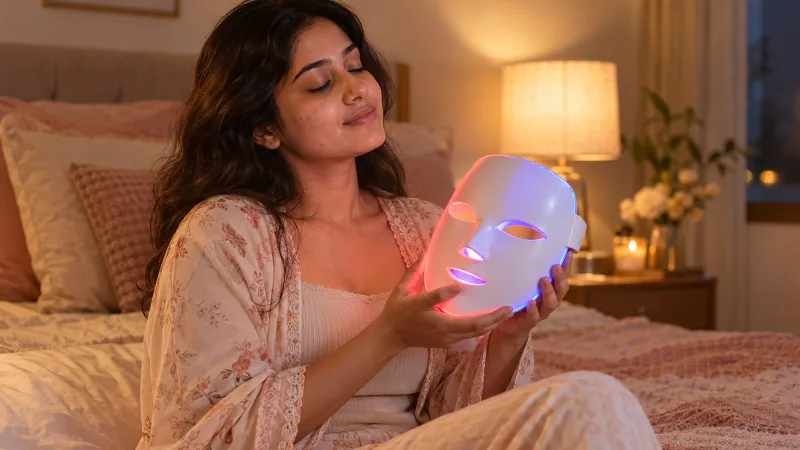
A mask with several colour modes, such as the Glow LED Face Therapy Mask with its 7 modes, lets you switch colours without buying separate devices. It is designed for at-home use, so progress is gradual, and it doesn't replace a dermatologist's care. Follow the session time given in your device's manual, then build the routine like this:
- Cleanse gently. Remove all makeup and sunscreen. Hard water can leave skin feeling tight, so choose a mild cleanser rather than scrubbing harder.
- Pat your face dry. Start with clean, bare skin, and leave serums and acne creams for later.
- Run the session with your eyes closed. Choose blue or red according to your plan.
- Apply your skincare afterwards. Use your serum or acne product, then a light moisturiser.
- Protect your skin the next morning. Wear a non-greasy SPF every day, whichever colour you used.
- Clean the mask. Wipe it as your manual advises, especially in humid weather when sweat and oil build up quickly.
Evenings are usually easiest, because you are washing your face anyway. If you use a prescription cream, ask your dermatologist how to time it around your sessions. Avoid starting a new active and LED in the same week, or you won't know which one caused any irritation.
How long does LED take to show results on acne?
Expect weeks, not days. With 3–4 sessions a week, many people notice better tone and fewer flare-ups around weeks 4–6, though some see little change. A pimple that appears tonight won't vanish by tomorrow morning.
Give it a fair trial of about 8 weeks and take a photo every two weeks in the same light. If you are preparing for a wedding or function, start well in advance and don't try anything new in the final week.
LED also can't outrun everyday triggers. In the Indian climate, look at these too:
- Sweat and humidity trapped under a helmet or dupatta
- Hair oil left on overnight, which can travel to the forehead and hairline
- Heavy creams that suit a Delhi winter but not a Mumbai monsoon
- Pollution and sunscreen that aren't properly cleansed off at night
Our routine for oily skin in humid weather covers the daily basics that give LED a better chance of helping.
Does LED help with dark marks left by acne?
Don't count on it. The brown or dark marks left after pimples, known as post-inflammatory hyperpigmentation, are very common on Indian skin and can last for months. Daily sunscreen and not picking at spots matter most. A dermatologist can suggest suitable ingredients if the marks bother you.
There is also a caution here. Visible light, including blue light, has been linked to increased pigmentation in some people with medium to deep skin tones. If you tan easily or get dark marks, begin with fewer blue sessions and watch your skin closely. Stop if the marks seem to deepen. If you have melasma, ask a dermatologist before starting.
Who should not use LED light for acne?
Skip LED or speak to your doctor first if any of these apply:
- You take a photosensitising medicine, which can include acne medicines such as isotretinoin and doxycycline
- You have epilepsy or a condition that makes you sensitive to light
- You are pregnant
- Your skin is broken or freshly peeled
If you aren't sure whether a medicine makes you sensitive to light, ask your doctor or pharmacist before your first session.
When should you see a dermatologist instead?
A home device is an add-on, not a substitute for medical care. Book an appointment if you have:
- Painful lumps or cysts, or any acne that leaves scars or pits
- Sudden acne as an adult
- Breakouts along the jaw and chin alongside irregular periods or new facial hair, which may need checking for PCOS or another hormonal cause
- No real improvement after 8–12 weeks of a steady routine
- Breakouts that started after a new medicine or steroid cream
Early care can help limit scarring, which is much harder to improve later.
If you are still unsure where your skin fits, start with a clean, simple routine for two weeks and then decide whether LED is worth adding. You can browse our LED essentials, or message us on WhatsApp at +91 98116-65715 to talk through your skin and whether a mask is a good fit.