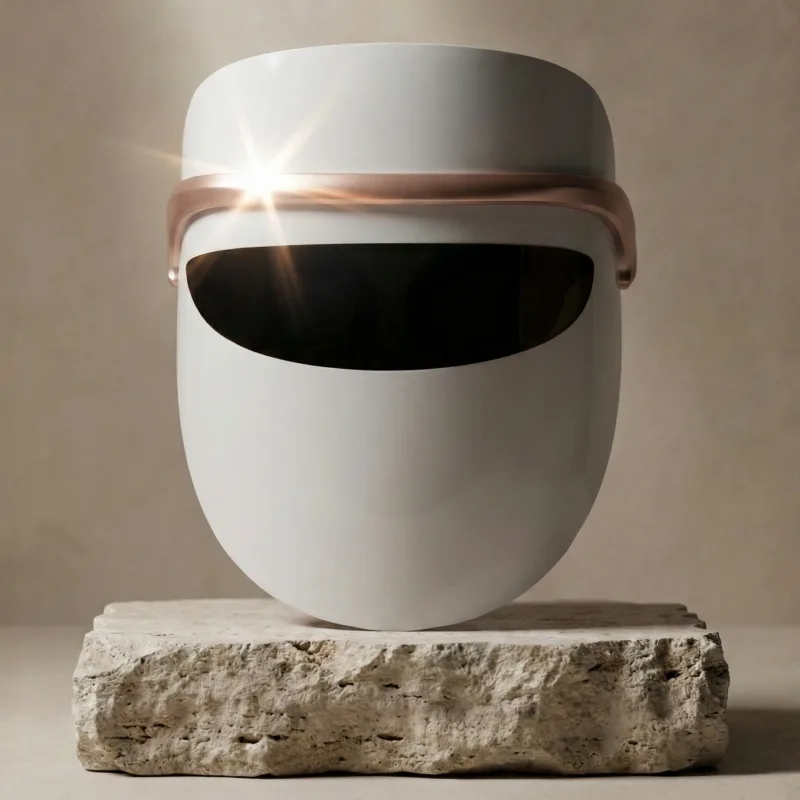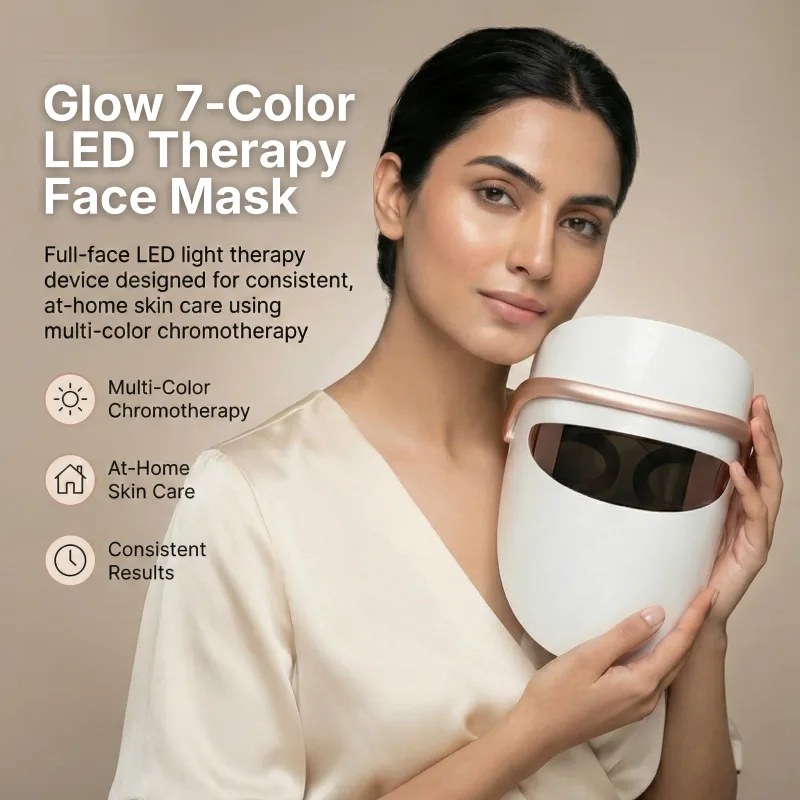
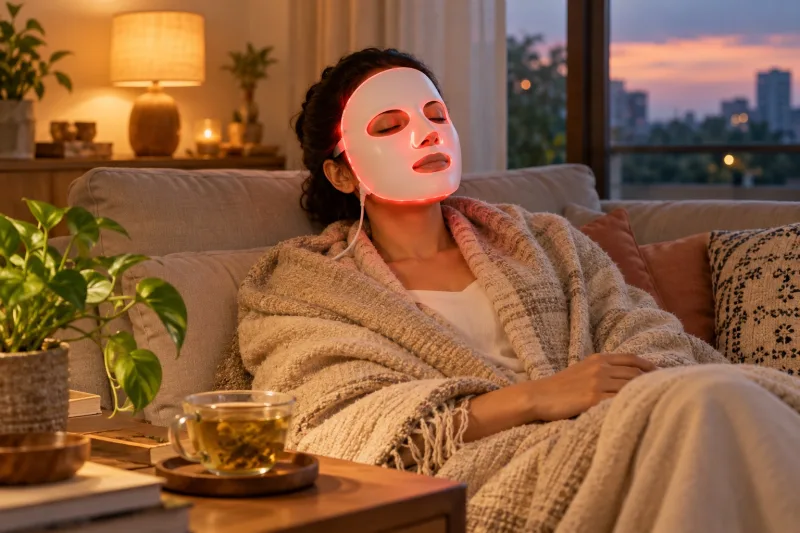
Short answer: an LED face mask uses low-level light to help improve the look of dull, uneven or breakout-prone skin over weeks of regular use. Red and blue light have the most research behind them; other colours have less. Home masks are gentler than clinic devices. Most people use one 3–4 times a week and start noticing a difference around weeks 4–6. Results vary.
You'll find our mask in the LED face mask collection. Here's what LED light therapy is, what each colour is used for, and who should skip it.
How does LED light therapy work?
LED light therapy shines specific colours of light onto the skin. Each colour is a different wavelength, and different wavelengths reach slightly different depths of the skin. The idea is that skin cells respond to certain wavelengths of light, which over time can show up as a more even, clearer-looking complexion.
A few things set it apart from other face treatments:
- No heat, no needles, no downtime. You shouldn't feel anything beyond a little warmth from the mask.
- It's gradual. LED works through regular, repeated sessions, not one dramatic treatment.
- Home masks are lower-powered than the panels used in clinics. That's what makes them suitable for home use, and it's also why they take consistent use.
What does each LED colour do?
Seven-colour masks usually include red, blue, green, yellow, purple, cyan and white. The table below covers what each colour is commonly used for and how much research exists behind it. Check your manual for the exact modes on your mask. For the Glow LED face therapy mask, manufacturer-rated wavelengths are not yet published, so we don't compare it with other masks on wavelength.
| Colour | Commonly used for | How much research? |
|---|---|---|
| Red | The look of fine lines, firmness and dull skin | Most studied |
| Blue | Breakout-prone and oily-looking skin | Well studied for breakout-prone skin |
| Purple | A mix of red and blue, for combination concerns | Limited; based on red and blue research |
| Green | Uneven-looking skin tone | Limited |
| Yellow | Redness-prone or sensitive-feeling skin | Limited |
| Cyan | A calming, relaxing session | Early |
| White | General skin maintenance | Early |
A simple rule: if you're not sure where to start, red is the usual choice for dull or tired-looking skin, and blue for breakout-prone skin. Stick with one colour for a few weeks before judging it.
What results can you realistically expect?
Every week: 3–4 sessions work well for most people. Adjust to how your skin feels.
Weeks 4–6: many users notice a more even tone and firmer-looking skin. Results vary from person to person.
Ongoing: keep up regular sessions to maintain your results. When people stop, any change tends to fade.
What an LED mask can't do
- It won't lift sagging skin or erase deep wrinkles.
- It isn't a cure for acne, pigmentation, scars or any skin condition.
- It doesn't replace sunscreen, a good cleanser or a dermatologist's care.
- It won't show results in a few days. Anyone promising that is overselling.
How do you use an LED face mask?
- Cleanse. Start with a clean, dry face: no makeup, sunscreen or heavy creams, which can block light.
- Pick your light. Choose the colour mode for your concern and put the mask on.
- Close your eyes. Keep them closed for the whole session.
- Relax. Stay still for one timed session, as described in the manual. Don't repeat sessions back to back.
- Finish your routine. Apply your serum and moisturiser afterwards. By day, finish with sunscreen.
- Clean the mask. Wipe the inside with a soft, damp cloth and let it dry before storing.
Evenings work well for most people, because you can follow straight on with the rest of your night routine.
Can you combine LED with other face tools?
Yes. A simple "light, lift, massage" routine many people enjoy:
- LED mask on clean, dry skin.
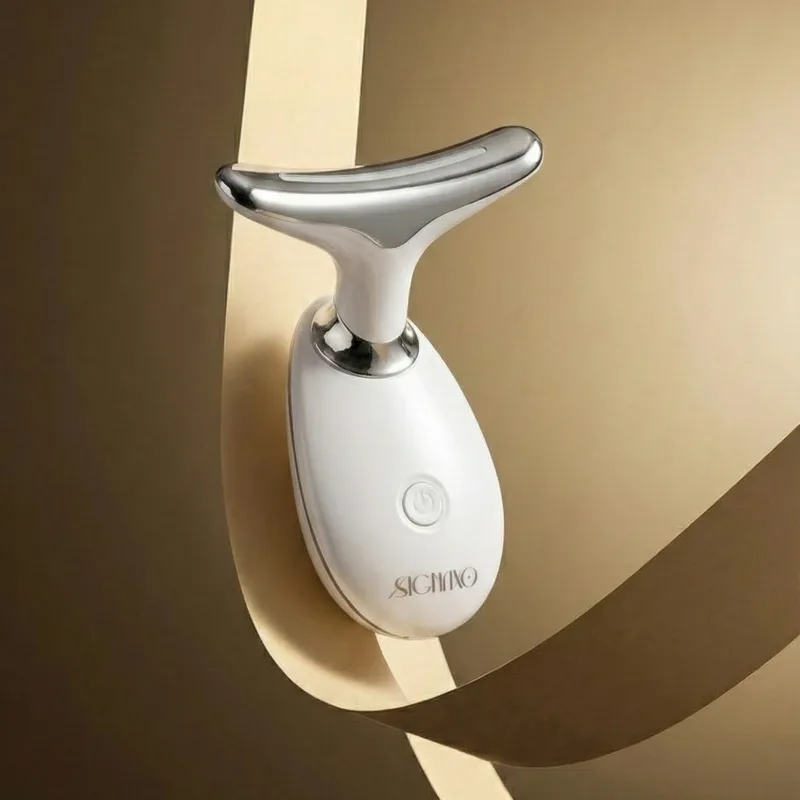
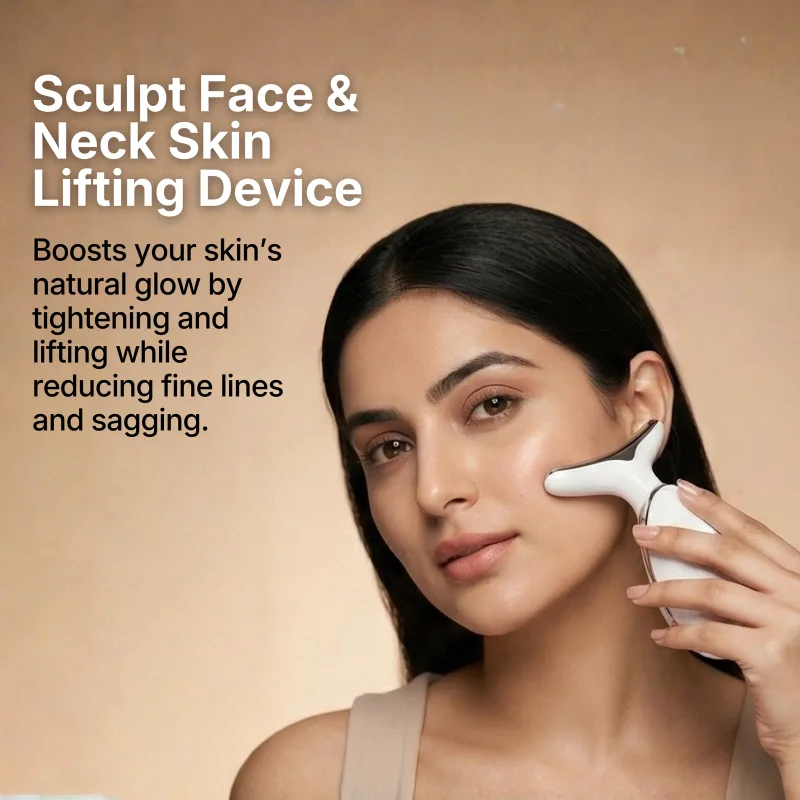
- Serum, then a few minutes with the Sculpt face and neck lifting device for a toning massage along the jawline. Not for anyone with a pacemaker or implanted device, or during pregnancy.
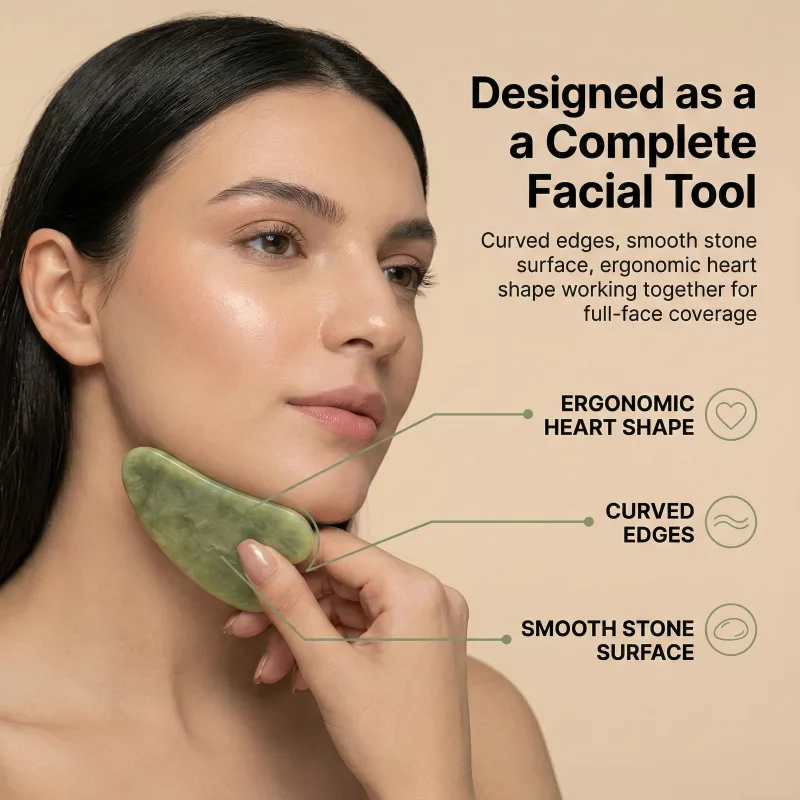
- Finish with a jade roller and gua sha to help your moisturiser spread and depuff the look of skin.
Don't use an LED mask on the same day as a peel, strong retinoid or other light-based treatment unless your dermatologist says it's fine.
What are the most common LED mask mistakes?
- Using it over makeup or sunscreen. Both can block light. Always start with a clean, dry face.
- Switching colours every day. Pick one colour for your main concern and stay with it for a few weeks.
- Doubling up sessions. Two sessions back to back won't speed results. Stick to one timed session.
- Stopping after a week or two. Most people need at least 4–6 weeks of regular use before judging it.
- Keeping your eyes open. Close them for the whole session.
How does an LED mask fit into an Indian skincare routine?
Hot, humid weather and strong sun shape how most of us care for our skin. A few practical points:
- Evenings are easiest. You can cleanse off the day's sweat, sunscreen and pollution, use the mask, then go straight into your night routine.
- Keep sunscreen daily. LED doesn't protect against sun, and sun exposure can undo the look of a more even tone.
- Oily or breakout-prone skin can stay with a light gel moisturiser after the session. There's no need for a heavy cream.
- Add one new thing at a time. If you're also starting a new serum or active, introduce them a couple of weeks apart so you can tell what suits you.
How do you look after the mask?
- Wipe it with a soft, damp cloth after each use. Don't soak it or rinse it under the tap.
- Charge and store it as described in the manual, away from heat and direct sun.
- Don't use it if it's cracked or damaged, or if any lights stop working. Contact us instead.
Who should avoid LED face masks?
- Photosensitising medication: if you take isotretinoin or another medicine that makes skin sensitive to light, ask your dermatologist first.
- Epilepsy or light sensitivity: don't use an LED mask without medical advice.
- Pregnancy: check with your doctor before starting.
- Broken or irritated skin: wait until skin is healed, including after a fresh peel.
- Eye conditions: if you have an eye condition or light-triggered migraines, ask your doctor first.
Stop using the mask if you notice lasting redness, itching or irritation.
How is a home LED mask different from a clinic LED session?
Dermatology clinics and some salons use larger LED panels with higher power output, often as part of a wider treatment plan. A home mask is lower-powered by design so that it's comfortable and suitable for unsupervised use.
That trade-off means you use a home mask more often, over a longer period, to see a change. The upside is convenience: a session fits into your evening without an appointment. If you're already under a dermatologist's care for a skin concern, ask whether a home mask fits alongside their plan.
Is an LED face mask worth it for you?
It's likely to suit you if you want a calm, no-needle addition to your routine, you're happy to use it several times a week for at least 4–6 weeks, and your concerns are the look of dullness, uneven tone or occasional breakouts.
It's probably not the right tool if you want a fast, dramatic change, or if you're dealing with painful, persistent acne or sudden pigmentation. For those, see a dermatologist first. An LED mask can support a routine; it can't replace medical treatment.
Want to build a routine around it? Our guide to hydration vs moisturiser covers the basics that make every other step work better.
Results vary from person to person. Not sure? WhatsApp us. We'll tell you honestly.