

Short answer: To reduce neck lines and tech neck, treat your neck like your face. Apply moisturiser and sunscreen down to the collarbone every day, and bring your phone and laptop up to eye level so you are not folding your neck for hours. Gentle massage or an at-home lifting device can make the skin look smoother and firmer over several weeks. Deep, long-standing lines usually soften rather than disappear, and results vary from person to person.
Key takeaways
- Horizontal neck lines are partly genetic. Many people have faint "necklace lines" even in their twenties, and sun exposure and constant forward bending make them deeper.
- "Tech neck" describes creases and a heavy, tired look from long hours looking down at phones and laptops. Changing posture is the simplest thing that helps.
- Daily sunscreen on the neck matters as much as on the face, because neck skin is thinner and is often left out.
- Massage, gua sha and microcurrent-style lifting devices can make neck skin look fresher and a little firmer with regular use, but the effect is gradual and fades if you stop.
- A dark, velvety neck is not the same as neck lines. It can be linked to blood sugar or hormone issues and is worth showing to a doctor.
Why do neck lines appear so early?
Neck skin is thinner than facial skin and has fewer oil glands, so it dries out faster and shows creases sooner. Several things add up:
- Genetics and anatomy. Some people are simply born with one or two horizontal bands where the skin naturally folds. These can be visible in teenagers and slim young adults.
- Repeated bending. Every time you look down, the skin folds along the same lines. Hours of scrolling, studying or working on a laptop placed low on a table deepen those folds over time.
- Sun. Many of us apply sunscreen to the face and stop at the jaw. Two-wheeler rides, school runs and walking in the afternoon sun all expose the neck, and over time UV weakens the skin's support.
- Dryness. Hard water, hot baths in winter and harsh soaps strip the neck, which makes fine lines look sharper.
- Weight changes and age. As skin loses firmness with age, or after significant weight loss, lines and slight looseness show more on the neck and under the jaw.
What is tech neck, and is it only about lines?
Tech neck is an everyday term rather than a medical one. It describes the creases, the slightly slack look under the chin and the stiff shoulders that come from spending hours with your head tilted forward. Because your head is heavy, holding it forward also strains the muscles at the back of the neck and shoulders. That is why many people with tech neck lines also have neck ache, tight shoulders or a clenched jaw.
So the fix is part skin care and part habit. Creams alone cannot undo a posture you hold for eight hours a day.
What helps neck lines most? A realistic ranking
Not every step does the same amount of work. Here is an honest view of what tends to matter, from most to least important for most people.
| Step | What it does | When you may notice it | Effort |
|---|---|---|---|
| Daily SPF down to the collarbone | Protects thin neck skin from further sun damage and darkening | Mostly long-term prevention | Low |
| Raising screens to eye level | Reduces how often and how deeply the neck folds | Less stiffness within days; lines change slowly | Low to medium |
| Moisturiser morning and night | Plumps the surface so fine lines look softer | Often within 1–2 weeks | Low |
| A gentle active (niacinamide, or a mild retinoid at night) | Supports smoother, more even-looking skin over time | Usually 8–12 weeks | Medium |
| Massage, gua sha or an at-home lifting device | Relaxes tension and can make skin look fresher and a little firmer | Often after 4–8 weeks of regular use | Medium |
| Dermatologist procedures | Stronger options for deep lines or loose skin | Varies by treatment | High |
How should I care for my neck every day?
You do not need a separate "neck cream". The products you already use on your face usually work on the neck too, as long as they are gentle.
- Cleanse gently. When you wash your face, rinse the neck with lukewarm water. Avoid scrubbing, especially where gold chains or a dupatta rub. In humid weather, sweat collects in neck folds, so a quick rinse after a sweaty commute helps.
- Apply serum on slightly damp skin. A hydrating serum (glycerin or hyaluronic acid) or niacinamide is fine for most necks.
- Moisturise with upward strokes. Use a pea-sized amount extra for the neck and smooth it from the collarbone up to the jaw. Dry skin may need a richer cream in winter. Our winter routine for dry skin works for the neck too.
- Sunscreen every morning. Take it down to the collarbone and around the sides of the neck, and reapply if you are outdoors for long. If you ride a two-wheeler, a light cotton scarf adds protection.
- At night, add an active slowly. If you use a retinoid on your face, the neck is more sensitive. Start two nights a week, use a thin layer, and stop if it stings or peels.
One more habit is worth changing. Spray perfume on clothes rather than on the neck, because fragrance on sun-exposed skin can cause irritation and patchy darkening in some people.
How do I fix posture to stop tech neck from getting worse?
This is free and it works on the cause.
- Bring the phone up, not your head down. Hold it closer to eye level, rest your elbows on your body or a table, and lower your eyes instead of your chin.
- Raise the laptop. Stack it on books or a stand so the top of the screen is roughly at eye level, and use a separate keyboard if you can.
- Take micro-breaks. Every 30–45 minutes, sit tall, gently tuck your chin back (as if making a double chin) and hold for a few seconds. Repeat 5–10 times.
- Check your pillow. A very high pillow keeps your chin bent towards your chest all night. A medium-height pillow that keeps your neck in line with your spine is kinder.
If you have neck pain, tingling in the arms or headaches, see a doctor or physiotherapist. Those are not skin issues.
Can massage, gua sha or a lifting device help neck lines?
Yes, within limits. Regular massage relaxes tight muscles, helps serums spread evenly and can leave neck skin looking smoother and less tired. It will not erase a deep crease or tighten genuinely loose skin. Think of it as care, not correction.
Gua sha and rollers
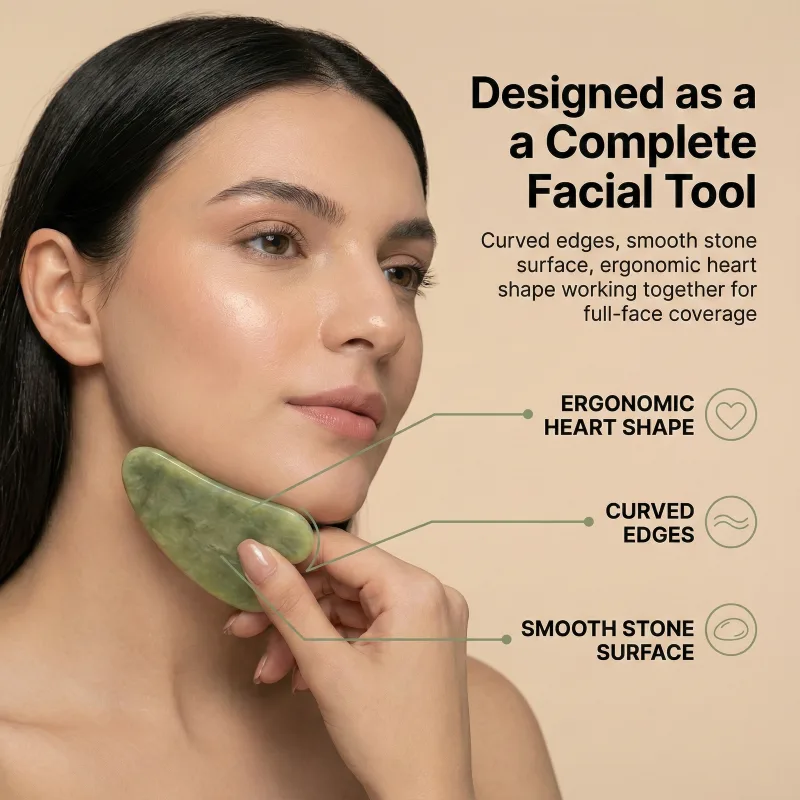
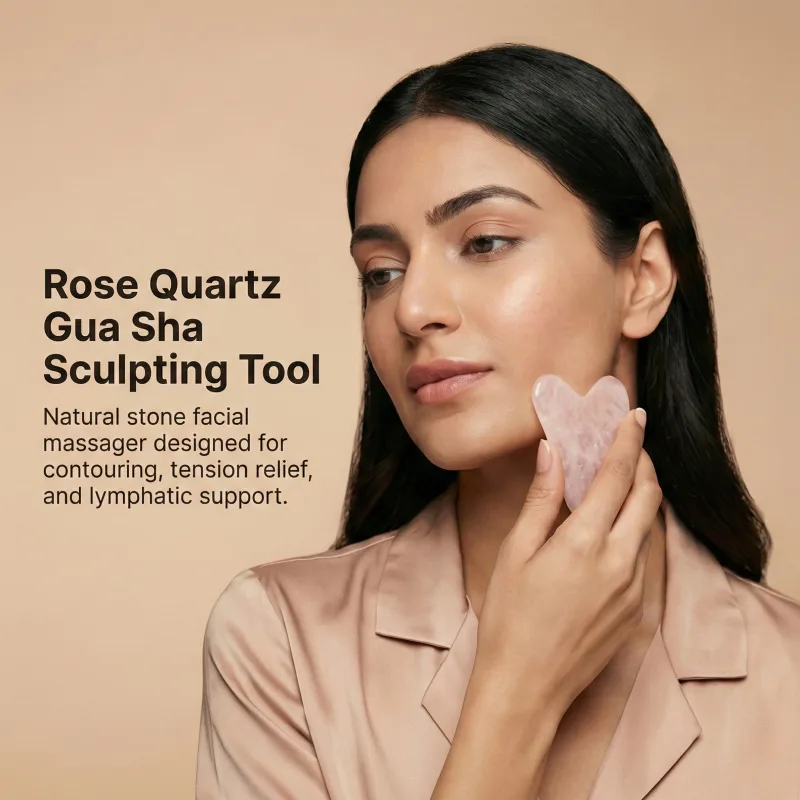
A smooth stone tool such as the Himalayan jade roller and gua sha set is a simple, low-risk start. Apply a few drops of oil or serum, hold the gua sha almost flat and stroke lightly from the base of the neck up towards the jaw, 3–5 strokes on each section. Keep pressure feather-light over the front of the throat. Then continue to the jaw, cheeks and forehead if you like. Keeping the stones in the fridge adds a cooling, depuffing feel. Use it 3–5 times a week. Gentle daily use is also fine. For the full face sequence, see our step-by-step gua sha routine.
An at-home lifting device
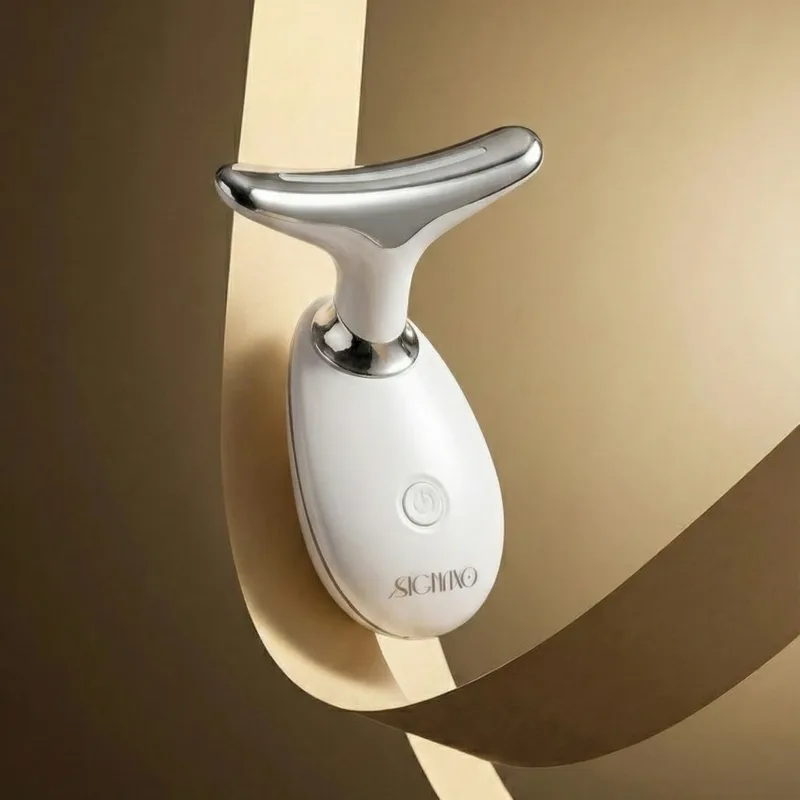
If early sagging along the jaw and neck bothers you, a face and neck lifting device such as the Sculpt Face & Neck Lifting Device can make the area look a little firmer over weeks of regular use. Use it over a serum or gel, start on the lowest setting and always glide upward and outward. Don't press it over the throat. The effect builds slowly and fades if you stop. We explain what to realistically expect in Do face lifting devices really work?
Who should skip a lifting device: anyone with a pacemaker or another implanted electronic device; anyone pregnant (check with your doctor first); anyone with broken skin or active breakouts on the area; and anyone who has recently had fillers, Botox or another procedure.
When are neck changes a reason to see a doctor?
Most neck lines are cosmetic. A few neck changes are not, and they are common in India:
- Dark, thick, velvety skin on the back or sides of the neck. This can be linked to insulin resistance, PCOS or weight changes, and it deserves a check-up, not scrubbing.
- A lump or swelling at the front of the neck, or a sudden change in neck shape.
- Itchy, red or scaly patches that do not settle. These are often a reaction to perfume, jewellery or a new product.
- Deep lines or loose skin that bother you a lot. A dermatologist can discuss prescription creams or in-clinic options that go further than home care.
How long before neck lines look better?
Be patient. A good moisturiser can make fine lines look softer within a week or two because the skin is plumper. Posture changes ease stiffness quickly but take months to show on the skin. Actives and regular massage or device use usually need 6–12 weeks of steady use before you can judge them. Take a photo in the same daylight every four weeks with your head held level. Comparing photos is far more reliable than checking the mirror each morning.
If you also want a sharper jaw, our honest guide to a defined jawline covers the posture and puffiness side in more detail.
A good next step is to start with sunscreen and a higher screen this week, then add massage once those are habits. If you are unsure whether a lifting device suits your skin, our team can help on WhatsApp at +91 98116-65715.