

Short answer: A defined jawline naturally comes mostly from three things: lower overall body fat, good head and neck posture, and less facial puffiness. Daily facial massage and an at-home lifting device can make the jaw and neck look a little firmer and sharper over several weeks, but they cannot remove fat under the chin or tighten loose skin. Your bone structure and genetics set the outer limit, and working with them is more realistic than fighting them.
Key takeaways
- How sharp a jawline looks depends on bone structure, body fat, skin firmness, puffiness and posture. No single exercise or tool changes all five.
- You cannot burn fat from the chin alone. Fat under the jaw shrinks only when overall body fat goes down.
- A forward-head, phone-down posture can create a double-chin look even in slim people. Correcting it costs nothing and shows at once.
- Gua sha, rollers and cold tools reduce puffiness for a few hours, not permanently. Regular use keeps the effect going.
- Sudden swelling, a lump under the jaw or a lump at the front of the neck needs a doctor, not a beauty routine.
What actually decides how sharp your jawline looks?
A defined jawline is really a clean line where the jaw meets the neck. Five things shape that line:
- Bone structure: the width and angle of your jaw and the size of your chin. This is genetic and does not change with routines.
- Fat: both the fat under the chin and the fat in the lower cheeks. Some people store fat here easily even at a healthy weight.
- Skin firmness: from the late twenties onwards, skin slowly loses some firmness, and the line along the jaw softens. Sun exposure speeds this up.
- Puffiness: fluid that settles in the face overnight or after a salty meal blurs the jawline, often more in the morning.
- Posture: how you hold your head changes how much skin and fat gathers under the chin, at least in photos and in the mirror.
The good news is that three of these five (fat, puffiness and posture) respond well to everyday habits. Skin firmness responds a little. Bone structure is simply yours.
Why do I have a double chin if I'm not overweight?
This is one of the most common frustrations, and it usually has a simple explanation. Use the table below to work out what is going on in your case.
| Likely cause | How to tell | What helps | What won't help much |
|---|---|---|---|
| Posture (forward head) | The double chin disappears when you sit tall and look straight ahead | Screen at eye level, chin gently tucked, neck stretches | Creams or massage alone |
| Puffiness | Worse in the morning or after salty food, alcohol or poor sleep; better by afternoon | Less salt at night, water, sleep, cool massage towards the neck | Weight loss diets |
| Genetic fat pad | Present for years, even at a healthy weight; soft and pinchable | Overall fat loss may help a little; a dermatologist can explain clinic options | Jaw exercises, massage |
| Overall weight gain | Face, neck and body all fuller than before | Gradual weight loss through food, activity and sleep | Spot exercises |
| Skin laxity (age) | Skin along the jaw looks softer or slightly hanging; pinched skin is thin, not fatty | Daily sunscreen, gentle massage, an at-home lifting device for a modest firmer look | Expecting a surgical-level lift |
Many people have two of these at once, for example a little genetic fullness plus morning puffiness. Fixing the parts you can change still makes a visible difference.
Can you lose fat from your face and chin only?
No. The body does not burn fat from the spot you exercise or massage. Fat under the chin reduces when your overall body fat reduces, and for some people the face is one of the last places it leaves.
What does help the face look leaner, often within days, is cutting things that add water retention on top of fat:
- Salt late in the day: pickles, papad, namkeen, packaged soups and restaurant gravies at dinner often show up as a puffy jaw the next morning.
- Alcohol and very late meals: both tend to leave the face fuller the next day.
- Short sleep: tired skin and fluid build-up go together.
- Too little water: it sounds backwards, but staying well hydrated helps the body hold less extra fluid.
If puffiness is your main issue, our guide on reducing morning face puffiness goes into quick fixes in more detail.
Do jawline exercises, mewing and chewing gum work?
Social media is full of jawline tricks. Here is an honest view:
- Mewing (resting the whole tongue on the roof of the mouth): it can encourage you to hold your head and chin in a better position, which may make the jaw look slightly sharper in the moment. Claims that it reshapes adult bone are not supported.
- Chewing gum or jaw trainers: heavy chewing may build the jaw muscle a little, which can make the lower face look wider rather than slimmer. It can also strain the jaw joint and cause clicking, pain or headaches. Not worth it, especially if you already clench your teeth.
- Neck and chin exercises (chin tucks, gentle neck lifts): useful for posture and a feeling of firmness, but they do not burn fat under the chin.
In short: exercises help posture, not fat. Stop anything that causes jaw pain.
How does posture change your jawline?
Long hours looking down at a phone or a laptop on a dining table push the head forward. The skin and soft tissue under the chin bunch up, and the jaw-to-neck angle disappears. It is temporary, but if you spend most of your day like this, it is the jawline people see.
- Raise your laptop so the top of the screen is at eye level, and hold your phone higher instead of dropping your head.
- Every hour, do 5 slow chin tucks: pull the chin straight back (as if making a slight double chin), hold for 3 seconds, release.
- For photos, push your face very slightly forward and down, rather than lifting the chin up. It defines the jaw line instantly.
A 5-minute daily jawline routine at home
Massage and cool tools cannot remove fat, but they can move fluid away from the jaw, relax a tight, clenched jaw and make the area look neater for a few hours. Done regularly, many people find their face looks less puffy overall. Results vary.
- Start with clean skin and a few drops of face oil or serum on the jaw and neck so tools glide without tugging.
- Begin at the neck. Stroke gently downward on the sides of the neck towards the collarbone 3–5 times to give fluid somewhere to go.
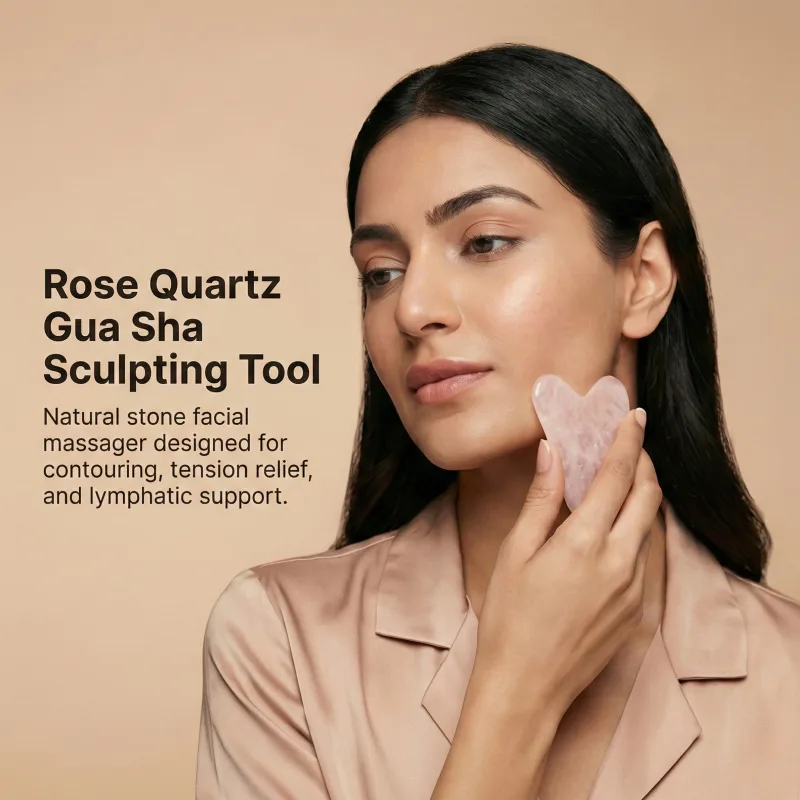
- Work along the jaw. With a gua sha held almost flat, glide from the centre of the chin along the jawbone to just below the ear, 3–5 strokes per side. Feather-light pressure is enough.
- Under the chin. Sweep from the centre under the chin outward towards each ear, 3–5 strokes.
- Finish with a roller or cold tool, rolling upward and outward over the cheeks 5–6 times. Keeping the stone in the fridge adds a stronger depuffing feel, which suits Indian summers and humid mornings.
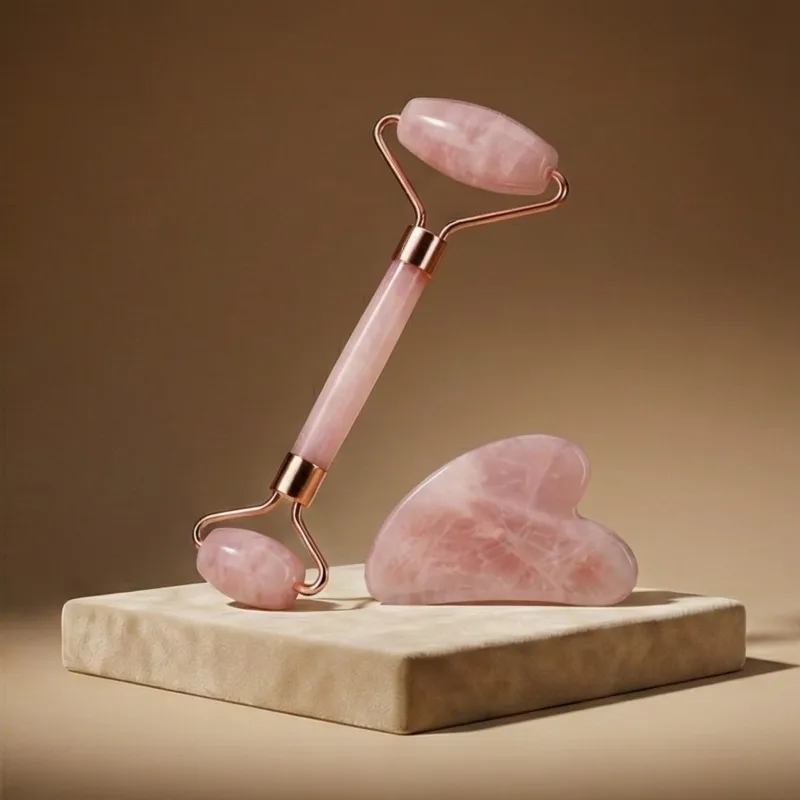
A rose quartz or jade set such as the Rose Jade Roller & Gua Sha Set covers both the gua sha and roller steps; use it 3–5 times a week, and gentle daily use is fine. For a full stroke-by-stroke guide, see how to use gua sha on your face. Skip areas with active breakouts and keep pressure very light if you have rosacea or easily flushed skin.
Where a lifting device fits
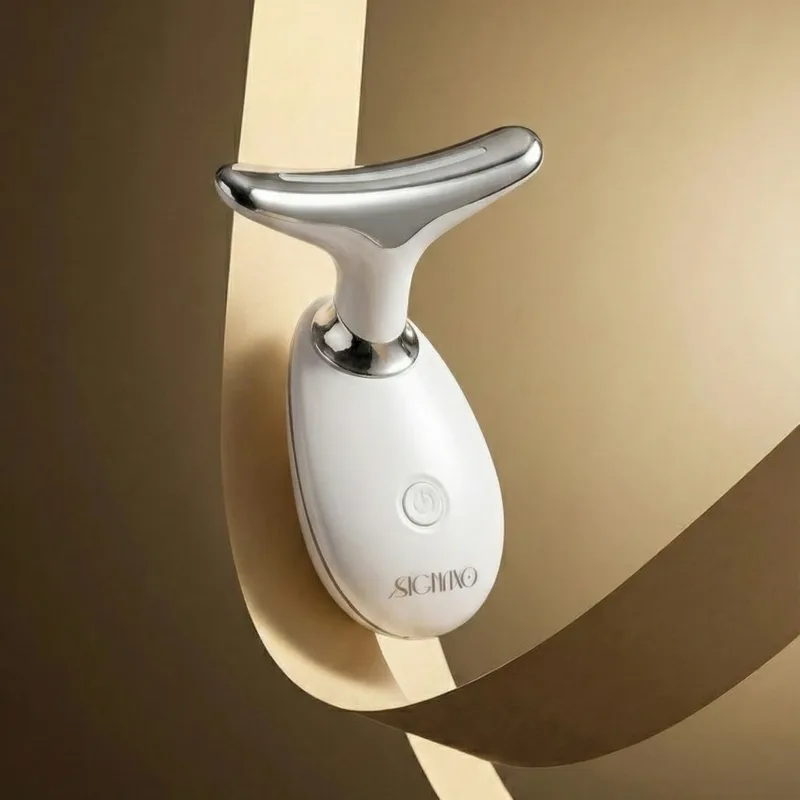
If the softness along your jaw is more about early sagging and tired-looking skin than fat, an at-home device like the Sculpt Face & Neck Lifting Device can be added a few times a week. Use it over a serum or gel, start on the lowest setting and always glide upward and outward from the neck to the jaw. Expect a modestly firmer, fresher look over weeks, which fades if you stop. It will not remove a fat pad or loose skin. Do not use it with a pacemaker or any implanted electronic device, on broken skin or active breakouts, soon after fillers, Botox or other procedures, or during pregnancy without checking with your doctor. Our honest guide Do face lifting devices really work? explains what to realistically expect.
What protects your jawline as you get older?
The single most useful long-term habit is daily sunscreen on the face and neck. Sun exposure is one of the main reasons skin loses firmness, and the jaw and neck are often forgotten. Beyond that:
- Keep your weight steady rather than swinging up and down repeatedly.
- Eat enough protein and sleep well; skin reflects both.
- Moisturise the neck along with the face, especially in dry winter months.
- Avoid smoking, which speeds up skin ageing.
When should you see a dermatologist or doctor?
See a doctor promptly if you notice a new lump or swelling at the front of the neck or under the jaw, swelling on one side only, swelling with pain, fever or difficulty swallowing, or a sudden change in your face shape. These can relate to glands, the thyroid, teeth or infection and need a proper check.
If you have a fat pad under the chin that has not changed despite a healthy weight, or noticeable skin laxity that bothers you, a dermatologist can explain clinic-based options, their risks and their costs honestly. At-home tools are for maintenance and a modest boost, not a replacement for that conversation.
If you would like help picking between a stone set and a lifting device, browse our facial essentials or message us on WhatsApp at +91 98116-65715. Tell us what bothers you most about your jawline, and we will suggest the simplest place to start, even if that is just posture and less salt at dinner.