Short answer: Most people get only mild redness, warmth or tiny raised bumps around the hair follicles after an IPL session, and these usually settle within a few hours to a day. Less common side effects include burns, blisters, darker or lighter patches and, rarely, thicker hair growth near treated areas. Nearly all of the serious ones are linked to avoidable causes: a level that is too high, tanned or very deep skin, flashing over moles or tattoos, or skipping the patch test.
Key takeaways
- Mild pinkness, warmth and goosebump-like bumps after IPL are normal and usually fade within 24 hours.
- Blisters, crusting, or skin that stays dark or light for more than a few days are not normal. Stop and see a dermatologist.
- The biggest risk factor for burns and pigment changes is skin that is too dark or freshly tanned for the light energy used.
- A 24-hour patch test on the lowest level before every new body area prevents most problems.
- IPL is not suitable for very deep brown skin (type VI), over tattoos or dark moles, or on blonde, red, grey or white hair.
Why does IPL cause side effects at all?
IPL works by sending a flash of broad-spectrum light into the skin. The pigment in a dark hair, melanin, absorbs that light and turns it into heat, which weakens the follicle over repeated sessions. The catch is that the melanin in your skin absorbs light too. When there is a clear contrast between dark hair and lighter skin, most of the heat goes into the hair. When the skin is deeper, tanned or patchy, more of the heat lands in the skin itself, and that is where redness turns into irritation, burns or pigment changes.
This is why skin tone matters so much for Indian users. Many Indian skin tones (types III–IV) do well with IPL, while deep brown skin (type V) needs more care and very deep skin (type VI) should not use at-home IPL. If you are not sure where you fall, our guide on whether IPL is safe for Indian skin tones explains each type in detail.
Which IPL side effects are normal after a session?
These are expected reactions that show the light reached the follicle. They should be mild and short-lived.
- Redness and warmth: a pink flush, like mild sunburn, for a few hours. It can last up to a day on sensitive areas such as the upper lip or bikini line.
- Small bumps around follicles: slightly raised, goosebump-like dots, sometimes called perifollicular swelling. They usually flatten within hours.
- A snapping or stinging feeling during the flash: often described as a rubber band flick. It should be bearable, not sharp.
- Mild itching as hair sheds: over the next one to three weeks, treated hairs may loosen and fall out. Some people notice light itching during this time.
- A faint burnt-hair smell: usually from hairs left too long. It means you need a closer shave next time.
Which side effects are not normal, and why do they happen?
| Side effect | How often it happens | Usual cause | What to do |
|---|---|---|---|
| Redness, warmth, small bumps | Common | Normal heat response around follicles | Cool the skin, moisturise, avoid sun; fades within a day |
| Redness lasting more than 2–3 days | Uncommon | Level too high, sensitive area, recent exfoliation | Pause, drop a level next time, see a doctor if it does not settle |
| Blisters, crusting, a burn | Uncommon | Tanned or too-dark skin, high level, overlapping flashes, flashing over moles | Stop using the device on that area and see a dermatologist |
| Darker patches (hyperpigmentation) | Uncommon, more likely on deeper skin | Heat absorbed by skin pigment, sun exposure after sessions | Strict sun protection, stop sessions there, see a dermatologist |
| Lighter patches (hypopigmentation) | Rare | Too much energy on deeper skin | Stop and see a dermatologist |
| Thicker or new hair near treated areas (paradoxical growth) | Rare | Not fully understood; more often reported on the face and neck and in hormonal hair | Stop on that area and ask a dermatologist |
| Eye discomfort | Rare, preventable | Flashing near the eyes or looking at the flash | Never use near the eyes or brows; see a doctor if vision is affected |
Burns and blisters
A burn after IPL usually looks like a red or brown patch in the shape of the flash window, sometimes with a blister or crust over the next day. It almost always happens when the skin has more pigment than the device level can handle, for example after a beach trip or a sunny wedding weekend, or when flashes overlap on the same spot. Never pop a blister. Keep it clean and covered and get it checked by a doctor.
Darkening or lightening of the skin
Indian skin is prone to post-inflammatory hyperpigmentation, meaning any irritation can leave a darker mark. After IPL this tends to show up on the underarms, bikini line or upper lip, where skin is often already a little darker. These marks usually fade slowly with sun protection, but this can take weeks or months. Lightened patches are rarer and can take longer, so stop at the first sign of either.
Paradoxical hair growth
In a small number of people, hair near the treated area becomes thicker or darker instead of thinner. It has been reported more often on the face and neck, in deeper skin tones and in people with hormonal hair growth such as PCOS. It is rare, and the exact cause is not fully known. If you notice coarser hair appearing just outside your treatment zone after several sessions, stop and talk to a dermatologist. Our article on IPL for PCOS facial hair covers what to realistically expect on the chin and jaw.
How can I prevent IPL side effects before they start?
Most problems are avoidable with good preparation. Follow these steps before every session, and especially before the first one on a new area:
- Check your skin and hair suit IPL. You need black, dark brown or light brown hair and skin type I–IV (type V only with extra care). Use the IPL skin tone checker if you are unsure.
- Avoid tanning for at least two weeks before. Indian sun is strong year-round, from winter terrace afternoons to outdoor festivities. If an area has tanned, wait until it fades.
- Shave the day before or on the day. Never wax, thread or pluck, because the light needs the root in place. A clean shave also stops surface hair from burning.
- Skip exfoliants and strong actives for a few days. Pause retinoids, AHAs, scrubs and peels around sessions on the same area.
- Patch-test on the lowest level and wait 24 hours. If the patch shows only mild, short-lived redness, you can continue. Increase the level gradually over sessions, not all at once.
- Cover moles, tattoos and darker spots. A white eyeliner pencil or a small plaster works. Never flash over them.
- Flash once per spot, without overlapping. Doubling up on the same patch is one of the most common causes of burns.
- Keep to the schedule. One session every two weeks is enough. Flashing more often does not speed results and adds irritation. Our 12-week IPL session plan lays out the timing.
Who should not use IPL at home?
Skip at-home IPL, or speak to a doctor first, if any of these apply to you:
- Very deep brown skin (type VI), or recently tanned skin of any tone.
- Blonde, red, grey or white hair. There is not enough pigment for the light to work, so you only risk irritation.
- Pregnancy. Check with your doctor before using it.
- Photosensitising medicines such as isotretinoin, some antibiotics or other drugs that make skin react to light. Ask your doctor.
- Tattoos, permanent makeup, dark moles or any mole that has changed. Get changing moles checked by a dermatologist anyway.
- Broken, sunburnt, infected or eczema-prone skin in the area you want to treat.
- Any history of keloids or unusual scarring, or a skin condition that flares with light. A dermatologist's opinion is wise here.
What should I do if my skin reacts after IPL?
For normal redness
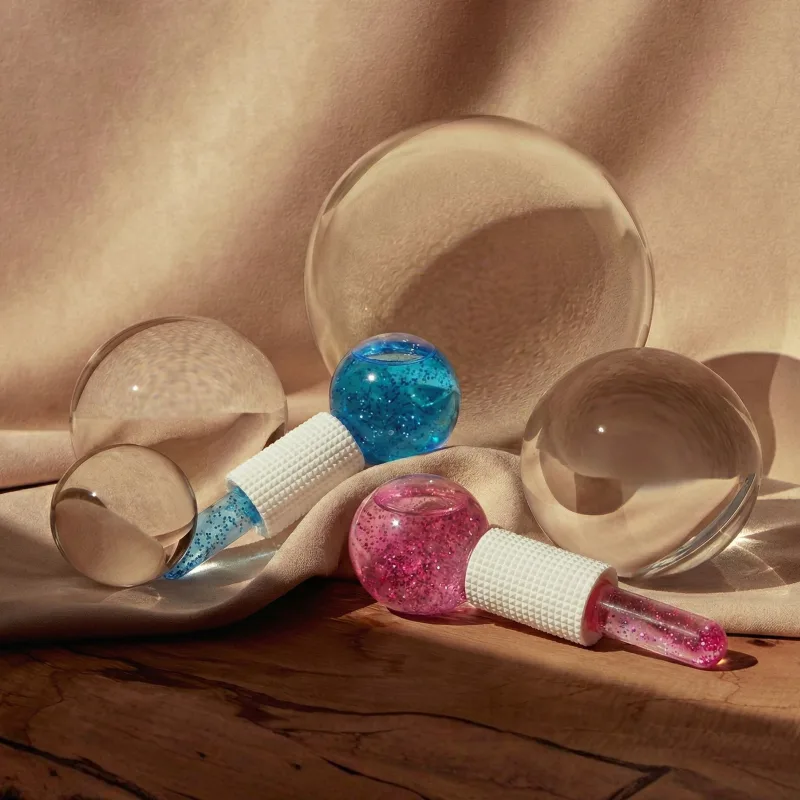
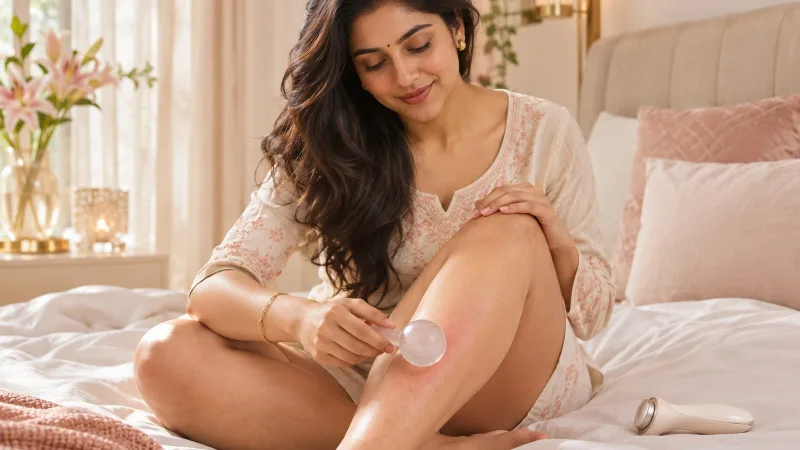
Cool the area for a few minutes. A cold, damp cloth works, as do chilled ice globes kept moving gently over the skin. Then apply a plain, fragrance-free moisturiser or aloe gel. Avoid hot showers, saunas, gym sweat, deodorant on freshly treated underarms and perfumed products for the rest of the day. Use a broad-spectrum SPF on any exposed treated skin and keep it out of direct sun for the next two weeks. If you use ice, keep sessions short, as explained in our guide to icing your face safely.
When to see a dermatologist
Stop using the device on that area and see a doctor if you notice blisters or crusting, swelling or pain that worsens after the first day, signs of infection such as pus, spreading redness or fever, dark or light patches that do not start to fade within a week or two, thicker hair appearing near treated skin, or any problem with your eyes or vision.
Using IPL at home with fewer side effects
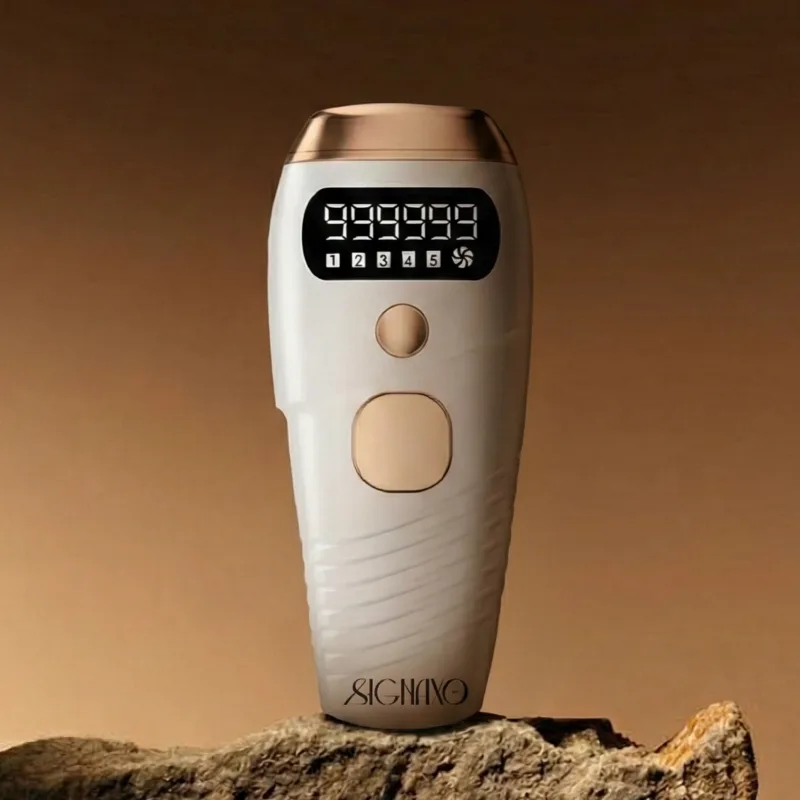
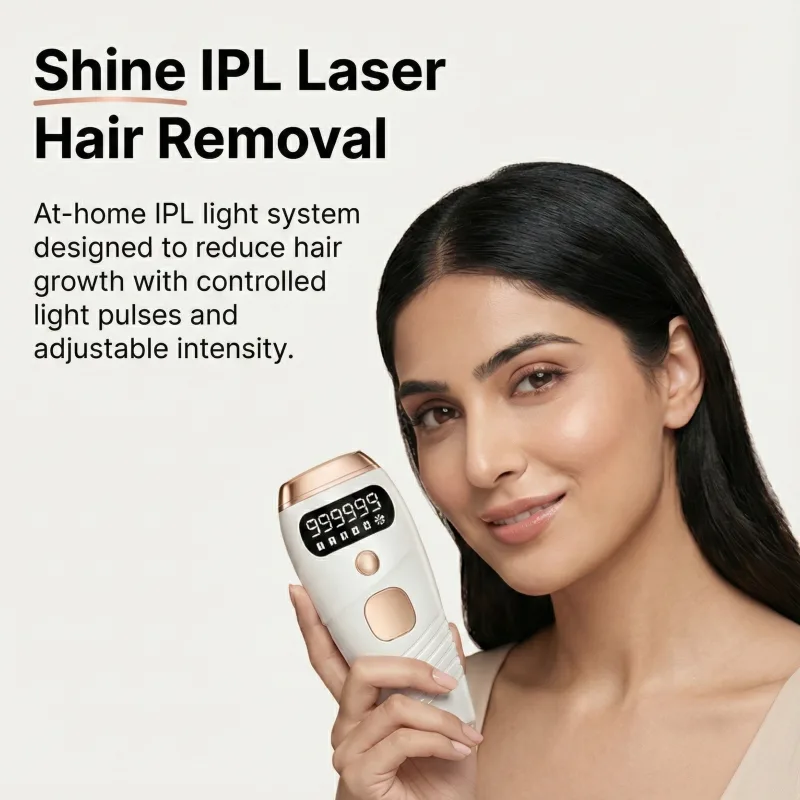
A home device uses lower energy than a clinic machine. That makes it gentler and slower, which is a reasonable trade-off for many people. An at-home IPL device such as the Shine IPL hair removal device lets you start on the lowest level and step up slowly as your skin shows it is comfortable. It suits skin types I–IV with dark hair, type V only with care and a patch test, and not type VI. Remember that IPL gives long-term hair reduction, not permanent removal. Most people notice slower, finer, patchier regrowth around sessions 4–6, and hormonal areas take longer.
For aftercare, a pair of chilled Frost ice globes can help calm post-session redness on the face, underarms or legs. Keep them in the fridge, or give them 10 minutes in the freezer and let them rest a minute, then roll from the centre outward without stopping in one place. They soothe the look and feel of warm skin, but they will not fix a burn. That needs a doctor.
If you are still unsure whether IPL is right for your skin, start with the skin tone checker, or send a clear photo of your skin and hair to the Signaxo team on WhatsApp at +91 98116-65715. They can tell you honestly whether a device suits you, and which level to begin on.