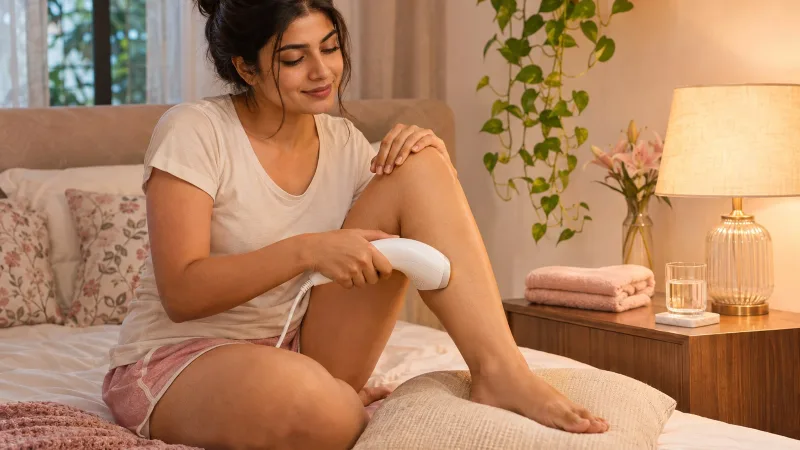
Short answer: Legs and arms are among the easiest areas to treat with at-home IPL, but they are also the biggest, so technique matters more than power. Shave the day before, patch-test on the lowest level, then work in neat rows, one section of a limb at a time, with each flash slightly overlapping the last. Repeat every 2 weeks for 12 weeks, then touch up monthly. Results vary from person to person.
Key takeaways
- IPL on legs and arms works best on black, dark brown or light brown hair and suits skin types I–IV; type V needs extra care and a patch test, and type VI should not use it.
- Covering large areas well depends on a system: divide each limb into sections and flash in straight, slightly overlapping rows so you do not leave stripes of hair.
- Arms and lower legs are often tanned in India. Skip any tanned area until the tan fades, and never flash over tattoos, dark moles or visible veins.
- Many people notice slower, finer, patchier regrowth around sessions 4–6. IPL gives long-term hair reduction, not permanent removal.
- Splitting legs and arms across two days is fine as long as each area keeps its own 2-week rhythm.
Can you use IPL on legs and arms at home?
Yes, for the right skin and hair. Legs and forearms are usually good candidates because the skin is less sensitive than the face or bikini line and the hair is often dark and fairly coarse, which gives the light something to target. If you are not sure where your skin tone sits, our guide to IPL on Indian skin tones explains types III to VI in detail.
The limits are worth knowing upfront. IPL does not work on blonde, red, grey or white hair, so very fine, light arm hair may barely respond. It is also not for anyone with very deep skin (type VI), and you should check with a doctor first if you are pregnant or taking photosensitising medicine such as isotretinoin.
How long does an IPL session on legs and arms take?
It depends on your device's window size, how fast it recharges between flashes and how tall you are. As a rough guide, a pair of lower legs is the longest single job, forearms are quick, and full legs can feel like a proper evening project the first few times. You get faster once the movement becomes routine.
If a full session feels too long, split it. Do legs on one day and arms the next, or lower legs on Saturday and thighs on Sunday. What matters is that each area is treated roughly every 2 weeks, not that everything happens in one sitting. Many people find a fixed slot, like a Sunday-evening series on TV, keeps them consistent.
Glide mode vs stamp mode: which is better for large areas?
Some IPL devices offer an automatic or continuous flash mode where you slide the device along the skin as it flashes; others work one flash at a time, where you press, flash, lift and move. Check your device's manual to see which modes it has, and use only what it describes.
| Technique | How it works | Best for | Watch out for |
|---|---|---|---|
| Stamp (single flash) | Press flat, flash, lift and move one window-width along | Knees, ankles, elbows, wrists, first sessions | Gaps between flashes if you move too far |
| Glide (continuous, if your device has it) | Slide slowly in a straight line while it flashes | Shins, thighs, calves, outer forearms | Moving too fast leaves stripes; going back over the same line doubles the dose |
Whichever you use, the device window must sit fully flat on the skin. On bony, curved areas like the shin bone and knees, stamping is usually more accurate.
How do you do IPL on legs and arms, step by step?
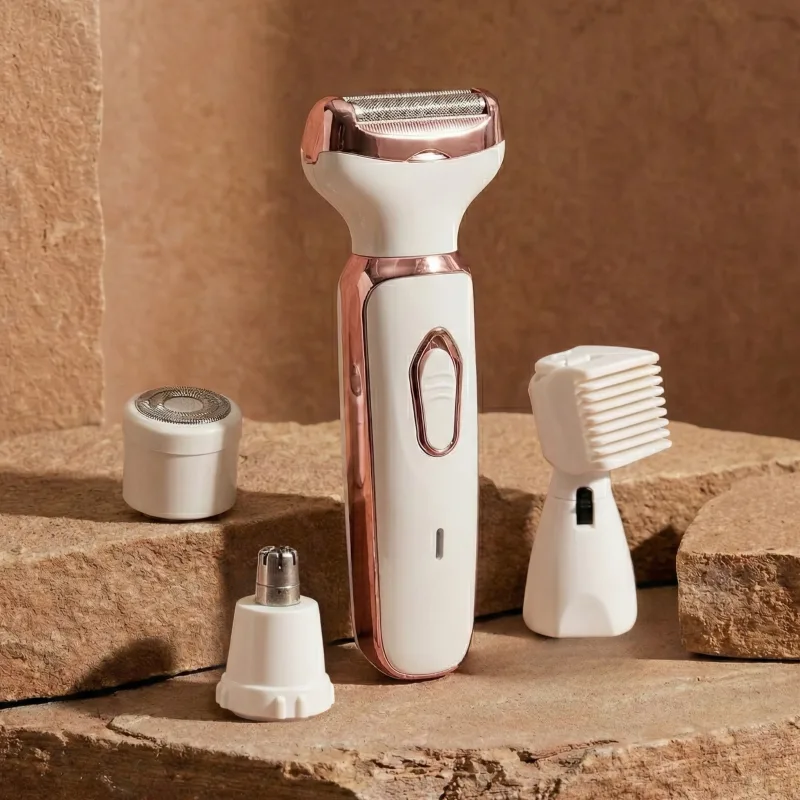
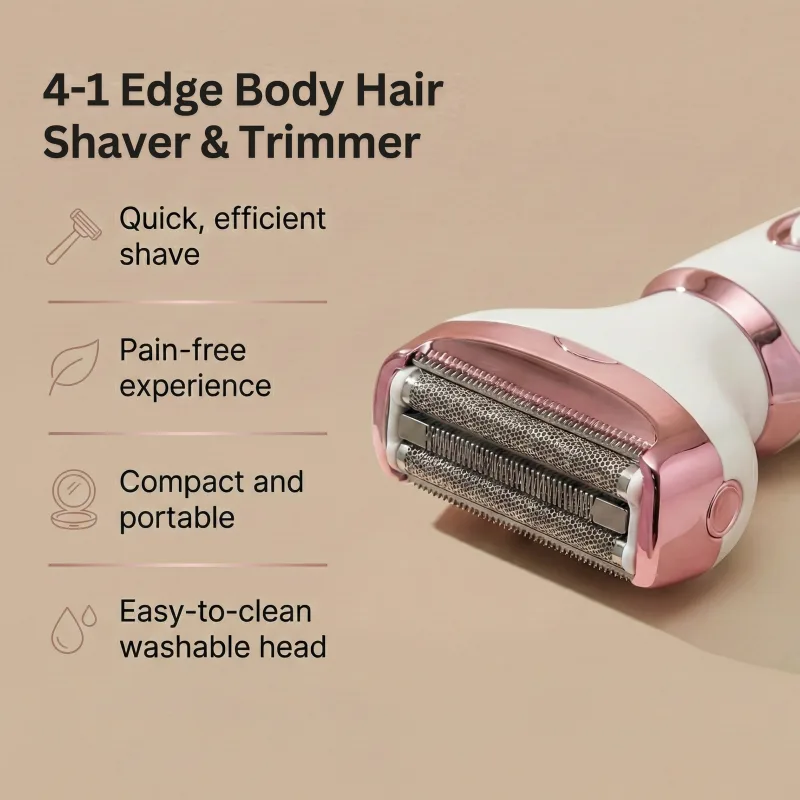
- Shave the day before. Shave or trim close to the skin; never wax or pluck, because IPL needs the hair root in place. A body trimmer is gentler on sensitive skin and avoids razor nicks.
- Patch-test first. Before your first full session, flash a small patch on the lowest level and wait 24 hours. Test the inner thigh and the outer forearm separately if their colours differ.
- Clean and dry the skin. No lotion, oil, deodorant or self-tanner on the area.
- Divide each limb into sections. For a leg: front shin, outer calf, inner calf, back of calf, knee, and the same four faces of the thigh. For an arm: outer forearm, inner forearm, upper arm.
- Work in straight rows. Start at the ankle or wrist and move upward, overlapping each flash very slightly with the last. Finish one row before starting the next.
- Never flash the same spot twice in one session. Overlapping the edges is fine; double-flashing the centre is not.
- Calm the skin afterwards. Mild warmth and redness are common. A cool compress or chilled facial roller helps, then a fragrance-free moisturiser.
- Note the date and level. A quick note on your phone makes the 2-week rhythm much easier to keep.
In what order should you treat legs and arms?
A predictable order is the simplest way to avoid missing sections. Treat lighter, less sensitive areas first while you are fresh, and leave fiddly joints for when you have warmed up to the technique.
| Order | Area | Tip |
|---|---|---|
| 1 | Shins and front of thighs | Easy to see, good place to settle into a rhythm |
| 2 | Calves and back of thighs | Sit on the edge of the bed with one foot up, or use a mirror |
| 3 | Knees and ankles | Stamp one flash at a time; skin here is often darker, so check your level |
| 4 | Forearms | Rest the arm flat on a table for a steady surface |
| 5 | Upper arms | Easier if someone helps with the back of the arm |
If the session runs long, stop after step 3 and do arms the next day.
Why do I see missed patches or stripes after IPL?
Stripes of normal regrowth between smoother areas almost always mean gaps between flashes, not that the device has stopped working. Common causes are moving more than one window-width at a time, gliding too fast, tilting the device on a curve so it doesn't touch the skin fully, or losing track of where you stopped.
Two easy fixes help. Shave in good light so you can see where you've been, and keep each row straight, from bottom to top, as if you were mowing a lawn. Some people mark the end of each section with a light pencil eyeliner dot, as long as they avoid flashing over it. If a patch was missed, simply cover it properly in your next scheduled session; don't go back over it the same day.
Some hair returning is also normal. Hair grows in cycles and IPL works best on hairs in their active phase, which is why several sessions are needed. Our article on hair growth cycles and IPL explains this in more detail.
Which parts of legs and arms need extra care?
Tanned forearms and lower legs
In India, forearms and shins see the most sun on the commute, at the market or during outdoor festivals. Recently tanned skin has more pigment, which raises the risk of burns and darkening. Wait for the tan to fade, use daily SPF on exposed areas between sessions, and lower the level on any visibly darker patch.
Knees and elbows
These are often naturally darker than the surrounding skin. Patch-test them separately and use a lower level if needed.
Areas to skip completely
Never flash over tattoos, dark moles, birthmarks, visible varicose veins, cuts, scratches or irritated skin. If you are unsure about a mark or spot, ask a dermatologist before treating around it. For what normal redness looks like versus a reaction that needs attention, see IPL side effects: what's normal and what's not.
How do you keep up IPL on legs and arms for 12 weeks?
The routine is the same as for any area: one session every 2 weeks for 12 weeks, then monthly touch-ups to keep regrowth sparse. Our 12-week IPL session plan lays out the full schedule. For large areas, consistency is the real challenge, so make it easy for yourself: set a repeating phone reminder, keep the device charged and in one place, and do the shave the evening before as part of the routine.
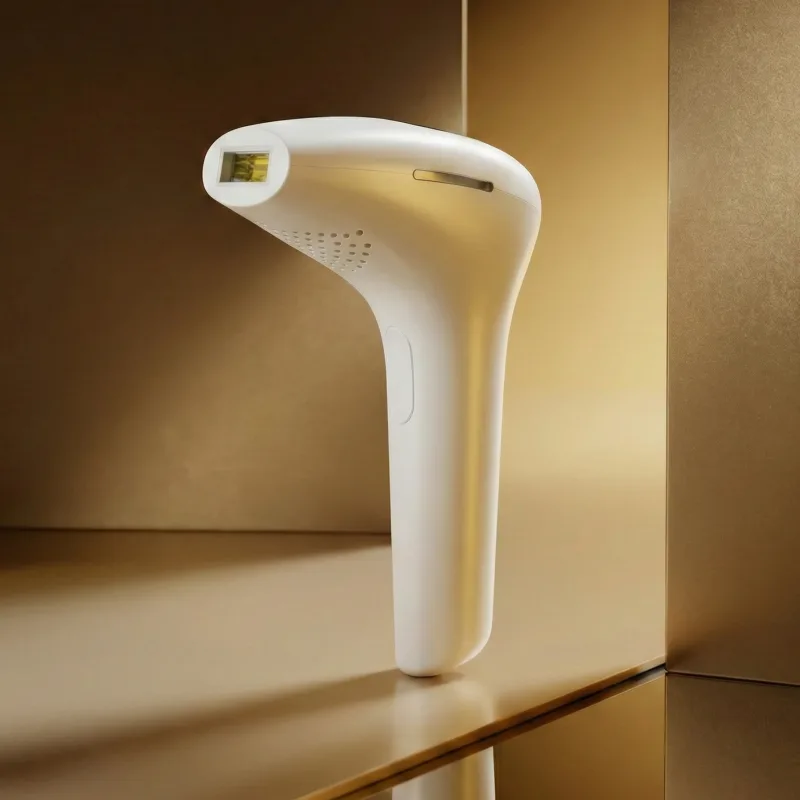
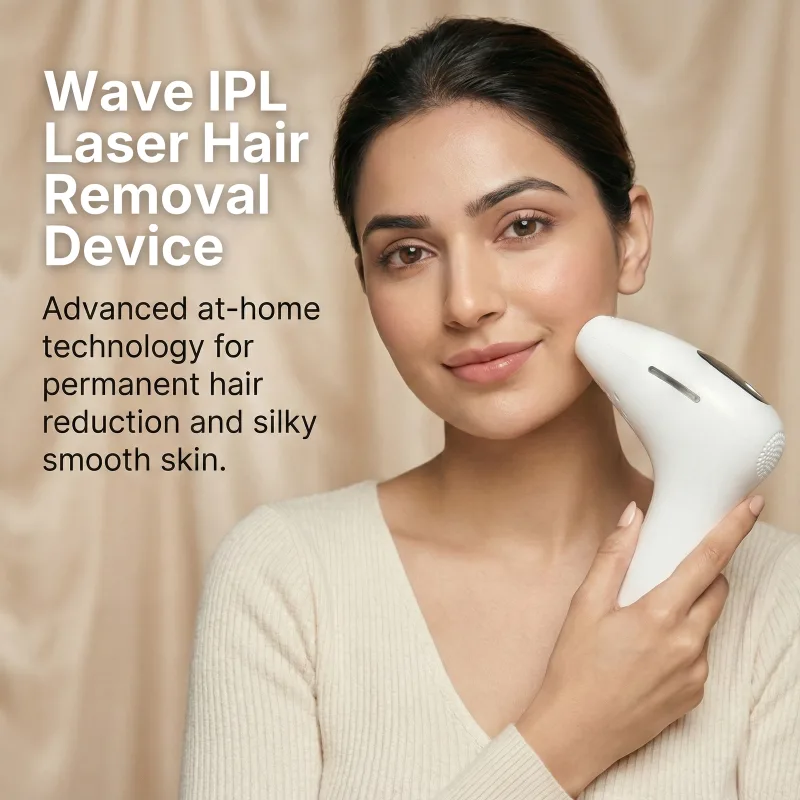
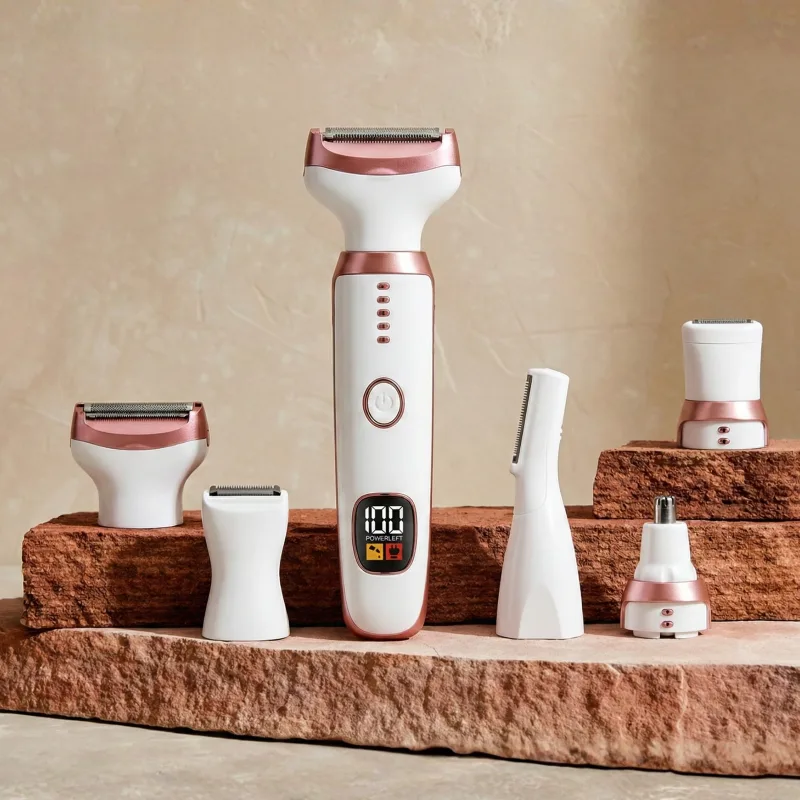
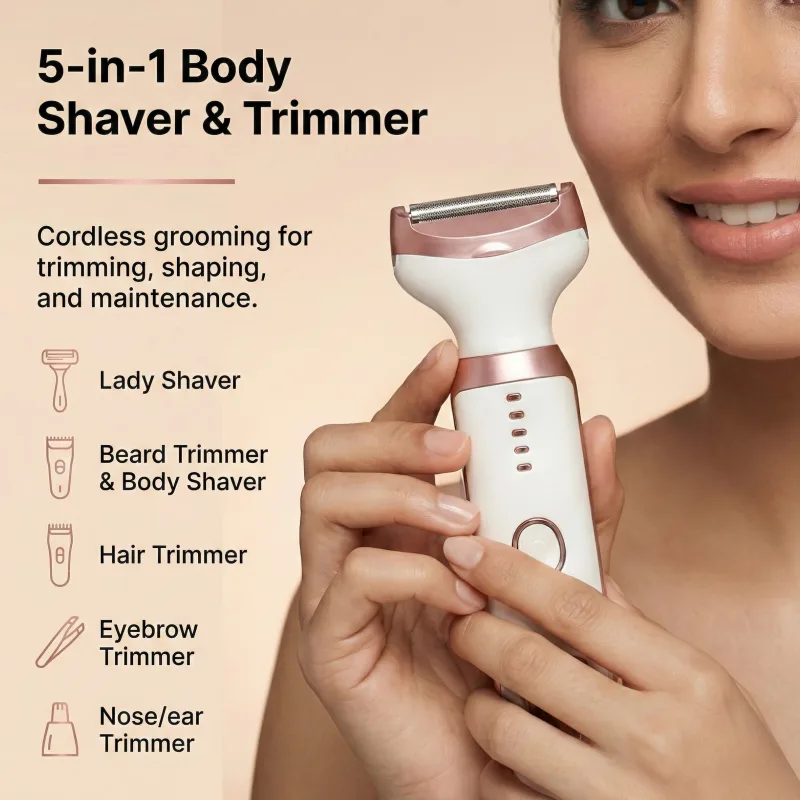
On the equipment side, a device with a reasonably large window and quick recharge makes legs much less tedious. An at-home IPL device such as the Wave IPL hair removal device is designed for body areas like legs and arms, for skin types I–IV with dark hair. For the shave before each session, a rechargeable body trimmer such as the Sharp 5-in-1 body shaver trimmer covers legs quickly and is kinder to skin prone to razor bumps. Neither replaces patience: most people notice slower, finer, patchier regrowth around sessions 4–6, and coarse lower-leg hair may take longer than the thighs.
Timing tip: if you have a wedding or a trip coming up and want smooth arms for a sleeveless blouse, start at least 12 weeks ahead and avoid a session in the few days before heavy sun exposure.
Not sure whether your skin tone suits IPL? Try the free IPL skin tone checker, or send a photo of your skin and hair to our team on WhatsApp at +91 98116-65715 and they'll help you decide whether it's right for you.