
Short answer: With one session every two weeks, most people start to notice slower, finer and patchier regrowth around sessions 4–6, which is roughly 6–10 weeks in. The first session or two usually change very little that you can see. Areas with dark, coarse hair, such as underarms and legs, often respond earliest, while hormonal areas like the chin and jaw take longer. IPL gives long-term hair reduction, not permanent removal, and results vary from person to person.
Key takeaways
- Visible change from at-home IPL usually shows around sessions 4–6, about 6–10 weeks into a fortnightly routine.
- IPL only affects hairs in their active growth phase, so it takes several sessions spread over weeks to reach most follicles.
- Underarms, legs and the bikini line often improve sooner than the chin, jaw or upper lip, where hormones keep activating new hairs.
- Some hair coming back is normal; monthly touch-ups after the first 12 weeks help keep regrowth slow and sparse.
- Dated photos in the same light are the most reliable way to judge progress, because day-to-day memory is a poor guide.
Why doesn't IPL work after the first session?
It is common to feel a little disappointed after session one or two. That is not a sign the device isn't working. IPL sends light into the pigment of the hair, which turns into heat and weakens the follicle. But at any moment, only a portion of your hairs are in the active growth phase, called anagen. Hairs that are resting or about to shed don't respond in the same way.
So each session reaches the hairs that happen to be growing at that time. Over several sessions, two weeks apart, more and more follicles get caught in their growth phase. That is why the routine runs for 12 weeks rather than a single sitting. If you'd like the fuller explanation of growth phases, our guide on how hair growth cycles affect smooth skin goes into more detail.
What does a realistic IPL timeline look like, week by week?
Here is what many people notice when they follow the standard routine: shave, patch-test on the lowest level, then one session every two weeks for 12 weeks, followed by monthly touch-ups. Treat this as a rough guide, not a promise.
| Stage | Roughly when | What you might notice |
|---|---|---|
| Sessions 1–2 | Weeks 0–2 | Little visible change. Some treated hairs may loosen and shed over the following week or two, which can look like regrowth pushing out. |
| Sessions 3–4 | Weeks 4–6 | Regrowth may feel slightly softer. You might go a little longer between shaves. |
| Sessions 5–6 | Weeks 8–10 | The stage where most people see a difference: finer, lighter, patchier hair with bare spots appearing. |
| End of 12 weeks | Week 12 | Noticeably less hair on responsive areas, though rarely zero. Slower areas may still be catching up. |
| Touch-up phase | Monthly after week 12 | Occasional new hairs appear; touch-ups keep them sparse. Hormonal areas may need touch-ups for longer. |
For the step-by-step routine itself, including how to set up each session, see our 12-week IPL session plan.
Which body areas show IPL results fastest?
How quickly you see change depends on hair colour, thickness and what is driving the growth. Dark, coarse hair on light-to-medium brown skin gives IPL the best contrast to work with.
| Area | Typical pace | Why |
|---|---|---|
| Underarms | Often among the quickest | Hair is usually dark and coarse. Underarm skin can be a little darker, so start low. |
| Legs and arms | Steady, visible by mid-routine for many | Large areas are easy to miss in patches, so neat, overlapping rows matter. |
| Bikini line | Often responds well | Coarse, dark hair. External bikini line only, and skip any noticeably darker skin. |
| Men's chest and back | Slower, needs patience | Dense, coarse hair; some of it is hormone-driven and may need longer touch-ups. |
| Chin, jaw, upper lip | Slowest | Hormones keep activating new hairs, especially with PCOS. Expect more sessions and ongoing touch-ups. |
If facial hair linked to PCOS is your main concern, read what to expect with IPL on the chin and jaw. It's worth speaking to a doctor about the hormonal side too, because IPL doesn't address the cause.
Why do some hairs come back after IPL?
Even with a good result, some hair returning is expected. The common reasons are:
- Resting follicles waking up. Hairs that were dormant during your sessions can start growing later.
- Hormones. Puberty, PCOS, pregnancy, menopause and some medicines can activate new follicles, particularly on the face.
- Hair colour. Light brown hair responds less than black or dark brown. Blonde, red, grey and white hair has too little pigment for IPL to work.
- Missed patches. Gaps between flashes leave stripes or islands of untouched hair.
- Skipped or late sessions. Long gaps in the first 12 weeks mean fewer follicles are caught in their growth phase.
- Level kept very low. Starting low is right, but if your skin is comfortable after patch-testing, staying on the lowest setting throughout may slow things down.
Returning hair is usually finer and more scattered than before. If it comes back thick and fast all at once, look at the reasons above rather than simply flashing more often.
How do I track IPL progress with photos?
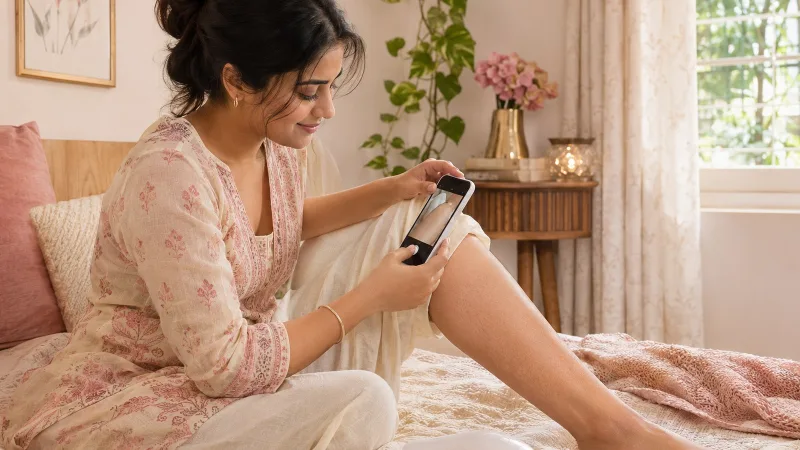
Hair reduction is gradual, so it's easy to forget how much hair you started with. A simple photo routine gives you an honest answer.
- Take a "before" photo of each area before your first session, ideally on the day you would normally shave.
- Use the same spot and light every time, such as a window in daylight. Indian homes often have warm yellow bulbs that hide fine hair, so daylight is more reliable.
- Keep the timing consistent. Photograph the same number of days after shaving each time, for example three days, so you compare like with like.
- Shoot every two sessions, roughly once a month, and add the date to the file name.
- Note how long you go between shaves. A shave diary in your phone is often more telling than the photos: going from every two days to once a week is real progress.
- Compare at week 12 with your first photo, not last week's.
What can slow down IPL results, and what should I avoid?
A few habits quietly hold back progress or make sessions unsafe:
- Waxing, threading or plucking between sessions. These pull out the hair the light needs to reach. Shave or trim instead.
- Tanning. Sun-darkened skin raises the risk of irritation and means you should pause. Winter outings, beach holidays and long cricket afternoons all count; cover up and use SPF.
- Treating tattoos or dark moles. Always avoid them.
- Flashing the same spot twice in a session. It won't speed things up and can irritate the skin.
- Photosensitising medicine. If you take something like isotretinoin, or you are pregnant, check with a doctor before using IPL.
Mild redness or warmth that settles within hours is common. Anything more, such as blisters or skin darkening, means stop and read our guide to IPL side effects, and see a dermatologist if it doesn't settle.
Is my skin and hair a good match for at-home IPL?
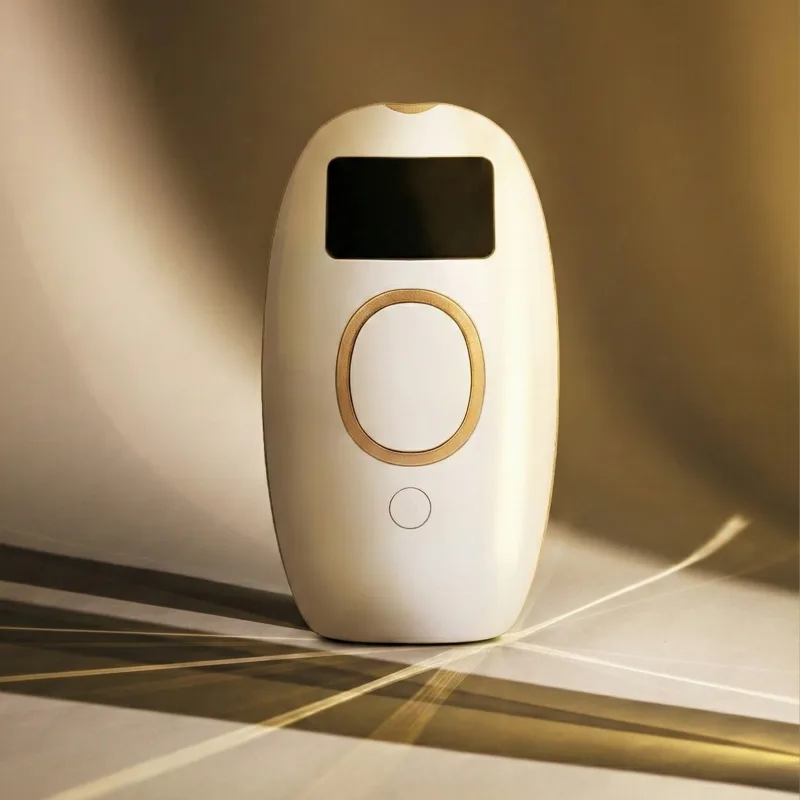
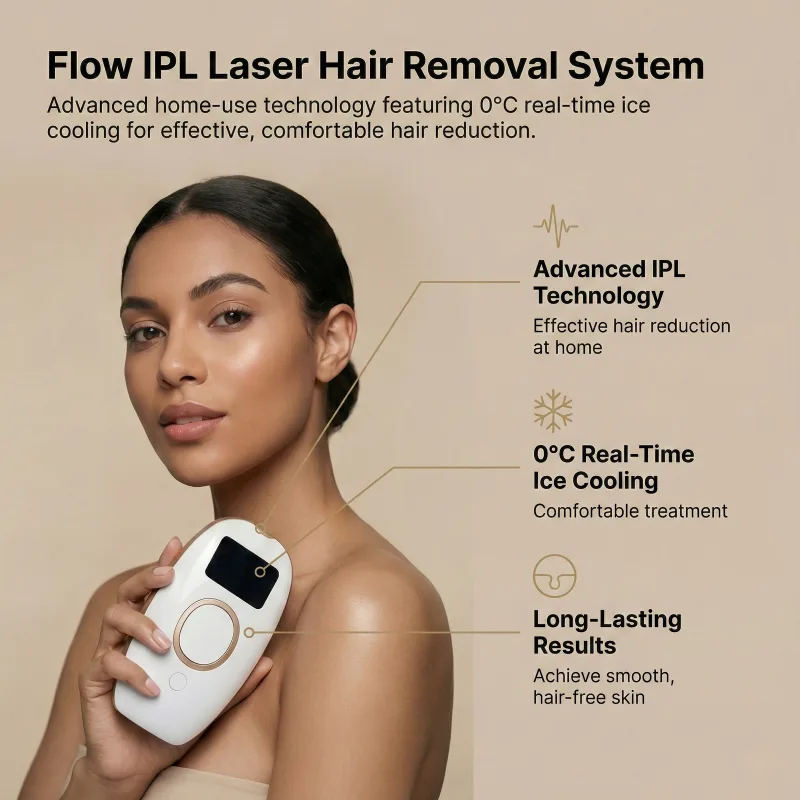
Timeline questions often come down to suitability. At-home IPL devices such as the Flow IPL device are designed for Fitzpatrick skin types I–IV, which covers many light to medium brown Indian skin tones. Type V (deep brown) skin needs extra care and a patch test, and type VI (very deep brown) skin should not use these devices. Hair needs to be black, dark brown or light brown.
If you're a good match, a routine that sticks to the two-week rhythm, careful shaving and steady photos usually tells you within two to three months whether it's working for you. If after the full 12 weeks you see no change at all, check your hair colour and session consistency first, then ask for help. Our guide on IPL for Indian skin tones explains the skin types in more detail.
Not sure where your skin tone falls? Try the free IPL skin tone checker, or send a photo of your skin and hair to Signaxo on WhatsApp at +91 98116-65715 for help working out whether IPL suits you before you start.